Groups warn Middle East truce may not ease economic fallout
The International Monetary Fund and the World Bank Group are closely watching the tentative truce between the U.S. and Iran in the Middle East, but warned of economic fallout, especially for food prices.
The International Monetary Fund and World Bank warnings show the conflict has a global impact. Energy and food prices are rising. Economies, especially import-dependent ones, are strained. As leaders try to control the crisis, ordinary people and businesses face higher costs and uncertainty.
Leaders of the IMF, the World Bank Group and the World Food Program issued a joint statement on Wednesday saying they are ready to help.
Leaders from the three organizations met on Wednesday to talk about how the conflict could affect the global economy and food security.
“The Middle East war is upending lives and livelihoods in the region and beyond. It has already triggered one of the largest disruptions to global energy markets in modern history,” the statement said. “Sharp increases in oil, gas, and fertilizer prices, together with transport bottlenecks, will inevitably lead to rising food prices and food insecurity.”
The groups said these consequences will fall “heavily on the world’s most vulnerable populations, particularly in low‑income, import‑dependent economies.”
“Spikes in fuel prices and potential sharp increases in food prices are especially concerning where fiscal space is constrained and debt burdens are already high, reducing governments’ ability to protect vulnerable households,” the joint statement said.
“Our institutions will continue to monitor developments closely and coordinate the use of all available tools to support those impacted by the crisis,” the groups said.
Prior to the two-week ceasefire agreed to late Tuesday, Trump had been threatening to destroy all of Iran. The ceasefire deal requires Iran to reopen the Strait of Hormuz, the crucial waterway that carries about 20% of the world’s oil and natural gas.
Since the conflict began at the end of February, U.S. gas prices have climbed about $1 per gallon. The national average has recently reached $4 per gallon.
The ongoing conflict with Iran has pushed oil prices to record highs. If it continues, experts warn that economic strain will grow, further affecting U.S. taxpayers.
U.S. military operations, ongoing since late February, are costing an estimated $1 billion per day. Analysts have noted that if the conflict continues for an extended period, it could drive a significant increase in defense spending and further impact the federal budget.
The Department of War may ask Congress for an additional $200 billion for Iran operations. It has not yet provided exact figures for a supplemental request.
Last week, Trump unveiled a 2027 budget proposing a 44% increase in military spending to bolster the nation’s fighting forces. That would bring the U.S. defense budget to $1.5 trillion, if approved by Congress.
On Febr. 28, after nuclear talks with the Islamic Republic failed to produce a deal, the U.S. and Israel launched strikes on Iran.






Chance Showers And Thunderstorms then Showers And Thunderstorms
Latest News Stories

IL U.S. House candidate: drug screen expectant moms getting subsidies

Illinois quick hits: Ameren requests rate hike; Pearl Harbor remembrance

First Look at Lincoln-Way 210’s Proposed 2026-2027 School Calendar

Meeting Summary and Briefs: Manhattan Township Board for October 2025

Everyday Economics: A consumer slowdown, fraying margins, and a big test for the Fed

Manhattan Buried Under Nearly 12 Inches of Snow; Sub-Zero Temperatures Forecast for Friday
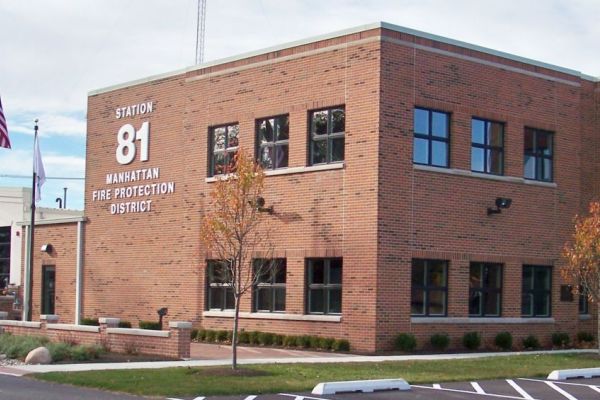
Manhattan Fire District Grapples with Surging Insurance Costs in Draft Budget
Meeting Summary and Briefs: Jackson Township Board for Oct. 2025

Frankfort Turns to County for Wildlife & Dangerous Animal Control
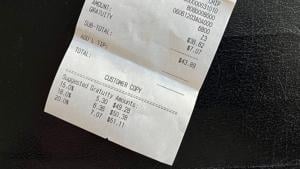
Illinois rejects federal ‘no tax on tips’ rule, keeps state tax on tipped income

JJC Foundation Director Kristin Mulvey to Retire After 25 Years of Transformative Leadership
Attack foiled in Ft. Worth day before National Guard troops shot in WDC