GOP seeks probe of $180B in fraud with taxpayers’ money
California’s Assembly Republican Caucus on Wednesday called for a special legislative session to investigate an estimated $180 billion in fraud in taxpayer-funded programs.
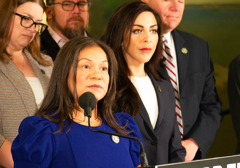
“Fraud absolutely is linked to the cost-of-living crisis,” Assemblymember Carl DeMaio, R-San Diego, said during a news conference at the Capitol. “Every dollar, every penny of fraud is money that should be going to needy families in the form of government services that they are now seeing cuts in. Every dollar that’s given out to a fraudster is a dollar that should be given back to a taxpayer.”
Earlier on Wednesday, Assembly Minority Leader Health Flora and caucus members sent a letter to Democratic Gov. Gavin Newsom, pointing to a new estimate that California may have lost at least $180 billion to fraud across state programs. Flora said the estimate was based on audits, public records and prior investigations. He called on Newsom to call a special session to determine the extent of fraud and improper payments and “advance reforms to strengthen oversight and recover taxpayer funds.”
Republican lawmakers at the press conference said they were particularly concerned about fraud and waste in programs meant to help California’s homeless population, money being spent on fraudulent hospice programs and sober living facilities.
“Many sober living homes are unlicensed and unregulated,” Assemblymember Laurie Davies, R-Oceanside, told reporters. “They operate in a legal gray area that protects the predator, not the patient. California’s pathetic excuse of patient protection laws are quite literally encouraging this type of rampant fraud and abuse of our health insurance market.”
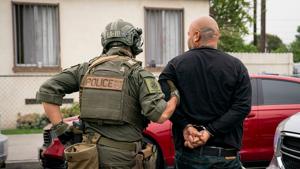
The comments followed raids by the FBI in Los Angeles on April 2, in an effort to find and arrest those suspected of fraudulently receiving Medicaid dollars as reimbursements for providing hospice care to dying patients. Federal agents arrested 15 people who are accused of defrauding $60 million health care expenditures, according to previous reporting by The Center Square.
During another investigation conducted this year, Assemblymember Alexandra Macedo, R-Tulare, reported finding that roughly 300 hospice care businesses were tied to a small number of addresses in the Los Angeles area. All those businesses received Medicaid reimbursements, according to Macedo’s investigation.
When she drove out to the addresses those hospice care businesses were supposed to be located, she found dilapidated buildings that she told The Center Square were obviously not the location of a hospice care facility. Some phone numbers for those businesses listed on public records were disconnected, or the person who answered the phone when Macedo called hung up when she identified herself as a politician conducting an investigation.
The Center Square reached out to eight Democrats in the California Legislature who have authored anti-fraud legislation in the past or authored homelessness-related legislation. The only Democratic state lawmaker who responded before press time on Wednesday sent a text message through his communications director.
“Nothing but political theater,” Assemblymember Corey Jackson, D-Moreno Valley, told The Center Square in that text. “They are clearly performing for Trump.”



Chance Showers And Thunderstorms
Latest News Stories
Joliet Junior College, City of Joliet to Explore Joint Public Safety Institute
Manhattan Township to Draft Solar Farm Ordinance Amid Growing Interest
Meeting Summary and Briefs: Village of Manhattan Board of Trustees for September 2, 2025
Manhattan to Install Solar-Powered Flashing Beacons in School Zone
Resident Shares Personal Tragedy as Manhattan Proclaims Suicide Prevention Month
Manhattan Adopts 20-Year Comprehensive Plan to Guide Future Growth

WATCH: Legislator warns gas could reach $8 to $10 a gallon
White House announces new AI Education initiative

Chicago student petitions to restore bathroom doors
Alleged Epstein 50th birthday letter from Trump released
WATCH: Bonta disappointed with U.S. Supreme Court ruling
Trump’s tariffs ‘not survivable’ for some U.S. small businesses