Will County P&Z Commission Grants Extensions for Joliet Township Solar Farm Ground Cover
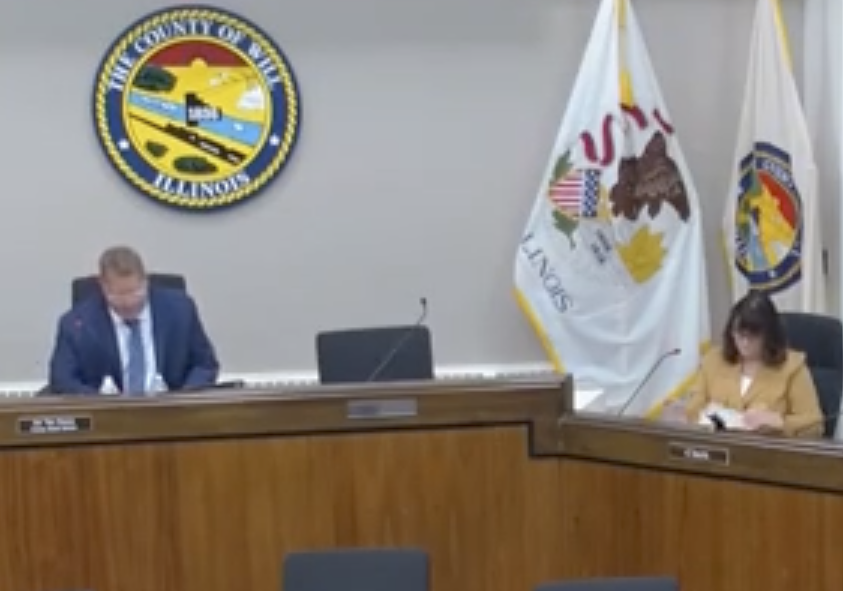
Will County Planning and Zoning Commission Meeting | April 7, 2026
Article Summary: The Will County Planning and Zoning Commission unanimously granted a final deadline extension for a commercial solar developer in Joliet Township, giving the company until September 2026 to plant specialized native pollinator ground cover beneath its solar arrays.
Joliet Solar Farm Key Points:
-
Nexamp Solar, operating as Moon Shoal Renewables and Summer Stone Renewables, requested Variance Extensions #VEXT-26-001 and #VEXT-26-002.
-
The extensions apply to previously approved variances that reduced required mowing from five times a year to one time, and increased maximum plant height from 13 inches to 36 inches.
-
The extensions were necessary because the property’s farmer planted traditional crops last season, preventing the solar developer from seeding the required native pollinators before the original variance expired.
On Tuesday, April 7, 2026, the Will County Planning and Zoning Commission granted a final round of variance extensions to Nexamp Solar, ensuring the developer has the legal runway to establish native pollinator habitats at its forthcoming commercial solar facilities in Joliet Township.
The developer is currently permitting two 5-megawatt commercial solar facilities, operating under the names Moon Shoal Renewables LLC and Summer Stone Renewables LLC. The projects are located near 2618 S. Chicago Street and W. Schweitzer Road, just west of the Chicagoland Speedway.
In October 2024, the commission approved special use permits for the facilities alongside specific variances regarding ground cover. To participate in the Illinois Pollinator-Friendly Solar Site Act and create deep-rooted habitats that manage stormwater, the developer required variances to reduce the county’s required number of mowings from five times a year to just once, and to increase the maximum allowed plant height from 13 inches to 36 inches.
Because variances legally expire if a project is not established within one year, the developer had to seek extensions.
Land Use Planner Marguerite Kenny explained that the developer was unable to plant the specialized native seed mix last year because the land was still actively being farmed.
“What happened was last spring the farmer planted the field before the solar facility can go in and establish a ground cover section,” Kenny said.
Because the applicant could not plant the section of the field to establish the native pollinators before the previous extension expired on March 30, 2026, they applied for their second and final 180-day extension, as permitted by the Will County Zoning Ordinance.
The commission held separate votes for each variance extension (#VEXT-26-001 and #VEXT-26-002), unanimously approving both. The extensions are now valid through September 26, 2026, giving the developer the spring and summer seasons to establish the native plantings as their building permits finalize.





Partly Sunny
Latest News Stories

IL GOP U.S. Senate candidate says state needs balanced representation

Wheat price drop brings notable Thanksgiving savings for Illinois families

Illinois lawmaker calls FDA hormone therapy reversal ‘overdue’

IL Rep on congressmen trading: ‘We’re not going to take a pile of money to hell’

Illinois quick hits: Officer shot report numbers down; Thanksgiving meal costs down

WATCH: Chicago activist testifies; Quinn’s millionaire surcharge; High SNAP error rate

GE Appliances announces $150 million partnerships
Frankfort, Will County Partner on Wildlife Rabies Control
Executive Committee Approves Appointments for Washington Township, Emergency Telephone Boards

Manhattan D114 Schools Earn ‘Exemplary’ Status in State Report Card

WATCH: Dems leave hearing before minority group’s testimony on Biden border policies
Will County Executive Committee Delays Vote on School Choice Referendum