Analysis: Homelessness predicted to rise despite policy efforts
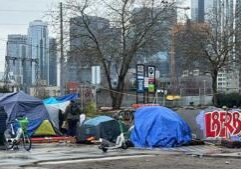
Homelessness is predicted to rise, while policies predicted to lower the homeless numbers only address part of the cause, according to analysts.
The annual Point-In-Time (PIT) count, conducted by the Continuums of Care for the U.S. Department of Housing and Urban Development (HUD), is a once‑a‑year estimate nationwide of the number of people experiencing homelessness, both sheltered and unsheltered, and provides insight into whether homelessness is on the rise or decline.
“It’s an imperfect measure,” Ryan Orsinger, director of Data Science and Research at Haven for Hope, told The Center Square. “If you get 100 volunteers in San Antonio one year, and you get a count, and then the next year you get 200 volunteers and they’re just all geared up, you could actually have a change in the measurement not based on the number of human beings who are actually experiencing homelessness, just because of measurement variance.”
Weather, volunteer engagement, and other factors influence the PIT count, leading to fluctuations in data and unreliable results. According to Orsinger, HUD is exploring ways to revamp the PIT count, potentially collecting more counts throughout the year to provide more accurate data.
The full 2025 PIT count numbers have not yet officially been released, though the 2024 PIT count showed the highest level of homelessness on a single night on record, with 771,480 people recorded homeless. While awaiting the 2025 PIT count national results, some states and districts’ results have been released.
The D.C. metropolitan area PIT count recorded 9,659 people as homeless in January 2025, which is only 1% lower than 2024’s count but still higher than before the COVID-19 pandemic. Given the 1% decrease in the region and the PIT count occurring on only one night a year, the decrease is not truly significant.
“If we’re looking at a 1% difference on people, and there’s a variance of 1%, I’m not going to take that as good news or bad news if it goes up or down, because that’s a pretty reasonable measurement error, at least nationally,” Orsinger said. “Once you get above like 5–6% variance, then you’re getting to the real story, especially on a national figure.”
Tens of billions of taxpayer dollars have been spent on homelessness programs in hopes of reducing homelessness as a whole, with some programs having significantly more success than others.
On July 24, 2025, President Donald Trump signed an executive order revoking the housing-first policy and labeling homelessness primarily as a public safety and mental health crisis, arguing drug addiction and serious mental illness as the main cause of homelessness, and redirected federal homelessness policy toward law enforcement, involuntary treatment and stricter funding conditions.
Trump’s executive order was an attempt to address the root causes of homelessness using a treatment-first initiative, in hopes that taxpayer money no longer continues to fund programs deemed ineffective. Still, many homeless advocates and critics expressed displeasure with the executive order and current policy.
“The Trump administration has done everything in its power to target, attack, and punish people experiencing homelessness, from attempting to slash critical funding for housing to promoting an anti-homeless agenda based on myths and stereotypes,” the National Homelessness Law Center told The Center Square. “Trump’s policies have made homelessness worse, have made more people hungry and sick, and will leave us all less safe.”
Though PIT count numbers are not fully out yet for 2025 or 2026, there is concern among shelters that the current policy will not decrease homelessness numbers any more than previous attempts, since addressing mental health and addiction only addresses two causes. The rise of insurance and housing costs has prevented individuals and families of both older and younger generations from being able to sell, rent or purchase housing.
Rep. Beth Van Duyne, R-Texas, addressed property inflation at a panel hosted by The Daily Caller, saying how people were leaving higher inflation areas for cheaper housing in other states and driving up prices in those areas.
“It’s a reason not to sell it, and so you got a ton of people who are in houses that they don’t need to be in right now,” said Van Duyne. “Rising families want to be able to purchase, so helping them by not having to pay the inflationary costs on that is, actually, it’s just common sense.”
“People have seen rates double, triple, sometimes even more than that, and it’s causing our housing prices to be even more severe,” said U.S. Rep. Lindsay Cross, D-Fla.
“We’re creating a situation where if you can’t insure it, you can’t own it, and if you can’t own it, you can’t live or rent there,” U.S. Sen. Jamaal Bailey, D-N.Y., said. “We’re adding to the housing crisis by not staying on top of insurance costs.”
According to HUD, Trump’s executive order to lower the cost of housing ensured the “income needed to buy a home is down four percent and mortgage affordability is at a four-year high” as of the 2026 State of the Union, with “existing home sales increased more than 5% in December 2025.” The executive crackdown on fraud and deportations may also help increase housing availability.
This gradual improvement in affordability may spark hope for some citizens, leading to a potential decline in homelessness, but the shift toward a housing-first policy over a treatment-first policy still raises concern.
“It misapplies that policy solution if somebody’s issue is just economic in nature,” Orsinger said. “It’s tricky. In both cases, it’s a misapplication of a single intervention to an entire population of people who are different.”
“We used to have massive mental health institutions in this country, just like we used to condition housing on jumping through impossible hoops. We don’t do those things anymore because we learned they didn’t work and that they caused real harm,” the National Homelessness Law Center told The Center Square. “We already know what works to solve homelessness: it’s getting people the housing they can afford and the health care they need.”
HUD said Trump’s executive order to lower housing costs resulted in the “income needed to buy a home is down four percent and mortgage affordability is at a four-year high,” and is providing some relief to housing costs.
“At a time when more and more people are one missed paycheck away from homelessness, politicians must make sure that everybody has a safe place to call home,” the National Homelessness Law Center told The Center Square. “The good news is that there are real ways to do this, things like using empty government-owned buildings to build deeply affordable housing and expand rent control and rental assistance.”
Terri Behling, director of communications at Haven for Hope, told The Center Square that the true solution to ending homelessness is addressing each individual person where they are, without treating each person as if they all have the same problems, and it takes both public and private partnerships to accomplish this.
“It’s investing in preventative measures, more affordable housing, more shelter services, more resources in general,” Behling said. “I would hope that those who do make policy would look at it as a whole and not just look at one solution, because homelessness, just like health care, is super complex, and so it affects everyone differently.”
Haven for Hope is one example of private and public partnerships working together to meet the needs of struggling individuals where they are, providing an array of programs in what Haven for Hope calls a “one-stop shop,” and successfully helping homeless people get back on their feet. However, funding and coordination for such campuses are not standard.
“This policy of Housing First also defunded shelters across the United States. That’s why you don’t see a Haven in every city,” Orsinger said. “All those federal dollars went somewhere else.”
Not all attempts to create shelter campuses have received support, as seen with the proposed Salt Lake City shelter facility, which the National Homelessness Law Center and other critics protested against. This was not the only attempt at a shelter that has not been successful.
“There was an outfit from Albuquerque who came and they wanted to replicate the idea of a one‑stop shop, but their physical facility is 21 miles outside of town in an old prison,” Orsinger said. “You can’t just shove human beings to the edge of town and expect them to resolve all of their challenges with being displaced in the first place.”
Not all solutions work, but attempts are steps in the right direction.
“Homelessness can happen to anyone and it doesn’t discriminate,” Behling said. “Understand the complexities, look at the research, and make decisions informed by data and talking to people with lived experience and talking to the providers in the country.”
The next PIT count results are expected between May and July 2026, which are predicted to show an increase in homelessness despite current policy efforts.






Showers And Thunderstorms Likely
Latest News Stories
Will County’s “First-in-Nation” Veterans Center to House Workforce Services, Sparking Debate
Improved Vendor Service Creates $1.2 Million Shortfall in Sheriff’s Medical Budget
Will County Public Works Committee Unveils 25-Year Transportation Plan, Projects $258 Million Gap
Will County Animal Protection Services Seeks New Facility Amid “Gaping Wound” of Space Crisis
Board Confronts Animal Services Crowding, Explores Future Facility Options
Will County Board Members Demand Transparency in Cannabis Tax Fund Allocation
Homer Glenn Residents Push Back on 143rd Street Widening as Officials Signal “Tentative Agreement”
Will County Forges 2026 Federal Agenda Amid D.C. Policy Shifts, ‘Big Beautiful Bill’ Impacts
Health Department Seeks $1 Million Levy Increase to Prevent “Weakened System”
County Rolls Out New “OneMeeting” Software to Improve Public Access

Meeting Summary and Briefs: Will County Board Finance Committee for August 5, 2025
Will County PZC Approves Rezoning for Truck Repair Facility on Manhattan Road Amid Resident Concerns
Key Stretch of Bell Road on Track for Thanksgiving Reopening, Committee Approves Additional Funds