Bachelor’s at Illinois community colleges may widen access, affordability
(The Center Square) – Community colleges in Illinois could soon offer Bachelor’s degree programs to Illinois residents. Officials, lawmakers and students all say the initiative would make higher education more accessible, affordable and benefit the state’s economy.
House Bill 5319 would allow all community colleges to provide four-year baccalaureate degree programs, with specific programs offered to be determined by collaborative efforts between the Illinois Community College Board (ICCB) and the Illinois Board of Higher Education (IBHE).
The ICCB released a report detailing the economic impact of the 45 institutions across the state, with data showing the state sees a 130% return on tax funds spent on community colleges.
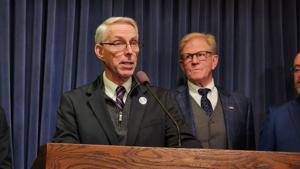
ICCB Executive Director Brian Durham said the schools serve as a backbone to communities across the state.
“They drive workforce development, support local businesses and create pathways that strengthen families and entire regions. Every dollar invested returns value through higher earnings, stronger employment and more resilient communities,” Durham said.
He said the proposal could bolster the economy and expand opportunities for people across the state who may not otherwise be able to attend a university.
Michael Deno is a student studying social work at Shawnee Community College in Southern Illinois. He is also the founder of The House of Care Ministries – a non-profit community organization he started to help people in need.
“I’m a person with disabilities. I’m a person who also once struggled with a mental health crisis and addiction. Four years ago, when I found Shawnee Community College, I wouldn’t have been in this building with all of you,” Deno said. “Thanks to the support of my community college, I’m here today.”
He said he wouldn’t have been able to start the organization if not for his community college, which has made it easier for him to earn an education while also working and running a nonprofit.
He said the opportunity to earn a bachelor’s degree right in his community would mean a lot for his work, education and future prospects.
“I have a very colorful past. So what a bachelor program would do for me at the community college level would enable me to stay there where I’m supported. It would enable me to afford it, because I’m really looking down the university cost like ‘I run a non-profit. I don’t make money,’” Deno said.
President of Harper College Dr. Avis Proctor spoke further on the economic impacts of the schools.
“The study shows that the average associate degree graduate earns $8,400 more annually than a high school graduate. Imagine what the impact would be if we allowed students to earn a bachelor’s degree,” Proctor said.
State Rep. Tracy Katz Muhl, D-Northbrook, reflected other’s comments on the impacts her bill could have.
“Illinois cannot meet its workforce and economic goals without the community colleges, and we cannot fully unlock that potential unless we modernize what they are able to offer,” Katz Muhl said.
The bill is co-sponsored by many Democrat representatives, and over a dozen members of the House GOP. Further action by the legislature is likely, but uncertain.




Partly Sunny
Latest News Stories

Judge rules against Trump on National Guard, Marines in California

Permian Basin producers reduce methane intensity by 50% as production increases

Banning AI instruction in college could stifle innovation, IL lawmaker says

WATCH: Chicago braces for federal law enforcement; Dabrowski on public safety, education

Illinois quick hits: Eight dead after weekend violence; Mexican national’s extradition sought

JJC Moves Forward with Major Technology Overhaul to Modernize College Operations

Chinese networks use U.S. to launder billions for Mexican cartels
Alternative tax-hike ideas emerge to fund Illinois public transit

Kamala Harris pro-union X post inspires major Labor Day backlash

Speaker Mike Johnson says Shreveport ‘Democratic DA’ is to blame for high crime

Trump says he will sign executive order ending mail-in voting
Meeting Summary and Briefs: Joliet Junior College Board of Trustees for August 20, 2025