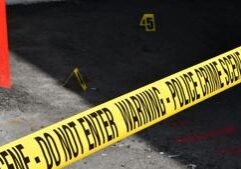
Illinois proposal aims to improve detection of potentially staged deaths
(The Center Square) – State Sen. Craig Wilcox, R-Woodstock, says too many deaths initially ruled as suicides may actually be homicides, and he is pushing legislation to change how those cases are handled across Illinois.
Wilcox’s proposal, Senate Bill 1781, would require additional training for law enforcement and stricter scrutiny of deaths when there is a known history of domestic violence.
The measure is currently assigned to the Senate Criminal Law Committee.
Wilcox said the idea for the bill was sparked by investigative reporting and a documentary highlighting cases where deaths may have been misclassified.
“I became convinced that, unfortunately, we probably in America do have a significant number of deaths that are ruled suicides that should have, at a minimum, been treated as a suspicious death,” Wilcox said.
The legislation would require officers to undergo brief training designed to help them recognize potential warning signs that a suicide scene could be staged. Wilcox said similar training already exists and, in some cases, can be completed in about 10 minutes.
The focus is on identifying specific indicators — such as inconsistencies in how a death occurred — that could prompt a closer look at a scene.
“It’s not asking you to open a full investigation,” Wilcox said. “It’s just saying, look at the scene a little differently.”
Wilcox pointed to a 1990s case in suburban Illinois as an example of why the legislation is needed. In that case, a death initially ruled a suicide raised forensic questions that were later revisited.
He said such cases highlight how certain types of deaths — particularly strangulation — may be difficult to carry out without clear physical evidence, something the proposed training would emphasize.
“In a suicide hanging, if there’s an unfurled extension cord with no locking mechanism, that should be a sign that self-strangulation is likely not possible.”
The proposal has drawn some concern from law enforcement groups over what critics describe as an unfunded mandate. While the training itself already exists, departments would still need to dedicate time and resources to ensure officers complete it.
Wilcox acknowledged those concerns but said the burden would be minimal given the short length of the training. An amendment to the bill narrows requirements for the Illinois State Police to focus on homicide detectives rather than all officers, addressing some opposition.
Local police departments and county sheriffs, however, would still be responsible for implementing the training within their agencies.
“Those who get away with homicide often become the most dangerous when they are eventually confronted,” Wilcox said. “We’d rather have those cases looked at more closely from the start.”




Patchy Fog then Partly Sunny
Latest News Stories
Illinois senator says True Value move highlights business climate concerns

Two service members killed, one missing in Iranian strike
U.S. Coast Guard monitors Chinese ships off Alaska coast

Millions celebrate America 250, Sail250 events in key ports

Chicago delays vote on parking meter sale, risks litigation

Hegseth’s ‘High-T’ troop screening mandate comes without cost estimate
Congressional candidates tackle housing, immigration

Senators to examine hospital price transparency legislation
Transit bill sponsor ok with recycled board appointments

U.S. adds 3.5M businesses despite shaky economy

Walmart targeted with lawsuit over customer service line voice recordings
Utility company pays $314 million to Eaton Fire victims