Texas Ten Commandments law may reach Supreme Court
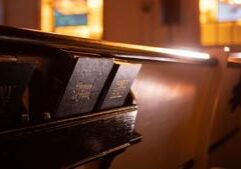
A federal appeals court ruling upholding a Texas law requiring Ten Commandments displays in public school classrooms is setting up a potential challenge before the U.S. Supreme Court over the role of religion in public education.
In a decision issued this week, the U.S. Court of Appeals for the 5th Circuit upheld Senate Bill 10, which mandates that public schools “shall” display the Ten Commandments in classrooms across the state. Opponents of the law said they plan to appeal the ruling to the nation’s highest court.
The case is Rabbi Nathan v. Alamo Heights Independent School District.
David Hacker, vice president of legal services and senior counsel at First Liberty Institute, told The Center Square that the decision means schools must comply with the requirement as written in the law.
Hacker noted that the Ten Commandments have educational value.
They are “a foundational moral, literary and historical text. Their influence on Western legal traditions is widely acknowledged and needs to be part of any complete education,” Hacker told The Center Square.
Hacker said the 5th Circuit ruling makes clear that the establishments of religion “historically involved coercion: mandatory church attendance, enforced religious taxes and legal penalties for noncompliance.
“By contrast, simply displaying a religious text on a classroom wall bears no resemblance to these practices,” he added.
The defendants include the American Civil Liberties Union, the ACLU of Texas, Americans United for Separation of Church and State, and the Freedom From Religion Foundation.
In a joint statement, the defendants said they were “extremely disappointed” in the ruling, arguing it conflicts with First Amendment protections and longstanding Supreme Court precedent. They said the decision undermines the separation of church and state and interferes with families’ rights to decide how their children receive religious instruction.
The Center Square reached out for comment to all of these organizations, but did not receive a response from any of them but the Freedom From Religion Foundation. Annie Laurie Gaylor, co-president of the foundation, criticized the ruling, noting the narrow margin of the court’s decision and calling it inconsistent with established precedent.
“We take a little solace in the fact that, despite its being the most conservative appeals court, the vote was so close, 9-8. It is nevertheless shocking that an appeals court would presume to do what only the Supreme Court itself can do and overturn long-standing precedent,” Gaylor told The Center Square.
The organizations said it plans to appeal the ruling to the U.S. Supreme Court “to reverse this decision and uphold the religious-freedom rights of children and parents,” and expressed confidence the court will reaffirm its decision in Stone v. Graham, a 1980 case addressing religious displays in public schools.
The state of Texas has also discussed potential changes to how social studies is taught under the state’s Texas Essential Knowledge and Skills for K-12 social studies curriculum, including references to biblical texts.
At the federal level, the Trump administration has expressed support for expanding religious expression in schools and earlier this year issued guidance regarding prayer in public education.





Showers And Thunderstorms Likely
Latest News Stories

Illinois news in brief: Work begins on $1.5 billion O’Hare expansion; Police catch man accused of road rage, shooting
Putin, Zelenskyy to meet after ‘successful’ peace talks with Trump
WATCH: Dems, GOP battle over CA redistricting
Trump holds high-stakes peace talks with Zelenskyy, European leaders
Newsom files FOIA request on border patrol’s appearance
Soaring utility bills, solar federal tax credit cuts dominate Illinois energy debate

Illinois quick hits: Pritzker signs crypto regulations

Trucking industry leader: New law may drive business out of Illinois

DEA targets drug smuggling corridors in work with Mexico

Planned restart of California oil production faces legal challenges

Derailment disrupts train service for Chicago, New York, Washington, Miami
Second Oval Office meeting with Zelenskyy notably different in tone