Arizona GOP pushes to protect Colorado River’s limited water
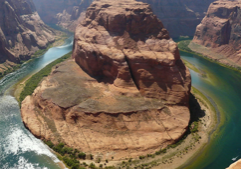
Arizona Republicans are seeking to protect the Colorado River as its water supply continues to dwindle.
State Senate President Warren Petersen, R-Gilbert; state House Speaker Steve Montenegro, R-Surprise, and other Arizona Republicans recently met with the Trump administration, urging the federal government to use the Colorado River Storage Project Act.
The 1956 law allowed the U.S. Bureau of Reclamation to create dams and reservoirs in the Upper Colorado River Basin while also managing its water resources among Colorado, New Mexico, Utah and Wyoming. The river also provides water to the lower basin states of Arizona, California and Nevada.
Arizona Senate Republicans asked the Trump administration to release water from the reservoirs to protect hydropower generation and stop low water levels.
According to Montenegro, “Lake Mead and Lake Powell are running dangerously low, at just 25% to 33%, while reservoirs in the Upper Basin are nearly full, between 82% and 97%.”
“It is clearly evident from the dire situation that the water sitting upstream must be released so it can flow downstream to Lake Powell,” he said.
Lake Mead and Lake Powell are the primary water storage sources for Arizona’s water from the Colorado River.
In addition to a request to release the water, the Senate Republicans laid out a plan that included long-term strategies to stabilize the Colorado River, such as $1 billion annually in federal funds for any future agreement to compensate Colorado River users for voluntary conservation.
The plan also proposes that states relying on the Colorado River and Mexico use a reverse auction format rather than a fixed price per acre-foot to maximize water saved per dollar.
Arizona state Republicans’ plan additionally seeks to dedicate federal funding to building a new dam or a desalination project.
The Republicans’ plan “provides options to help stabilize the Colorado River system over time,” Petersen said, answering The Center Square’s questions by email.
However, he added the “timeline depends on several factors,” such as “how quickly the federal government can act to release or appropriate resources, and how many Colorado River users are willing to voluntarily conserve water.”
Regarding the potential for Arizona to commit state funds to match the $1 billion annual federal investment proposal, Petersen said a “potential state contribution would be evaluated through the normal budget process in partnership with stakeholders and lawmakers.”
“The immediate priority is securing a meaningful federal commitment because the Colorado River is a regional and national resource,” the Senate president said. “Arizona has consistently shown a willingness to invest in long-term water security.”
Petersen said Arizona will need both long-term and short-term solutions. In the short term, he said Arizona will need to respond to the “Bureau of Reclamation’s latest 24-month outlook, which shows challenges greater than anything we have seen in the history of the Colorado River.”
The outlook shows that Lake Powell will be stabilized through water-level management to avoid low levels, while Lake Mead remains in a shortage, so the bureau will cut water deliveries to Arizona, Nevada and Colorado.
The 24-month outlook also says the Colorado River is at about 40% of its normal yearly inflow.
In the long term, Petersen said, “Responsible leadership means investing in augmentation and new water supplies, including projects like desalination, so we can support continued growth across the Southwest.”
A day after meeting with Arizona Republicans, U.S. Secretary of the Interior Doug Burgum met with governors from Arizona, California, Colorado, Nevada, New Mexico, Utah and Wyoming to discuss the Colorado River’s water shortage.
“Interior and Reclamation continue to coordinate with the basin states, tribes, Mexico and basin stakeholders as we make the decisions necessary to operate and protect the system, ” Burgum said.
Assistant Secretary-Water and Science Andrea Travnicek said it is “imperative” for the federal government to take “action quickly to protect a resource that supplies water to 40 million people and supports vital agricultural, hydropower production, tribal, wildlife, and recreational uses across the region.”
“The Department of the Interior and Reclamation remain fully committed to taking the actions necessary to reduce impacts on water deliveries, safeguard critical infrastructure, and preserve as much operational flexibility as possible,” she said.
In February, the states that use the Colorado River for water missed a deadline to reach an agreement on water use. Current guidelines will expire at the end of 2026.





Showers And Thunderstorms Likely
Latest News Stories
U.S. Supreme Court could rule on Texas lawsuits brought in Democratic-led state courts

WATCH: Illinois In Focus Daily | Monday Aug. 11th, 2025

Illinois quick hits: Judge denies Madigan’s motion; legislator urges action on DCFS interns

About Us

Everyday Economics: CPI takes center stage as tariff-driven price pressures mount

Net negative migration is harmful to the economy, economists say

Details pending on billions in foreign investments coming from trade deals
Will County Health Department Seeks $1 Million to Avert ‘Drastic’ Service Cuts from Expiring Grants
Will County’s “First-in-Nation” Veterans Center to House Workforce Services, Sparking Debate
Improved Vendor Service Creates $1.2 Million Shortfall in Sheriff’s Medical Budget
Will County Public Works Committee Unveils 25-Year Transportation Plan, Projects $258 Million Gap
Will County Animal Protection Services Seeks New Facility Amid “Gaping Wound” of Space Crisis
Board Confronts Animal Services Crowding, Explores Future Facility Options
Will County Board Members Demand Transparency in Cannabis Tax Fund Allocation