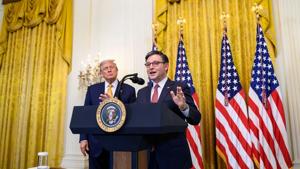
Convenience store advocate: Swipe fee ruling is ‘one step’ in the process
*The Center Square) – The federal government has moved to partially block an Illinois law banning electronic processing fees on the tax and tip portions of credit and debit card transactions, but President Donald Trump or federal courts could overrule the Office of the Comptroller of the Currency.
The OCC ruled on Friday that national banks and savings associations are not required to comply with the Illinois Interchange Fee Prohibition Act, which is scheduled to take effect July 1. The rule does not apply to community banks, state-chartered banks or credit unions.
The OCC issued a second rule to block similar prohibitions under consideration in other states.
Doug Kantor, general counsel for the National Association of Convenience Stores, said the OCC has a long history of contradicting presidential administrations in favor of big Wall Street banks.
Kantor said Trump recently called for reforms and referred to the “swipe fee ripoff.”
“And with good reason, because billions and billions of dollars get taken out of people’s pockets every year through a system that is a walking, talking cartel in the way that it’s set up,” Kantor told The Center Square.
Kantor said it is not clear if a federal appeals court would consider Friday’s ruling to block the Illinois law, or if there could be separate litigation.
The Seventh Circuit Court of Appeals has oral arguments scheduled on May 13 to consider an appeal by banking and credit union groups after U.S. District Court Judge Virginia Kendall upheld the Illinois law in February.
At a news conference in Springfield earlier this month, Illinois Bankers Association Executive Vice President Ben Jackson said the law was a last-minute addition to the state budget package two years ago.
“We believe if this had gone through the regular vetting process that the legislature typically undertakes that it would not have passed at all,” Jackson said.
Peoria restaurant owner Tremaine Branch joined Jackson and other banking and credit union advocates for a recent news conference.
Branch said the law would add new costs for small businesses.
“I would need to update my payment systems, retrain my staff and change how I handle transactions. Those changes take time and money,” Branch said.
Kantor disagreed and said the Interchange Fee Prohibition Act would save Illinois businesses and consumers billions of dollars.
“When these fees get taken out of tax and tip portions of transactions, the money adds up fast,” Kantor said.
Kantor said the Trump administration could take action to change what the OCC is doing, or the courts could overrule the OCC.
“And that would not be the first time the OCC has lost on trying to read bank preemption far too broadly before,” Kantor said.
Kantor said the OCC ruling handed down on Friday was just a step in the process.





Mostly Sunny
Latest News Stories
Meeting Summary and Briefs: Will County Board Legislative Committee for October 7, 2025
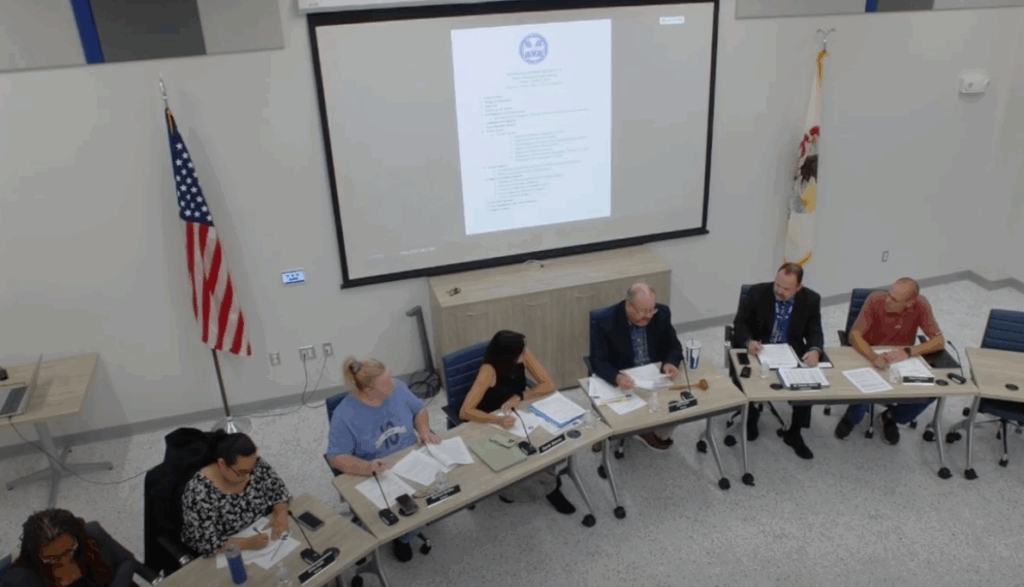
Parents, Mayor Raise Concerns Over Special Education Services at Manhattan 114 Board Meeting
Manhattan Awards Over $1.3 Million in Bids for Major Water Main Upgrades
Will County Board Committee Passes Contentious ‘Live and Work Without Fear’ Resolution on 4-3 Vote
Will County Awards $10.4 Million Contract for Bell Road Widening in Homer Glen Area

Manhattan Township to Set Solar Farm Rules Amid Concerns with Area Projects
Meeting Summary and Briefs: Will County Public Works & Transportation Committee for October 7, 2025
Meeting Summary and Briefs: Will County Board Finance Committee for October 7, 2025
Meeting Summary and Briefs: Will County Board Capital Improvements & IT Committee for October 7, 2025

Jackson Township Board Discusses High-Speed Rail Uncertainty and Northpoint Development

Southwest falls short on list of great cities to drive

Govt shutdown predicted to drag on after funding bill fails for 8th time in Senate