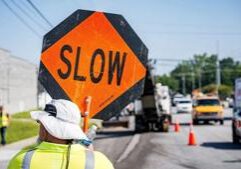
Deferred maintenance blamed in I-64 bridge hole
(The Center Square) – State transportation officials say repairs are underway after a large hole developed on an Interstate 64 bridge, while a government watchdog argues the incident reflects broader issues with infrastructure funding and maintenance.
According to Paul Wappel, a public information officer with the Illinois Department of Transportation, the agency first became aware of the issue April 17.
“Concrete has been poured so the temporary steel plate is no longer there,” Wappel said in an email. “We hope to have this section open midweek, weather permitting.”
Wappel added that the bridge’s main structural components were not considered deficient.
“The superstructure and substructure are rated as a 6, which is satisfactory condition,” he said, noting the hole occurred in the bridge deck, which is already scheduled for rehabilitation later this year.
“The deck condition at the time of the most recent inspection did not warrant restrictions or temporary measures,” said Wappel.
But Sheila Weinberg, founder and CEO of Truth in Accounting, said the situation points to a larger national pattern of deferred maintenance.
“This is indicative of the short-term planning that our elected officials do,” Weinberg told The Center Square. “They’re notorious for not doing maintenance on a regular basis and they just keep on putting that off.”
While the bridge received a “satisfactory” rating, Weinberg questioned whether that standard meets public expectations.
“If I was a user of a bridge, I would want it to be a 10 out of 10,” she said. “Even though [it’s rated] satisfactory, it’s indicative of an overall issue where governments defer maintenance.”
Weinberg pointed to accounting practices that she says allow governments to obscure the scope of the problem.
“They don’t even figure out how much deferred maintenance they have,” Weinberg said. “Some people say it’s in the hundreds of billions of dollars throughout the country.”
She warned that delaying repairs can create financial and safety risks.
“Instead of maintaining it on a regular basis, they wait until tragedy is about to strike or has stricken,” Weinberg said. “Then they have to raise taxes or borrow money to cover all this.”
The Pew Charitable Trusts says they looked at all 50 states and found the majority expect to fall short over the coming decade of doing what it takes to keep roads and bridges in a state of good repair.
“Our research found that 24 state DOTs reported funding shortfalls between what was needed to fix and repair key state roads and bridges and just six reported adequate funding. While state Departments of Transportation need to make sure they are doing an effective and efficient job of using available infrastructure dollars, persistent insufficient funding of needed repairs will leave roads and bridges in bad shape while pushing the bill onto future budgets,” The Pew Charitable Trusts experts told The Center Square.
The Pew Charitable Trusts says states are underinvesting in preventive maintenance, even though preservation is far cheaper than repair or replacement. The group warns that deferring upkeep builds larger costs over time and can strain future budgets by diverting funds from other priorities.
Pew points to Transportation Asset Management Plans as a key transparency tool that shows infrastructure conditions, funding gaps, and long-term strategies. While many states report shortfalls, it notes some—including Montana—have improved outcomes by increasing funding and focusing spending on maintaining bridges in good condition.
Weinberg added that better budgeting practices could help prevent similar incidents. “You should maintain what you have on a regular basis, not defer it,” she said. “That should be part of your budget.”
The I-64 bridge is expected to reopen once repairs are complete, though officials say timing will depend on weather conditions.



Mostly Cloudy then Chance Showers And Thunderstorms
Latest News Stories
Jackson Township Prepares for Property Viability Pole Relocation, Addresses Northpoint Traffic Control
Manhattan School District Explores Alternative Transportation Amid Lincoln-Way Bus Challenges

Manhattan Ranked 6th Safest City in Illinois; Police Chief Warns of Traffic Accidents
Manhattan Township Assessor Initiates $13,500 Software Upgrade Amid Office Transition
Manhattan and New Lenox Renew Boundary Agreement Through 2046
Manhattan Board Approves Route 52 Safety Study and Multi-Use Path Engineering
State of the College: Local Legislators Bolster Student Support Services
Meeting Summary and Briefs: Public Health & Safety Committee for February 5, 2026

State of the College: Dual Credit Program Enrollment Hits 6,000 Students
Meeting Summary and Briefs: Finance Committee for February 3, 2026
Fairmont Neighborhood Plan Update Prioritizes Infrastructure and Beautification Following Demographic Shift
Health & Safety Committee: Monee Church Kitchen Project Highlighted in County Health Impact Report