Report: Sharp ideological divide in Minnesota congressional delegation
A new report analyzing congressional voting records shows a clear ideological divide between Minnesota’s Republican and Democratic delegations.
In its idealogical rankings, the Institute for Legislative Analysis rates all lawmakers on a 0 to 100 scale. A score of 100 represents the strongest alignment with “reduced federal spending, narrower regulatory power, a smaller scope of government, and strict adherence to constitutional structure and civil-liberties protections.” A score of 0 reflects the opposite.
Minnesota Republicans consistently scored significantly higher on the index than Democrats.
U.S. Rep. Brad Finstad led the state’s delegation with a score of 81.91%, followed by U.S. Rep. Michelle Fischbach at 81.68% and U.S. Rep. Tom Emmer at 80.20%. U.S. Rep. Pete Stauber received a 75.62% score.
That rounds out the four Republicans of Minnesota’s congressional delegation. Among its six Democrats, U.S. Rep. Angie Craig had the highest score at 16.50%.
In the upper chamber, Sen. Amy Klobuchar scored 11.18% and Sen. Tina Smith 6.94%.
Other House Democrats included Rep. Kelly Morrison at 9.50%, Rep. Betty McCollum at 4.08% and Rep. Ilhan Omar is last at 3.57%.
The institute said its index is designed to provide a consistent benchmark for measuring ideological movement over time, rather than relying on shifting political labels.
It also recently released its 2026 Congressional Vote Record Report, which looked at longer three-year trends and found broader changes within both parties.
“While scorecards based on a handful of votes can be useful for showing differences among lawmakers, our annual index covers every substantive vote and is designed to show how political philosophies and party dynamics change over time,” said Ryan McGowan, CEO of the institute. “The latest report shows that different wings of the Republican Party are increasingly gravitating toward President Trump’s policy agenda.”
Democrats, meanwhile, remain more unified overall but are beginning to show more variation on issues including border security, crime and national security.
“On the Democratic side, we are beginning to see more internal variation in what has otherwise been a party far more unified in its voting than Republicans,” McGowan said.
The institute said reports like this play an important role in understanding the political direction of the nation’s lawmakers.
“Unlike labels such as conservatism, progressivism, or MAGA, which can shift over time,” a press release from the institute said, “the ILA scale is designed to provide a consistent baseline for measuring party behavior and ideological movement.”




Chance Showers And Thunderstorms
Latest News Stories

New department to oversee childcare background checks, billions in grants

Illinois Quick Hits: Illinois power company to shutter three plants
Poll: Voters back redistricting commissions over legislatures 2-to-1
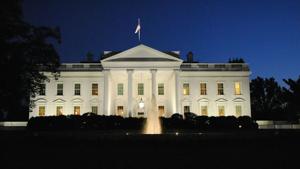
FBI foils alleged terror plot at White House UFC event
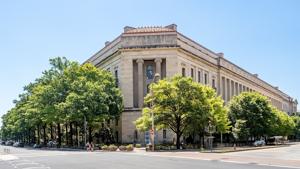
Pro-life org urges DOJ to end mail-order abortion after latest domestic assault case
USDA announces charges against eight in SNAP fraud crackdown

First day of World Cup games in Atlanta, first border crime arrest made
Newsom: Trump ordered investigation into him and his wife

Appeals court dumps $60M baby formula NEC verdict vs Mead Johnson

B-52 bomber crashes after takeoff from California base
Kiley maintains lead in California congressional race

Chicago council defers meter sale approval, criticizes Johnson over ‘lack of transparency’