
Virginia Supreme Court questions redistricting process
Virginia Supreme Court justices zeroed in Monday on one question: Did lawmakers follow the rules when they put a redistricting amendment on the ballot?
The case is not about how people voted. Rather, according to justices, it is about whether the process used to get the amendment there met the requirements in Virginia’s constitution.
That process is laid out in Article XII. Lawmakers must pass an amendment, wait for an election, pass it again, and then send it to voters.
Justices spent much of the hearing asking whether that sequence happened the way the constitution requires.
One issue is what counts as the required “intervening election.” Attorneys disagreed on whether that means Election Day itself or the broader voting period.
Another issue is the special session lawmakers used. Republican challengers say that session was called for budget work, not redistricting.
They told the court there is no clear example of lawmakers using a special session that way.
Justices pushed on that point, asking whether the Legislature can expand the scope of a session once it starts.
A justice pressed attorneys on whether lawmakers followed the rules for expanding the special session, at one point asking whether it was “irrelevant” if those requirements were not followed.
Attorneys for the commonwealth said the process was valid and warned against overturning a vote after it already happened.
Virginia Solicitor General Tillman J. Breckenridge told the court it would be “patently unfair” to throw out the result based on process questions after voters had already weighed in.
Justices also examined the purpose behind those rules, including giving voters time to understand proposals and allowing accountability between legislative approvals.
They questioned whether technical issues, like timing or publication rules, should outweigh the outcome of a statewide vote.
Some justices raised concerns about setting a precedent where procedural missteps could undo election results.
Others questioned whether courts should step in at all when it comes to the Legislature’s internal rules.
The case is one of several legal fights tied to the new maps.
Breckenridge told the court there are at least two other separate lawsuits still moving. One focuses on whether the districts meet constitutional compactness standards.
A Circuit Court ruled Sunday against a Republican effort to block the maps on those grounds, though that decision is expected to be appealed.
The state is also trying to move parts of the case faster through the courts.
The court had not issued a ruling as of publication. Candidate filing for Virginia’s August congressional primaries closes in late May, creating urgency for campaigns and election officials who need to know which district lines will apply.
Throughout the hearing, justices did not signal how they will rule, but their questions stayed focused on whether lawmakers followed the constitution step by step.
The outcome will determine whether the amendment stands or whether the process has to start over.




Slight Chance Showers And Thunderstorms
Latest News Stories

Illinois Quick Hits: General Assembly approves CTE bill

Amended scooter, e-bike bill heads to governor

Property tax-free Bears deal fails to pass

Illinois Quick Hits: Loyola student’s alleged killer charged with new felony
$55.9 billion budget includes new taxes, ‘no property tax relief’

Illinois to require bell-to-bell student phone ban in public schools
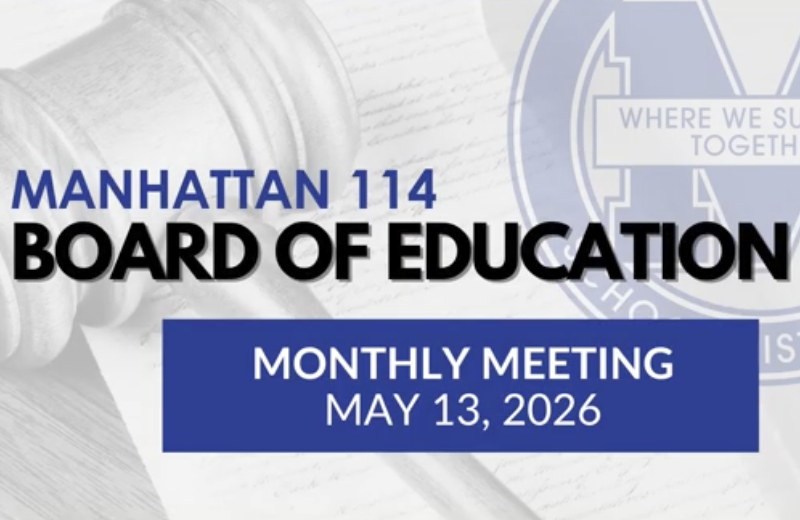
Meeting Summary and Briefs: Manhattan School District 114 for May 13, 2026
Illinois Quick Hits: Housing, megaprojects take backseat to budget talks

Taxpayer watchdog calls for accountability after helicopter prom controversy

Proposed $250 bill could be a boon for drug cartels, experts warn
Iowa voters head to the polls for fierce races
District 210 Transportation Update Details Fuel Swings, New Bus Safety Technology