Supreme Court skeptical of Syria, Haiti temporary protected status
The U.S. Supreme Court appeared skeptical of immigrant’s challenges to the Trump administration’s termination of temporary protected status in Haiti and Syria.
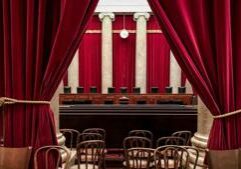
Justices on the high court heard arguments in Trump v. Miot and Mullin v. Doe, cases that challenge the special immigration status for immigrants from Syria and Haiti, respectively. A coalition of immigrants from both countries brought the challenges after the administration eliminated the protected status in 2025.
Temporary protected status is granted to immigrants from countries that have experienced a national disaster or war. The justices were charged with determining whether a lower court judge could strike down a designation made by the executive branch.
Lawyers for the Haitian and Syrian immigrants said the Trump administration did not properly consult other executive agencies or issue a notice before former Department of Homeland Security Secretary Kristi Noem terminated the status.
Congress requires the DHS Secretary to consult other agencies, including the Department of State, before it ends temporary protected status. The law does not specify what those consultations must look like.
Justice Amy Coney Barrett questioned whether the consultation would need to be specifically related to ending TPS, since Congress did not specify in the law.
Ahilan Arulanantham, a lawyer representing Syrian nationals, said the contents of a review discussion are significant, but not necessarily reviewable by a judge.
“Why would Congress permit review of the procedural aspect when everyone cares more about the substance?” Barrett asked.
Justice Samuel Alito appeared deeply skeptical of the Syrian and Haitian immigrant’s arguments. He cited concerns that federal judges across the country could strike down determinations from the executive branch based on little compelling evidence.
“If we accept your arguments it will create a hole in the judicial review bar that you can drive a convoy of trucks through,” Alito said, citing a phrase from Solicitor General John Sauer.
Solicitor General John Sauer argued that ending temporary protected status for Syrian and Haitian immigrants would project messages of confidence in the political systems of both countries. He pointed to the end of civil war in Syria in 2024 as an example.
“If we don’t terminate TPS, it will send a sense of doubt about that decision,” Sauer said.
He also argued that Haitian immigrants that come to the United States are among the most well educated in the country and would be doing a disservice to the nation’s future prosperity by allowing them to continue coming into the United States.
Geoffrey Pipoli, a lawyer arguing for the Haitian migrants, argued that the determination to end TPS for Haiti was discrimination on the basis of race.
Justices on the court did not appear to be convinced of Pipoli’s arguments, and argued that the administration has appeared to indiscriminately target TPS in all countries the U.S. still operates it in.
Alito cautioned against making determinations based on the majority race that lives in a certain country. He said it would be difficult to see how race plays a factor in the determinations when looking at certain countries.
“You have a really broad definition of who is white and who is not white,” Alito said. “I don’t like dividing the people of the world into these groups.”
However, several justices appeared sharply critical of the Trump administration’s efforts to end the temporary protected status. Justice Sonia Sotomayor said the past statements from Trump about countries like Haiti show a racial bias in eliminating TPS.
“I don’t see how that one statement is not a prime example in showing a discriminatory purpose in making this decision,” Sotomayor said.
Justice Ketanji Brown Jackson also argued that the Trump administration did not proceed through the proper channels of consideration before eliminating the protected status. She said Noem should have a more substantive conversation with the State Department and other executive agencies.
“Congress has directed this secretary in this statute, in contrast with the prior regime, to make certain findings, make certain determinations,” Jackson said.
Justices on the high court will likely deliberate whether to keep TPS for Syria and Haiti intact over the next few months. The court is expected to issue a decision by July.




Mostly Sunny
Latest News Stories
Illinois news in brief: Prosecutors charge man with using care in attempt to kill cops; Military higher education bill goes to governor; Burrito chain closes locations in Chicago area

Lincoln-Way North to Host TV Pilot Filming Under $210,000 Rental Deal
Analysts: Redistricting to cost taxpayers, while slowly shifting election outcomes

Trump honors fallen service members, vows Iran will not obtain nuclear weapon

Stephen Colbert returns to community show after final ‘Late Show’ appearance

TVA reports solid financial results, acknowledges resource plan delays
Illinois dual office holding debate intensifies amid Calumet funding, ethics concerns

School choice Yass Prize awards continue, $20M worth of grants awarded nationwide

U.S. sees progress in Iran talks, Tehran says no deal yet
Manhattan Board Approves Director of Operations Hire After Closed Session
Everyday Economics: History doesn’t repeat, but the Fed Is hearing an echo
Illinois DHS appointment sparks backlash over alleged voter registration mailer practices