Congress advances bills targeting $186 billion payment problem
Congress moved this week on both sides of the Capitol to address a problem that has persisted for decades after a new report found federal agencies made an estimated $186 billion in improper payments in fiscal year 2025, a $24 billion increase from the prior year.
The House Oversight Committee approved nine bills designed to reduce payment errors in federal programs. That same day, the Senate unanimously passed a bill to lengthen the timeframe for prosecuting pandemic-era fraud, part of a larger 17-bill anti-fraud initiative that Senate Republicans are advancing toward a floor vote.
Improper payments are defined as those that should not have been made or were made in incorrect amounts, including overpayments, underpayments, payments to ineligible recipients and payments lacking sufficient documentation. Fraud is one cause; eligibility errors, outdated data systems, and documentation failures are others, according to the GAO report.
Since fiscal year 2003, cumulative improper payment estimates have totaled about $3 trillion. GAO has identified improper payments as a material weakness in federal financial management every year since 1997.
Five program areas accounted for about 73% of the fiscal year 2025 total: Medicare at $57 billion, Medicaid at $37 billion, the Earned Income Tax Credit at $21 billion, the Supplemental Nutrition Assistance Program at $10 billion and the Small Business Administration’s Shuttered Venue Operators Grant program at $10 billion.
The $186 billion total is likely an undercount itself. The Temporary Assistance for Needy Families program, which spent about $16.5 billion in fiscal year 2025, was excluded because of statutory limitations on reporting.
Only 12 of the 24 major agencies covered by the Chief Financial Officers Act fully complied with federal payment integrity law in the most recent reporting year. Nine of the ten recommendations GAO made to Congress in 2022 to improve the system remain unacted upon.
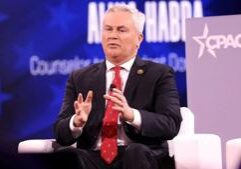
House Oversight Committee Chairman James Comer, R-Ky., framed the scale of the problem in terms that taxpayers would recognize.
“Taxpayers are footing the bill for fraud while criminals get rich,” he said during the markup. “Fraud at these levels costs each tax filer between $1,000 and $3,000 a year.”
The centerpiece of the House package is a shift from what Comer called the “pay and chase” model – in which agencies attempt to recover improper payments after the fact – to pre-payment verification.
Two bills, the Pre-Payment Fraud Prevention and Treasury Data Access Act and the Stopping Fraudulent Payments Act, would require agencies to conduct risk evaluations before payments go out and give Treasury new authority to return payment requests flagged as high-risk.
Other bills would replace static annual improper payment estimates with continuous rolling risk assessments, extend Treasury’s Do Not Pay system to state governments administering federally funded programs for the first time and make agency chief financial officers explicitly responsible for internal financial controls.
Rep. Maxwell Frost, D-Fla., co-sponsor of the Do Not Pay expansion bill, noted the system already prevented, detected and helped recover $11.7 billion in potential improper payments in fiscal year 2025.
Support was broadly bipartisan. Ranking Member Robert Garcia, D-Calif., backed multiple bills outright, and Democrats co-sponsored three. Opposition centered on two bills: one that critics said used vague criteria that could delay legitimate payments, and another that would move pandemic-era fraud oversight functions from their existing independent structure into the Treasury Department, a change some Democrats argued could weaken the arrangement’s effectiveness.
In the Senate, Iowa Republican Joni Ernst, chair of the Senate DOGE Caucus, unveiled a 17-bill Protecting American Taxpayers Act on April 22, projected by Ernst’s office to save $240 billion.
The nine House bills next advance to the full House floor.
Rep. Gary Palmer, R-Ala., a sponsor of one of the bills, offered a measured assessment of what the package could accomplish.
“This legislation puts us in a better position,” Palmer said. “It’s not going to solve it all, but it puts us in a much better position to advance on this, to try to eliminate the fraud as we go along.”



Showers And Thunderstorms
Latest News Stories

Illinois quick hits: Judge denies Madigan’s motion; legislator urges action on DCFS interns

About Us

Everyday Economics: CPI takes center stage as tariff-driven price pressures mount

Net negative migration is harmful to the economy, economists say
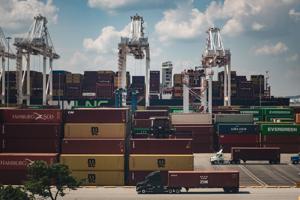
Details pending on billions in foreign investments coming from trade deals
Will County Health Department Seeks $1 Million to Avert ‘Drastic’ Service Cuts from Expiring Grants
Will County’s “First-in-Nation” Veterans Center to House Workforce Services, Sparking Debate
Improved Vendor Service Creates $1.2 Million Shortfall in Sheriff’s Medical Budget
Will County Public Works Committee Unveils 25-Year Transportation Plan, Projects $258 Million Gap
Will County Animal Protection Services Seeks New Facility Amid “Gaping Wound” of Space Crisis
Board Confronts Animal Services Crowding, Explores Future Facility Options
Will County Board Members Demand Transparency in Cannabis Tax Fund Allocation
Homer Glenn Residents Push Back on 143rd Street Widening as Officials Signal “Tentative Agreement”