Executive order creates website for retirement accounts, matching federal contributions
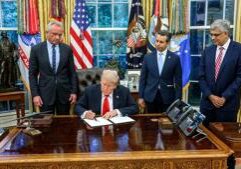
President Donald Trump signed an executive order Thursday aiming to expand access to “high-quality” retirement accounts to all Americans.
The administration will launch a website called TrumpIRA.gov where qualifying Americans who don’t have access to retirement plans through their employer can shop for private retirement accounts and access the Saver’s Match, a federal program that provides up to $1,000 in annual matching government contributions.
Trump called the plan “revolutionary.”
“Great thing for millions of Americans who lack employer-sponsored plans,” Trump said at the signing.
Most Americans with earned income can set up an individual retirement account on their own, regardless of whether their employer offers a retirement plan.The Saver’s Match was created by the SECURE Act 2.0 of 2022, which built on the SECURE Act – or the Setting Every Community Up for Retirement Enhancement Act – of 2019. Both laws seek to encourage more Americans to save for retirement by expanding access and simplifying administrative rules.
The match was set to become broadly available to qualifying low-income Americans in 2027, but Americans can only receive matching contributions if they have a retirement savings account and are contributing themselves.
Trump’s executive order gives individuals wanting to set up a retirement account one place to shop and compare plans online and easily access the match that may have already been available to them but they may never have learned about.
Under SECURE 2.0 and starting in 2027, single taxpayers making $20,500 or less per year and contributing to a retirement account will qualify for a full match on up to $2,000 in federal dollars. Single filers making between $20,500 and $35,500 in 2027 can qualify for smaller federal contributions.
But Trump also expressed a desire to expand the program with Congress. The director of the National Economic Council, Kevin Hassett, said.
“We think that there are a lot of people, even who make more than [$35,500], that don’t have any assets for retirement. And so we’re working with Congress to significantly expand this program,” Hassett said.





Showers And Thunderstorms Likely
Latest News Stories
Republican lawmakers say shooting proves need for Trump ballroom
White House calls for DHS funding after correspondents incident
Report: $186 billion in federal payment errors likely an undercount

Convenience store advocate: Swipe fee ruling is ‘one step’ in the process
Report: Sharp ideological divide in Minnesota congressional delegation

White House correspondents’ dinner shooter faces formal charges

Deferred maintenance blamed in I-64 bridge hole
Supreme Court strikes down Texas redistricting lawsuit, upholds new maps

Supreme Court to hear migrant farm worker case

Illinois quick hits: Convicted felon suspected of shooting two officers; Chicago Mayor orders up to $900,000 for additional peacekeepers; Belleville man faces attempted murder charge
Lincoln-Way D210 Approves $483,000 Agreement with Illinois Bone and Joint Institute, Adds Seventh Athletic Trainer

Manhattan Fire Board Reviews Financials, Navigates ‘No Tax on Overtime’ Law