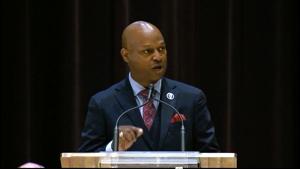
Teacher unions spent over $1B on political causes since 2015
National teachers unions have spent over $1 billion on political activity and advocacy since 2015, according to a new report by Defending Education.
Both reports, shared with The Center Square, found the American Federation of Teachers and the National Education Association together directed $669 million in federal political spending and an additional $336 million in state and local spending.
The total includes member dues, political action committee contributions and Committee on Political Education funds. Teachers’ unions collect COPE and PAC dollars separately from their dues and fees.
Defending Education says the funds were directed to political campaigns, nonprofit advocacy groups, school board races and efforts opposing school choice legislation.
Rhyen Staley, research director at Defending Education, told The Center Square in an exclusive interview that the findings raise concerns about how unions allocate their funds and the impact at the state and local levels.
“When you tie in money coming from the state and local level and the political game plan of teacher unions, it’s just one giant political machine that is trying to take control of everything,” Staley told The Center Square.
According to the findings, unions and affiliated groups spent approximately $7.2 million opposing school choice initiatives in Kentucky, $4.3 million to repeal similar policies in Nebraska and more than $4.2 million to oppose school choice efforts in Maine.
The report also noted that the unions contributed over $1.3 million to a Los Angeles Unified School District school board race.
Staley said the influence of teachers’ unions extends beyond traditional labor concerns, particularly at the local level.
At the state and local level overall, teachers’ unions spent more than $135.8 million, the report found.
“These are proxies for the teachers’ union,” Staley added. “These unions are taking lots of money, and they’re pouring it into these local groups who are having massive impacts at the local level.”
A majority of public school districts do not reimburse union dues. They are paid by members via payroll deduction from taxpayer-funded salaries.
“If the union is taking their cut regardless if they’re a member or not and they’re getting that money, especially before a teacher even gets their paycheck, that is taxpayer dollars,” Staley said.
Staley added that unions take dues and move them into COPE accounts, which are then funneled into political campaigns.
The report also points to union involvement in broader political and social movements, including activities tied to May Day demonstrations, where some groups promoted student participation in protests related to immigration enforcement.
Staley said students are being used as “propaganda” for unions to show participation in protests, but “they’re not really engaged.”
“The teachers’ unions are very unique because they are teachers who are directly involved with children, and a lot of this is meant to develop their next generation of political allies,” Staley added.
The National Education Association, the largest teachers union in the country, has also contributed millions to advocacy organizations, according to the report. Midwest Academy has received more than $1.7 million since 2015.
The Center Square reached out to the NEA and AFT by email and phone for comment, but did not receive a response.




Partly Sunny
Latest News Stories

Fifth Circuit upholds Texas instate tuition ban for illegal foreign national students

30 state financial officers urge an EO to return $39B in savings bonds to rightful owners

VA hits multiple milestones in claims, care delivery and administration

U.S. Supreme Court to hear Colorado-Nebraska water dispute

Taxpayers bear burden for federal student loans
Talarico raises more money than Paxton in Senate race

Illinois’ gun ban upheld after appeals court reverses district judge’s ruling

Report: Illinois commutes rated among America’s safest

Concerns raised that KIDS Act threatens Americans’ online privacy, free speech

Illinois Quick Hits: Illinois offers disaster tax relief
Millionaire tax push resumes in Chicago

Report: $225M in K-12 fraud found across six years