Court-ordered tariff refunds bypass consumers who paid
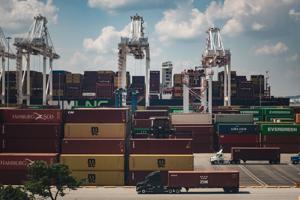
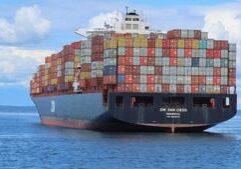
The Trump administration has begun returning $166 billion in tariff refunds, launching a new portal for U.S. importers to claim their money back, but consumers who paid higher prices on imported goods are unlikely to see a cent.
President Donald Trump called the court-ordered refunds “a travesty,” writing on social media recently that “handing over 159 billion dollars in tariff refunds to people who have been ripping off our Country for years is unexplainable.”
Although Trump said $159 billion was at issue, Customs and Border Protection has put the figure at $166 billion, plus interest, in court records.
The Supreme Court ruled 6-3 in February that Trump exceeded his authority by using the International Emergency Economic Powers Act to impose tariffs, ordering the refunds. A March The Center Square Voters’ Voice Poll found that about 42% of voters say American consumers primarily bear the cost of tariffs, while just 12% think foreign countries pay, and by law, the refunds go only to the businesses that imported the goods, not the consumers who absorbed the costs through higher retail prices.
The Yale Budget Lab, a nonpartisan policy research center, previously estimated that the Section 122 tariffs would mean a loss of between $600 and $800 for the average U.S. household.
“Due to the way the tariffs were collected, the legal recipient of most refunds will be the U.S.-based firm that physically paid the tariff at the time of importation,” said Phillip Magness, a senior fellow at the Independent Institute, a nonprofit research organization. “Many of these firms have passed through the burdens of their tariffs onto their clients and onto U.S. consumers in the form of higher prices. Consumers will not realize the full relief of court-ordered refunds even though they incurred the burdens through higher prices that they already paid.”
Chief Justice John Roberts wrote the majority opinion, joined by Justices Neil Gorsuch and Amy Coney Barrett, both Trump appointees, along with liberal Justices Sonia Sotomayor, Elena Kagan, and Ketanji Brown Jackson. Justices Clarence Thomas, Brett Kavanaugh, and Samuel Alito dissented. Roberts wrote that the Constitution gives Congress alone the power to impose tariffs during peacetime and that Congress never clearly delegated that authority to the president under IEEPA. Trump has called the ruling “an unnecessary and expensive slap in the face” to the United States.
CBP launched Phase 1 of its refund system on April 20. U.S. Court of International Trade Judge Richard Eaton, who oversees the refund process, said approximately 21% of total entries subject to IEEPA duties have been accepted for processing, and roughly 3% have already been liquidated and are in the active refund stage, with disbursements flowing through the U.S. Department of the Treasury. CBP anticipates issuing the first refund on or about May 11. Previously, more than 26,000 importers, representing 78% of tariff payments, had registered with CBP for electronic refunds. CBP officials told the court the first phase could process about $120 billion in refunds.
Importers are encountering problems accessing the system, including long wait times to reset usernames and passwords and confusion identifying the correct importer to file a claim. CBP told the court it will issue updated guidance, including updates to its frequently asked questions page.
At least two major companies, FedEx and UPS, have said they will refund customers. Others have not. In March, an Illinois man filed a class-action lawsuit against warehouse retailer Costco seeking consumer refunds, arguing that “the truly injured parties possess no direct avenue for redress.” Costco is expected to respond in June to the lawsuit. Costco CEO Ron Vachris said on an earnings call earlier this year that, if the company receives tariff refunds, “our commitment will be to find the best way to return this value to our members through lower prices and better values.”
Hours after the Supreme Court ruling, Trump imposed a 10% global tariff under a separate statute, Section 122 of the Trade Act of 1974. That tariff now faces its own legal challenge in the U.S. Court of International Trade. The administration has also been working to rebuild its tariff framework using Section 301 of the Trade Act, which allows the president to impose tariffs after investigating specific trade issues. Hearings under that process are set for May 5, and new tariffs could be implemented as early as July. Those rates could be higher than the existing 10% global import duty Trump put in place after the Supreme Court ruling.
Magness said the administration’s legal maneuvering has no modern precedent.
“Trump’s attempts to shoehorn his tariffs under different sections of trade law are unprecedented in the modern era,” he told The Center Square. “Past uses of Section 301 have generally followed a more conventional approach where tariffs are initiated on an industry-by-industry basis, as opposed to part of a concerted effort to reconstruct a tariff that the courts struck down under a different law.”
Magness compared the strategy to former President Joe Biden’s efforts to restore student loan forgiveness after courts blocked his initial program, saying both involved searching other statutes for authority following an initial legal defeat.
“Much like Trump’s strategy after the ruling, Biden scoured other statutes for loopholes to reinstate loan forgiveness, and faced similar court challenges to each subsequent measure,” Magness said.



Chance Showers And Thunderstorms
Latest News Stories

Pritzker unveils Illinois LGBTQ hotline amid debate over transgender athletes

WATCH: Trump ends funding for cashless bail policies, hedges on Guard deployment to Chicago
Hochul pushes back on Trump’s cashless bail funding threat
Education Department finds GMU Violated Title VI
Redistricting opponents immediately appeal to CA voters
Former Transportation Secretary urges state taxpayer funding for Chicago transit
Illinois quick hits: Education tax benefits available; Giannoulias orders license plate reader to shut off access to CBP
WATCH: Trump order withholds funds over no-cash bail policies like Illinois’
Trump eyes First Amendment showdown with order to prosecute flag burning
Trump strikes positive tone with South Korean president
House Oversight Committee to investigate D.C. police over crime data
Twenty years later, Katrina still among Atlantic’s most deadly, costly