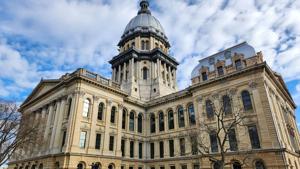
Illinois lawmaker warns medical records bill could delay care
(The Center Square) – State lawmakers are clashing over an Illinois proposal that would restrict how certain sensitive medical information is shared, with supporters arguing it protects patient privacy and critics warning it could jeopardize care.
House Bill 5295, also known as the Reproductive Health Records Privacy Act, would require health providers to segregate records related to abortion and gender-affirming care and limit their disclosure – particularly to out-of-state entities.
During floor debate, bill sponsor state Rep. Mary Beth Canty, D-Arlington Heights, said the measure is designed to shield patients from legal risks in other states.
“Not all medical treatment is treated the same across states,” Canty said. “Some states criminalize certain types of medical treatment… and here in Illinois, we believe that people should be safe to receive the care that they choose to receive.”
Canty said records would be automatically segregated, with patients able to release them if they choose, adding the restricted information is “not medically necessary” and that abortion-related complications could be treated as a miscarriage.
But opponent, state Rep. Bill Hauter, R-Morton, a physician, argued the proposal could lead to incomplete medical records and potential safety risks.
“We rely, as medical professionals, on the medical record to be complete and accurate and private,” Hauter told The Center Square. “To say that this information is unimportant… ignores real-world scenarios where it could be critical to patient care.”
On the House floor, Hauter pressed Canty on whether withholding information could delay diagnosis or treatment, particularly in emergency situations.
“How about an emergency department for an unconscious patient?” Hauter asked. “Wouldn’t it be vital to see the complete medical record of the patient?”
Canty responded that such patients would be treated regardless and reiterated that the restricted information would not be necessary for care.
Hauter disagreed, pointing to scenarios involving complications from abortion medication or undisclosed medical history.
“We already have privacy laws that protect every part of a patient’s record. You can keep it private without removing it from the medical record,” said Hauter. “It’s very difficult – if not impossible – to fully segregate this information in an electronic medical record, including medications, prior history and physician notes.”
As the bill advances, Hauter also questioned the motivations behind the proposal, pointing to political considerations at the executive level.
“He wants something he can show – ‘I did this’ – to advance his agenda. It doesn’t matter if it’s constitutional or workable or even implemented. He wants to sign it and campaign on it.”
Hauter also raised concerns about how the proposal could affect communication between medical professionals, including whether doctors could face limits on verbally sharing relevant patient information during treatment.
“Are you going to limit the free speech of healthcare professionals,” said Hauter. “If a patient tells me something in the course of care and I communicate that to another provider because it’s medically necessary, am I no longer allowed to mention it?”
The measure has passed the Illinois House and is now in the Senate for consideration.






Slight Chance Showers And Thunderstorms then Chance Showers And Thunderstorms
Latest News Stories

U.S. rep.: Mexico still not delivering water to South Texas, despite claims

Supporters say will storage option would streamline judicial process

Dallas Fed: Geopolitical conflicts creating uncertainty for U.S. oil and gas industry
Illinois Quick Hits: Pritzker pushes for E15

Lincoln-Way West Blanks Rival Lincoln-Way Central 10-0 in WJOL Tournament

Southside (AL) Outlasts Lincoln-Way West 6-4 Despite Howard’s Power Surge

Manhattan School District Adopts BoardBook Premier to Digitize Meetings and Enhance Public Transparency

Local Farmer Pitches Farmland Preservation Program to Combat Will County Industrialization

Trump addresses nation on Iran strikes; signals conflict nearing end

IL biometrics privacy reforms apply to past cases, too: Appeals court

Artemis II heads to the moon with first crewed mission since 1972

Pro-life org to Trump: Taxpayers should not be forced to fund killing of unborn children
Birthright citizenship advocates confident in SCOTUS hearing

College funding bill draws dissent from big Illinois universities