Trump tells small business owners tariffs ‘aren’t high enough’
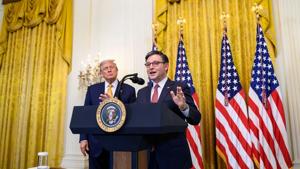
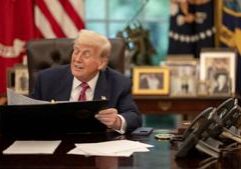
President Donald Trump told a group of small business owners Monday that tariffs should be higher, even as polling is mixed on the issue.
“You actually said thank you for the tariffs, but the tariffs really aren’t high enough in my opinion,” Trump said at a White House Small Business Summit held during National Small Business Week.
The comments come as the administration is processing about $166 billion in court-ordered tariff refunds while also preparing for a new round of higher tariffs as early as July. Those tariffs would be implemented under Section 301 of the Trade Act of 1974, which allows the president to impose duties following investigations into unfair trade practices. Hearings on the proposed measures are scheduled for May 5.
A survey conducted by Echelon Insights for Advancing American Freedom — an advocacy group founded by former Vice President Mike Pence — found that 46% of small business owners somewhat or strongly oppose Trump’s tariffs, compared to 41% who support them. About 42% said tariffs have increased the cost of goods needed for their businesses. The survey was conducted March 4-11.
A separate April survey by the National Federation of Independent Business found a more favorable split, with 53% of small business owners favoring the tariffs to some degree and 29% opposed. However, 56% of respondents in the same survey said tariffs have negatively impacted their operations, suggesting that support for the policy does not always translate to positive business outcomes. Of those negatively impacted, 78% reported higher prices for supplies or inventory.
Support for tariffs remains strong among Trump’s political base. A survey of attendees at the Conservative Political Action Conference in late March found 91% backed the policy, according to a McLaughlin & Associates poll. In contrast, a January Pew Research Center survey found that 60% of Americans overall disapprove of tariff increases.
Some Republican lawmakers have also raised concerns. During an April hearing of the House Ways and Means Committee, Rep. Max Miller, R-Ohio, told U.S. Trade Representative Jamieson Greer that the policy is hurting smaller firms that cannot pass higher costs on to consumers.
“This tariff policy isn’t working for them,” Miller said. “It is not a net positive. It is a net negative.”
Greer defended the administration’s approach, pointing to a 24% decline in the U.S. goods trade deficit between April 2025 and February 2026 compared to the same period a year earlier, as well as record exports of $315 billion in February 2026.
Businesses across multiple industries have submitted comments ahead of the May 5 hearings urging restraint. Ford asked that any new tariffs not be layered on top of existing ones, while Trek Bicycle warned that broad duties would raise costs for both businesses and consumers. The National Corn Growers Association called for duty-free treatment of agricultural inputs.
One ongoing concern for businesses is the lack of a formal exclusion process under Section 301. A Congressional Research Service report highlighted uncertainty over whether the Office of the U.S. Trade Representative will create a new mechanism for exemptions in current or future tariff actions.
The White House has defended the policy’s broader economic impact.
“In the past year, President Trump has used tariffs to renegotiate broken trade deals, lower prescription drug prices, cut our trade deficit, and secure trillions in investments to reshore manufacturing,” said White House spokesman Kush Desai.
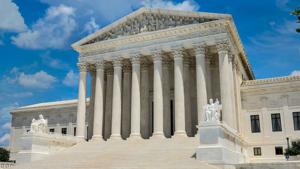
Legal challenges continue to shape Trump’s use of tariffs. In February, the Supreme Court ruled 6-3 that Trump exceeded his authority by using the International Emergency Economic Powers Act to impose tariffs. A federal trade court later ordered about $166 billion in refunds to the importers who paid the duties. Hours after the Supreme Court ruling, Trump imposed a 10% global tariff under Section 122 of the Trade Act of 1974, which is now being challenged in the U.S. Court of International Trade.
Public opinion remains divided on who ultimately bears the cost of tariffs. A Center Square Voters’ Voice Poll conducted in March found that 42% of voters believe American consumers primarily pay for tariffs, while 12% say foreign countries bear the cost. The Yale Budget Lab estimated that the Section 122 tariffs could cost the average U.S. household between $600 and $800 per year.
Phillip Magness, a senior fellow at the Independent Institute, said the economic effects may become more visible in the coming months.
“Not all have made the connection yet that tariffs are tantamount to a tax increase on affected goods,” Magness previously told The Center Square. “I suspect this connection will become more pronounced as the election approaches.”





Mostly Sunny
Latest News Stories
Meeting Summary and Briefs: Will County Board Legislative Committee for October 7, 2025
Parents, Mayor Raise Concerns Over Special Education Services at Manhattan 114 Board Meeting

Manhattan Awards Over $1.3 Million in Bids for Major Water Main Upgrades
Will County Board Committee Passes Contentious ‘Live and Work Without Fear’ Resolution on 4-3 Vote
Will County Awards $10.4 Million Contract for Bell Road Widening in Homer Glen Area

Manhattan Township to Set Solar Farm Rules Amid Concerns with Area Projects
Meeting Summary and Briefs: Will County Public Works & Transportation Committee for October 7, 2025
Meeting Summary and Briefs: Will County Board Finance Committee for October 7, 2025
Meeting Summary and Briefs: Will County Board Capital Improvements & IT Committee for October 7, 2025

Jackson Township Board Discusses High-Speed Rail Uncertainty and Northpoint Development

Southwest falls short on list of great cities to drive

Govt shutdown predicted to drag on after funding bill fails for 8th time in Senate