Bill preventing illegal immigrants from driving also impacts state voter ID laws
Four Republican U.S. senators are pushing a bill that would penalize states that issue driver’s licenses, commercial driver’s licenses, or personal identification cards to migrants illegally residing in the country.
“Since many illegal immigrants do not speak English and cannot read road signs, these drivers make roads less safe for the law-abiding public,” Sen. John Barrasso, R-Wyo., the bill’s main sponsor, said.
“While Wyoming already prohibits illegal immigrants from getting driver’s licenses, 19 states and the District of Columbia continue to issue personal and commercial driver’s licenses without verifying legal status.”
The No Licenses for Illegal Drivers or Truckers Act would slash a state’s annual federal highway funds by 10% if it does not verify the legal status of an applicant before issuing the person an ID or driver’s license.
The federal government would then redirect those withheld funds to states that are in compliance.
“We must defund woke sanctuary states who continue to put illegal aliens in the driver’s seat and Americans in the back seat,” Sen. John Cornyn, R-Texas, a cosponsor of the bill, said.
“This legislation puts Americans first and keeps our roads safe by not only cutting federal highway funding for any state that allows illegal aliens to obtain a state-issued or commercial driver’s license but also redirecting those dollars to states like Texas that actually enforce the law.”
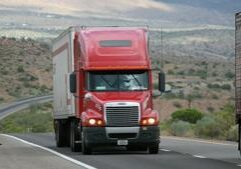
The legislation advances the Department of Transportation’s efforts to address a slew of deadly vehicular accidents caused by migrant semitruck drivers – many of whom had resided in the country illegally – who could not read English road signs.
Some states, such as California and New York, have resisted the DOT’s reform efforts, which include English language proficiency tests for all commercial drivers.
Though the No Licenses for Illegal Drivers or Truckers Act is marketed as legislation focused on road safety, its targeting of personal IDs as well as driver’s licenses also addresses Republicans’ election security concerns.
The Republican party fears that the relative laxness of many states’ voter identification requirements enables or could enable widespread election fraud.
Only 36 states require prospective voters to present personal ID to vote, and even those states usually allow people to vote without an ID so long as they sign affidavits or provide mere proof of residency.
The No Licenses for Illegal Drivers or Truckers Act would impact California, Colorado, Connecticut, Delaware, the District of Columbia, Hawaii, Illinois, Maryland, and Massachusetts, Minnesota, Nevada, New Jersey, New Mexico, New York, Oregon, Rhode Island, Utah, Vermont, Virginia, and Washington.
All of those states allow undocumented residents to obtain drivers’ licenses, which can often be used as ID for voting purposes.
Though election officials are supposed to verify voters’ citizenship status on the backend, illegal votes are sometimes already counted before ineligible voters are identified, which happened in Michigan at least 15 times in 2024.
Democrats argue that instances of illegal voting are rare and that stronger proof of citizenship requirements can disenfranchise rural and low-income Americans.
Citing this reason, not a single Senate Democrat supported the SAVE America Act, a House-passed Republican bill that has essentially died in the Senate.
If it reaches the Senate floor for a vote, the No Licenses for Illegal Drivers or Truckers Act will likely receive similar Democratic opposition.




Mostly Sunny
Latest News Stories

Administration presses law school accreditor over DEI policies

Speaker’s response to staffer assault complaint draws questions on his own conduct
Republicans’ $95B budget resolution passes House

$1.15T Pentagon funding authorization bill passes U.S. House
Lawmakers debate GLP-1 regulation, expansion
Illinois news in brief: Ex-Big Ten Network staffer gets 2 years in embezzlement case

New quantum tenant gets $1.8 million in tax credits
Proposal would term-limit Supreme Court justices without amendment

Pritzker says felon was unlucky to land in his back yard

Chicago council approves ballot question to recoup costs from ICE operations
Anti-ICE ‘extremist’ charged with arson in attack outside NYC federal building

World Cup events safe; terrorism, antisemitism concerns don’t materialize