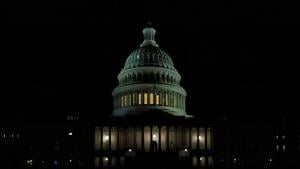
Court strikes down Trump’s backup tariffs as unlawful
A federal trade court struck down President Donald Trump’s latest global tariff on Thursday, ruling that the import taxes were unauthorized by law and ordering refunds for the businesses that brought the lawsuit.
The U.S. Court of International Trade ruled 2-1 that Trump overstepped his authority by invoking a never-before-used 1974 trade law to impose a 10% global import duty, continuing a pattern of courts rejecting the president’s attempts to unilaterally raise taxes on imported goods without explicit congressional authorization.
The Liberty Justice Center said it was the fourth major legal defeat for Trump’s tariff agenda since he took office.
Trump invoked the 1974 law hours after the Supreme Court’s February ruling, but the court found he misapplied it, relying on trade and current account deficits rather than the specific balance-of-payments measures Congress had in mind when it wrote the statute five decades ago.
The president criticized the ruling late Thursday during a stop at the Reflecting Pool.
“We had two radical left judges that voted against it. So nothing surprises me with the courts, nothing surprises me,” Trump said. “So we always do it a different way. We get one ruling, and we do it a different way. We’re taking in hundreds of billions of dollars from tariffs, and we’re taking it away from countries, frankly, that have ripped us off for years now.”
The court found that Trump’s proclamation failed to identify the specific type of economic crisis the law requires, ruling that his reliance on trade and current account deficits did not satisfy the 1974 statute’s terms.
“The President enjoys no inherent authority to impose tariffs during peacetime,” the court wrote, citing the Supreme Court’s February ruling that struck down Trump’s previous tariffs.
“The United States has a trade deficit, not a balance-of-payments deficit, and does not have international payments problems,” said Jeffrey Schwab, senior counsel at the Liberty Justice Center, which represented small businesses in the case. “The president cannot impose these tariffs under Section 122.”
The Liberty Justice Center filed the lawsuit on behalf of Burlap & Barrel, a New York-based online spice retailer, and Basic Fun, a Florida-based toy company, the two companies together facing more than $750,000 in tariff costs over the 150-day period covered by the law. A coalition of Democrat-led states filed a separate challenge, but most were dismissed by the court for lack of standing.
“This ruling is a major victory for small businesses like ours that depend on fair and predictable trade policy,” said Ethan Frisch, co-founder and co-CEO of Burlap & Barrel.
Phillip Magness, a senior fellow at the Independent Institute, said the legal battle isn’t over.
“The Trump administration will likely appeal their loss on the Section 122 tariff case to the Federal Circuit and eventually seek another hearing before the Supreme Court,” he told The Center Square. “But that road is becoming increasingly difficult. The Supreme Court has already ruled against the administration in the IEEPA tariff case, and the Court of International Trade is showing growing impatience over delays in refunding unlawfully collected tariffs.”
American businesses have paid about $8 billion in Section 122 tariffs since March, on top of $166 billion collected under Trump’s previous tariff regime before the Supreme Court struck it down, according to the We Pay the Tariffs coalition. The ruling entitles the three plaintiffs to refunds of duties already paid, but the coalition warned the process could prove difficult, noting that IEEPA refunds launched last month are already being absorbed by tariff-related debts for many businesses.
A dissenting judge argued the majority invented a measurement standard from statistical tables in legislative history and ruled on grounds neither party had raised, giving the administration procedural arguments to pursue on appeal.
Trump is also moving forward with trade investigations under Section 301 of the Trade Act of 1974, which could form the legal basis for a new round of tariffs.
As midterm elections approach, voters are increasingly skeptical of Trump’s tariff agenda. The Center Square Voters’ Voice poll in March found that 42% of voters say American consumers primarily pay the cost of tariffs, while just 12% believe foreign countries bear the burden. Total presidential tariffs paid since March 2025 have reached $283 billion, according to trade data.

Sunny
Latest News Stories

Iran conflict, refinery disruption play roles as Illinois gas price passes $4.50.
Rates hold steady ahead of Fed chair transition
Supreme Court skeptical of Syria, Haiti temporary protected status

Whitmer announces 40 jobs in Adrian; Trump administration claims credit

EXCLUSIVE: Minnesota sued over social media warning requirement

Murrill: Seismic decision vindicates congressional redistricting
Supreme Court limits Voting Rights Act in Louisiana redistricting battle
Supreme Court unanimously sides with pregnancy center
Supreme Court hears challenges to Haiti, Syria TPS

Illinois Quick Hits: Ex-East St. Louis librarian sentenced for fraud, theft
Candidates vie for Georgia’s attorney general post
Lincoln-Way Central Auxiliary Field to Get $463,875 Artificial Turf Upgrade