U.S. economy adds 115,000 jobs in April
The U.S. economy added 115,000 jobs in April, about double what economists had forecast, while the unemployment rate held steady at 4.3%, the Bureau of Labor Statistics reported Friday.
Health care led job gains, adding 37,000 positions, followed by transportation and warehousing, which gained 30,000 jobs, and retail trade, which added 22,000. Federal government employment continued to shrink, falling 9,000 in April. Since October 2024, the federal workforce has declined by 348,000, a drop of 11.5%.
White House spokesman Kush Desai called the report a sign of economic strength.
“The April jobs report smashing expectations thanks to robust private-sector growth is yet another sign that the American economy remains on a solid trajectory under President Trump,” he said.
March’s payroll figure was revised upward to 185,000, stronger than the 178,000 initially reported. So far in 2026, the economy has averaged 76,000 new jobs per month, up sharply from an average of 10,000 per month in 2025.
Average hourly earnings rose 3.6% over the past year, a figure that may be outpaced by inflation.
Heather Long, chief economist at Navy Federal Credit Union, noted the dynamic Friday.
“The bad news = Inflation is about to eat up wage gains. Wage growth: 3.6% in past year –> That’s likely to be eaten up by April inflation of ~4%.”
The labor force participation rate edged down to 61.8%, its lowest level since late 2021.
Orphe Divounguy, an economist with Zillow and the co-host of The Center Square’s Everyday Economics podcast, said in a post that the “labor market is no longer deteriorating. That matters.
“Payrolls are still rising and unemployment held at 4.3%. But the 3-mnth payroll average is just 48,000. And the labor force declined again. Involuntary part-time work also jumped by 445,000. Weakness is showing up in hours and real wages before unemployment.”
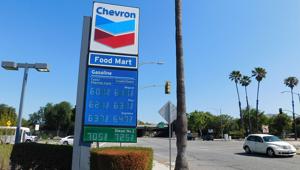
The report comes as the U.S. wages a military campaign against Iran that has pushed gasoline prices to a national average of $4.55 a gallon, up from $3.15 a year ago, according to AAA.
Bill Adams, chief U.S. economist at Fifth Third Commercial Bank, said the drop signals an emerging challenge for employers.
“Assuming the U.S. economy navigates the downside risks from the Iran War, it will likely confront a shortage of jobseekers by late this year,” he said.
The number of workers employed part-time for economic reasons – those who wanted full-time work but couldn’t find it – rose by 445,000 to 4.9 million in April.
The next employment report, covering May, is scheduled for release June 5.






Partly Sunny
Latest News Stories

Major nationwide Tren de Aragua crackdown, more than 80 firearms seized

Lincoln-Way West Dominates Lockport in 4-0 Shutout Victory

Illinois Quick Hits: State taxpayers to cover student loan debt for civil engineers

Fitzpatrick, Houlahan, Kelly, Smucker back bipartisan immigration reform bill

Lawmakers grill Hegseth on Iran conflict, $1.5T budget request
Trump confirms Makary out at FDA

Trump to ‘be thinking’ about red line in Iran ceasefire

Detroit border agents seize greatest volume of drugs at northern border

WATCH: Ex-rep sues Pritzker, Illinois over race-based congressional map

Lawmakers tussle over impacts of ‘equitable’ school funding in Illinois

Illinois Quick Hits: $42.6M UIS student library on schedule

An ‘arms race’ for pay at elite, tax-exempt colleges