Lawsuit: IL state VRA unconstitutionally lets Dems divide voters by race
Days after the U.S. Supreme Court declared states cannot use race to decide how to draw legislative districts, a new lawsuit is seeking to use that ruling to win a court order striking down an Illinois state voting law that Democrats have used to justify relying on race to draw Illinois’ legislative districts.
On May 8, conservative election integrity organization, the Public Interest Legal Foundation, filed suit in Springfield federal court against the state of Illinois, asking the court to declare the law known as the Illinois Voting Rights Act unconstitutional.
In the lawsuit, the Public Interest Legal Foundation asserts the Illinois VRA all but forces state lawmakers to use race when deciding how to carve up the state and its population into legislative districts, including those for U.S. House and the Illinois state House of Representatives and state Senate.
The lawsuit claims this practice violates the U.S. Constitution’s 15th Amendment and the federal Voting Rights Act, under which states are forbidden from discriminating on the basis of race in deciding how gets to vote and how their representative district boundaries are drawn.
However, the lawsuit further notes that Illinois Democrats, including Gov. JB Pritzker, have not just been compelled to draw district boundaries in ways that discriminate on the basis of race. The lawsuit asserts Illinois Democrats have intentionally done so, with the goal of artificially creating legislative districts that work to encourage and ensure the election of state and federal lawmakers who are black, Latino or of other preferred, particular races.
The lawsuit, for instance, noted that Pritzker bragged of the race-based outcomes when he signed the state’s most recent legislative maps in 2021.
They quoted from a press release issued by the governor’s office at the time, in which Pritzker said: “The Illinois Voting Rights Act of 2011 ensures redistricting plans are crafted in a way that preserves clusters of minority voters if they are of size or cohesion to exert collective electoral power. The maps signed into law today meet those requirements to adequately preserve minority representation and reflect the diversity of our state,”
In their complaint, PILF noted: “The press release explicitly adopted racial purposes behind redistricting guidelines, namely sorting and allocating political power on the basis of race.”
And that, the complaint asserted, violates “the Fifteenth Amendment’s prohibition of state action for which any racially discriminatory intent or racial means are used.”
The lawsuit does not seek a court order requiring the state of Illinois to redraw its state and federal district map.
However, the lawsuit seeks to pull the plug on the state law Democratic lawmakers used to justify the use of race in drawing the current map and barring them from using that law in the future.
In support of the lawsuit, the Public Interest Legal Foundation pointed to the April 29 U.S. Supreme Court decision in the case known as Callais v Louisiana, in which the court, by a 6-3 margin, explicitly declared the U.S. Constitution forbids the practice known as racial gerrymandering.
Further, the court’s majority declared racial minorities do not have a right under the federal VRA to elect representatives who are of the same race or a preferred race. Rather, the court declared, black, Latino and other racial minority voters have the same voting rights as anyone else.
In response to the ruling, a series of Republican states, primarily in the heavily Republican dominated southeast, have moved to redraw their states’ congressional maps to eliminate at least some of a dozen Democrat-leaning districts that Republicans say they were forced to draw under the prior interpretation of the federal VRA, with Democrats using voters’ race to secure seats in states that voted overwhelmingly Republican.
Meanwhile, Republicans have noted, their voters in Democrat-led states were afforded no such luxuries, often being limited to substantially fewer congressional seats, if any, despite often accounting for 40% of a state’s voter base.
In Illinois, for instance, Republicans hold just three of the state’s 17 congressional seats, despite winning more than 40% of the vote routinely, thanks to a congressional map widely considered one of the most egregious examples of gerrymandering in the U.S.
As it became increasingly clear the Supreme Court would use the Callais case to overturn the prior intepretation of the VRA, Illinois Democrats, led by state House Speaker Emanuel “Chris” Welch, launched a legislative effort to either pass a new, more stringent version of the Illinois VRA or even enshrine those race-based districting criteria into the state constitution.
In announcing the proposed state constitutional amendment, Welch stated the purpose of the amendment would be to somehow use the state constitution to sidestep the Supreme Court’s ruling in Callais and continue to use race to draw congressional and state legislative districts.
While the Democratic supermajority in the Illinois state House approved the proposed amendment, the measure stalled in the state Senate, where Senate President Don Harmon, D-Oak Park, said more time was needed to “dissect” the Callais decision and study how Democrats could “find a path forward” that would allow them to continue using race to draw district boundaries.
In their lawsuit, however, the Public Interest Legal Foundation says the Callais decision means the state cannot use state law to do what the Supreme Court has declared they cannot do.
The lawsuit was filed on behalf of named plaintiff Jeanne Ives, a conservative Republican former state lawmaker and one-time candidate for governor from DuPage County in Chicago’s western suburbs.
The lawsuit asserts Illinois’ reliance on the state VRA to use race in drawing district boundaries has “abridged and/or denied” the voting rights of Ives and other Illinoisans by “intentionally giv(ing) greater value to the votes of some racial groups, thereby discounting the value of votes of those groups not benefited.”
The state has not yet responded to the lawsuit by Ives and the Public Interest Legal Foundation.




Showers And Thunderstorms
Latest News Stories

Feds sue California over emission standards for trucks
Illinois quick hits: ‘Lawsuit inferno’ bill takes effect after Pritzker signed 267 measures Friday

WATCH: UW-authored study on surgery times contradicts CMS basis for reimbursement cuts

State defends gun ban district court ruled unconstitutional

Trump aiming for ceasefire, world awaiting news from Putin summit
Pritzker acts upon 269 bills, vetoes 2, signs ‘lawsuit inferno’ measure

Report: average American to receive $3,752 tax cut in 2026 due to OBBBA

Republican, Dem work to prevent deportation of entrepreneur
Nevada superintendent says ICE won’t enter schools
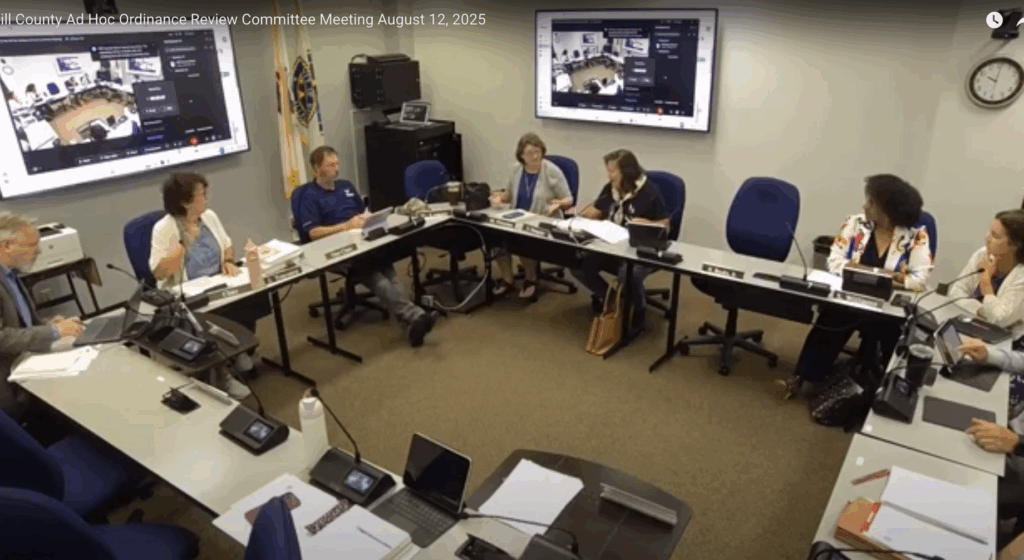
Will County Updates Solid Waste Ordinance, Increases Fines and Reporting to Landfill Committee
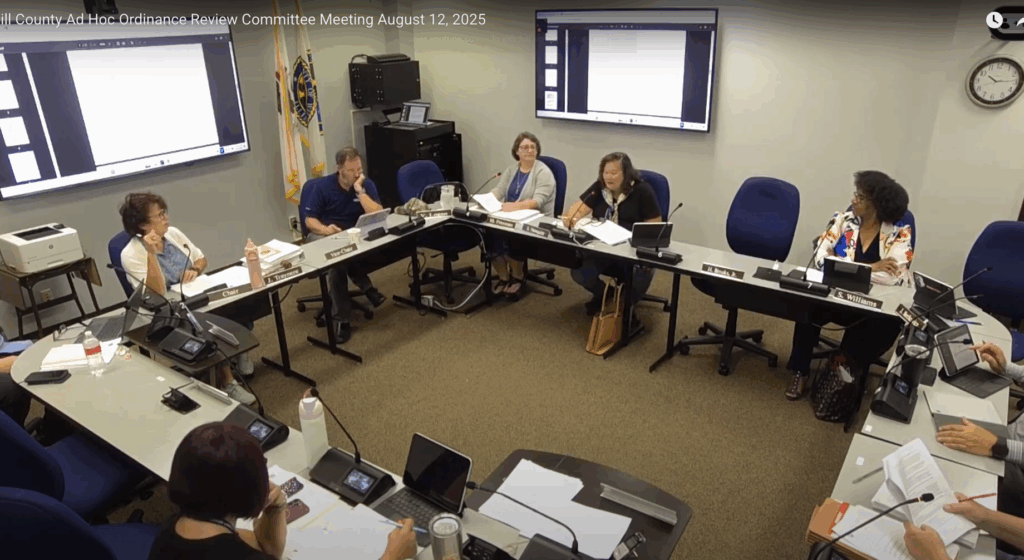
Citing Liability Concerns, Will County Committee Postpones Vote on Septic System Ordinance
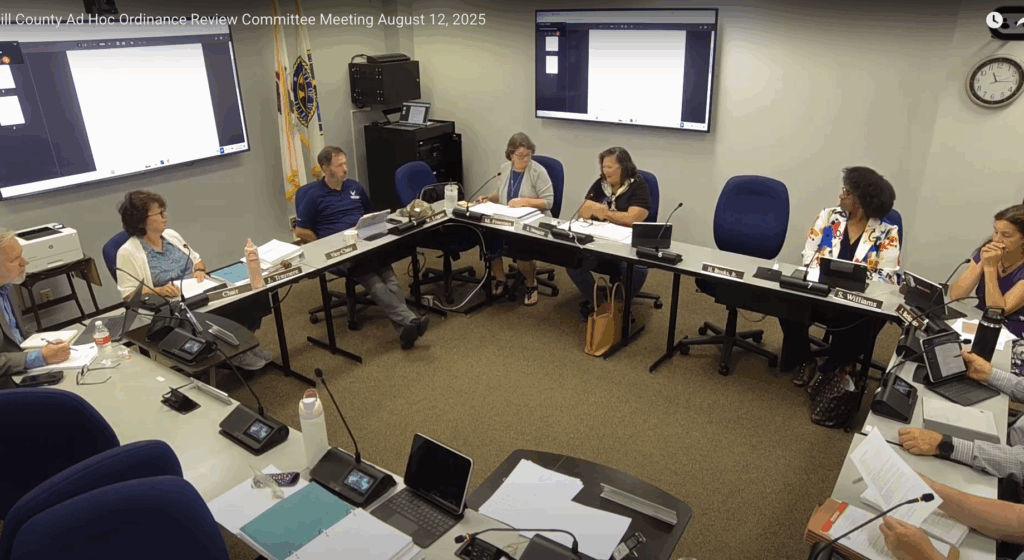
Will County Moves to Repeal Obsolete 1972 Fire Hydrant Ordinance