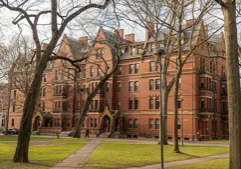
An ‘arms race’ for pay at elite, tax-exempt colleges
Top private nonprofit universities that receive government funding pay some of their top leaders millions of dollars and one even received a $20 million longevity bonus, an investigation by The Center Square found.
That is despite political leaders and others questioning the way the schools are funded and their political policies.
President Donald Trump has repeatedly threatened to revoke the tax-exempt status of the country’s elite private universities, most recently alleging that some harbor “radical left” policies and stoke antisemitism.
Others have long questioned the fairness of federal policies that allow the schools to skirt tax liabilities while they amass tens of billions of dollars in assets, develop patented technologies with government support that are worth hundreds of millions and pay their leaders handsomely.
“We’re sort of in a race – almost like an arms race – in terms of presidential compensation,” said James Finkelstein, professor emeritus of public policy at George Mason University, a public research university in Virginia.
His research found that over a recent 10-year period, the inflation-adjusted pay for college leaders has increased more than 50 percent.
Further, colleges can obscure the total compensation of their top leadership with agreements that delay part of their salary payments until the end of their tenures. The schools have purportedly used it as a retention tool to keep their presidents from going elsewhere, but it can also hide their true salaries for years.
The Center Square obtained a database of all nonprofits what received government money and used it to analyze the salaries of top University leaders.
The $20 million payout
The year Amy Gutmann left her post as president of the University of Pennsylvania — ending in 2022 — the university paid her a total of nearly $23 million, according to nonprofit filings reviewed by The Center Square.
That included a base salary of about $1.6 million, a bonus of $1 million, and a deferred compensation payment of more than $20 million that had accumulated over the course of her 18-year tenure.
Government grants to the university exceeded $1 billion in a recent year, records show.
Such deferred compensation arrangements were developed in the private sector, Finkelstein said, where they have acted as so-called “golden handcuffs” to discourage executives from leaving their jobs and as a tax benefit for the corporations.
That same tax benefit doesn’t exist for nonprofits, so “the only benefit is it doesn’t have to be reported until it’s paid,” Finkelstein told The Center Square.
“The real reason is to obscure the annual compensation,” he said.
The University of Pennsylvania did not respond to a request to comment for this article. Gutmann could not be reached for comment.
Gutmann’s successor, Dr. Larry Jameson, was paid more than $5 million in the most recent year that the university has reported to the government. His compensation was routinely higher than Gutmann’s while she was president as he helped oversee the university’s multi-hospital health system.
University hospital pay
University hospital executives are often paid more than presidents, according to The Center Square’s review of nonprofit data. For example, in 2023 when Dr. Robert Grossman was the chief executive of New York University’s health system and dean of one of its medical schools, he was paid more than $15 million.
Recent nonprofit filings reveal numerous examples of presidential pay that exceeds $1 million annually. Lee Bollinger at Columbia University was paid $4.4 million, and Carol Folt at the University of Southern California was paid $4 million.
Columbia receives more than $1 billion of government grants each year, and the University of Southern California gets more than a half billion.
Also among the highest-paid is Paula Wallace, the president and co-founder of the Savannah College of Art and Design, in Georgia. She was paid about $2.6 million in a recent year. Her compensation peaked in 2020 at about $5 million thanks to a hefty bonus.
Her husband, Glenn Wallace, is the college’s chief operating officer and has a salary of about $800,000.
Finkelstein, the public policy researcher, attributes the overall rise in university executive pay to bonuses that resemble those that are bestowed on successful athletic coaches, and to university governing boards that are stocked with members who make vast wages in private-sector jobs and are more amenable to high salaries.
“This notion that university executives should be compensated like their counterparts in the private sector, it distorts what the purpose of a university is,” he said. “We’re not a business.”
The universities pay federal payroll taxes but not most income and property taxes.
Federal lawmakers targeted high salaries at nonprofits in last year’s One Big Beautiful Bill Act by expanding a 21-percent excise tax on salaries that exceed $1 million. Previously, the tax was applicable to up to five top-paid employees, but the bill eliminated that limit and applies it to all employees earning that much.
Tax-exempt property
In August the Trump administration demanded a list of Harvard University’s patents that were supported by federal research grants as part of a review to determine whether they are sufficiently benefitting the public, as required by law. Harvard’s presidents have earned in excess of $1 million annually in recent years.
The university drew Trump’s ire earlier that year for refusing his demands to overhaul its policies, especially those that might give preference in hiring and admissions based on race and gender.
Other colleges capitulated, but Harvard refused. Trump responded by withholding more than $2 billion in research funding, which a federal judge later ruled was illegal.
Harvard received about $670 million in government grants in fiscal year 2024, according to The Center Square’s review of its most recent nonprofit filings. That was a 15 percent increase from 2020, when it received about $584 million.
Meanwhile, the school’s net assets have jumped to about $62 billion, a 28 percent increase during that same time frame.
And yet Harvard has repeatedly failed to meet the relatively meager requests from the city of Boston to help fund its public services.
For more than a decade Boston has asked nonprofits with sizable, tax-exempt property to voluntarily contribute money to city services — such as police and fire departments — that are funded by property taxes.
The city’s Payment In Lieu of Tax program requests about a quarter of what the nonprofits would pay in taxes if their properties weren’t exempt. And half of the amount can be paid in community benefits, such as free dental and legal services for residents the universities were already providing.
Boston’s total request for Harvard for the last fiscal year was about $14.6 million. It received community benefit credit for half of the amount and paid about $4 million of the remaining $7 million cash request, according to an annual city report.
Harvard has never met the full cash request, but it’s not alone. Boston University, which has the largest amount of tax-exempt property in the city, paid about $6 million cash of the $12 million sought by the city in the last fiscal year.
Harvard did not respond to a request to comment for this article.
Other large cities in the Northeast have implemented similar voluntary programs to offset property tax losses, but the idea has not spread widely to the rest of the country, said Matthew Putnam, a policy manager for the National Taxpayers Union.
“It’s pretty effective if the intention is just to address that property tax issue and the essential services that universities are using,” Putnam told The Center Square.




Showers And Thunderstorms Likely
Latest News Stories
No ethics reform in sight as ex-speaker’s scheduled prison term begins
Trump losing ground on economy, poll finds
Major tech company to cut H-1B visas amid Trump pressure, fee
US, India to hold new round of trade talks, with focus on energy
Johnson: Republicans ‘have plans’ to ‘fix’ Obamacare
Illinois House Speaker: ‘Mr. Trump, tear down this fence!’

Energy cost concerns loom as legislators look at policy changes
PJM exit: A price solution or power move?

Broadview, Illinois reduces ICE protest zone after ‘chaos,’ 15 arrests
Illinois’ ‘F’ grade leaves taxpayers on the hook for billions, watchdog says

Illinois quick hits: Chicago Jewish Alliance on peace developments; Blue Ribbon Schools announced
WATCH: Trump’s emergency Guard appeal denied; Fiscal Fallout reviews state salaries

Reforms prompt big money appeals in IL biometrics cases

Meeting Summary and Briefs: Will County Board Executive Committee for October 9, 2025