DEA warns fentanyl mixtures overwhelming overdose reversal drug
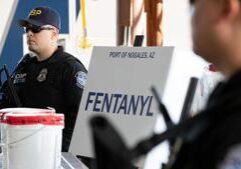
The U.S. Drug Enforcement Administration warned Americans Tuesday that fentanyl is increasingly mixed with a dangerous array of synthetic substances that can limit the effectiveness of naloxone, the standard overdose reversal drug, making the illicit drug supply more unpredictable and more lethal than ever.
Law enforcement and public health officials are seeing fentanyl combined with xylazine, medetomidine, nitazenes and cychlorphine – substances that either cannot be reversed by naloxone or require multiple doses to counter, the DEA said in a public safety advisory. Users typically have no way of knowing what is in the drugs they are taking.
The advisory arrives as the DEA and the Trump administration have been touting significant progress against fentanyl. Enforcement pressure drove the share of fentanyl pills containing a potentially lethal dose from 76% in fiscal 2023 to 29% in fiscal 2025, a result the agency has repeatedly cited as a win.
But the DEA’s own 2025 National Drug Threat Assessment warned that the declining purity trend “does not mean that street-level fentanyl is less dangerous,” pointing directly to adulteration as the compensating threat.
Congress is set to review a $3.6 billion DEA budget request for fiscal year 2027, part of more than $11.4 billion the Department of Justice is directing toward drug crimes – including $1.9 billion specifically targeting opioids such as fentanyl – as the agency now warns the threat is evolving faster than the progress it has claimed.
The DEA did not immediately respond to questions about what prompted the advisory, whether Mexican cartels are now involved in producing these combinations, or how the warning squares with the agency’s recent progress claims.
Xylazine and medetomidine are veterinary sedatives with no approved use in humans. Xylazine, known as “tranq,” has been linked to severe skin infections and wounds requiring amputation. Medetomidine, called “rhino tranq,” is 200 to 300 times more potent than xylazine, according to the DEA. Nitazenes are synthetic opioids developed in the 1950s that were never approved for human use; some variants are estimated to be 10 times more potent than fentanyl.
The DEA has identified 22 unique nitazene compounds since 2020, with suppliers introducing new ones each time existing compounds are scheduled.
Cychlorphine, named in Tuesday’s advisory, was flagged in a January 2026 public alert from the Center for Forensic Science Research and Education, a federally funded forensic research center, as a rising cause of fatal overdoses linked to confirmed deaths across eight states.
The center estimated cychlorphine to be about 10 times more potent than fentanyl. A November 2025 fatal overdose case in Illinois found cychlorphine alongside eight other substances – including multiple nitazene variants, cocaine, and alprazolam – illustrating how lethal these combinations can become, according to the CFSRE alert.
A pattern the center identified may help explain why cychlorphine is appearing more frequently. After China placed nitazene analogues under generic control in July 2025, positivity for nitazenes in fatal overdose cases declined – while cychlorphine positivity rose to fill the void, according to the CFSRE alert. The data suggests the illicit drug market is actively adapting to regulatory pressure, substituting newly emergent compounds as existing ones are controlled, according to the CFSRE alert.
As of the DEA’s most recent threat assessment, Mexican cartels had not been confirmed as producers of nitazene-fentanyl mixtures – that activity was traced to mid-level and street-level dealers purchasing from Chinese chemical suppliers online. Whether cartels have since expanded into these combinations is among the questions The Center Square put to the agency.
Overdose deaths have been declining. Provisional CDC data showed roughly 84,000 Americans died from drug overdoses in the 12-month period ending October 2024, down about 25% from the prior year, the largest single-year decline ever recorded.
The DEA urged the public never to take a pill not prescribed and dispensed by a licensed pharmacy, to assume all illicit drugs may contain fentanyl or other deadly additives, and to carry naloxone while understanding it may not fully reverse all substances present.






Partly Sunny then Chance Showers And Thunderstorms
Latest News Stories
Manhattan Park Board Rejects Site Plan Proposal, Halts Planning Over Cost Dispute

Board Denies Appeal for “Tiny Home” RV Living in Crete

Jackson Township Board Notified of Proposal for 800-Acre Data Center

JJC Board Censures Trustee Broderick Twice, Denies Request to Restore Good Standing

Will County Board Compromises on Mental Health Levy, Approves $10 Million After Debate

Green Garden’s Wildflower Farm Granted Second Extension for Rural Events Permit
Will County Board Rejects Proposed Tax Hike, Approves 0% Levy Increase in Contentious Vote
Will County Awards $10.4 Million Contract for Bell Road Widening Project
Regional Office of Education Highlights School Safety, New Learning Programs in Update
New Lenox Solar Farm Proposal Advances with Conditions, Following Village and Forest Preserve Input

Meeting Summary and Briefs: Will County Board for October 16, 2025
Will County Board Approves New 30 MPH Speed Limit for Frankfort Township Road