
Farmers call for fertilizer price transparency, domestic growth
Farmers and advocates on Tuesday called on Congress to implement transparency reporting requirements in fertilizer pricing.
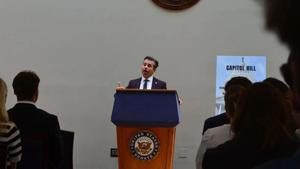
The U.S. Senate Agriculture, Nutrition and Forestry Committee held a hearing with farmers and advocates from across the country on rising fertilizer prices and supply chain solutions for the industry.
The advocates said farms have been struggling with fertilizer prices since before the U.S. conflict in Iran. Some farmers cited rising prices stemming from the conflict in Ukraine, which has kept prices high ever since 2022.
Andy Green, principal and senior advisor at Center Market Strategies, called for Congress to implement transparency requirements into fertilizer pricing. He said farmers are often unaware of what factors influence prices.
“More can be done and should be done on a bipartisan basis to enhance competition in the fertilizer sector,” Green said.
Trent Kubik, president of South Dakota Corn Growers, said consolidation of companies in the agriculture industry has yielded a negative overall effect for farmers. He said efficiency has declined while consolidation continues in the market, frustrating farmers.
“Fertilizer manufacturers are able to park barges of product and hold on to inventory,” Kubik said.
Kubik pointed to parts of the supply chain that he said do not work in favor of farmers. He said many areas of the supply chain are opaque and do not allow farmers to understand why fertilizer is priced a certain way.
Kubik called on Congress to pass the Fertilizer Transparency Act of 2026. The legislation would require the U.S. Department of Agriculture to publish weekly, rather than annually, market data on fertilizer prices from manufacturers.
“This legislation will make the market for key farm inputs more transparent and therefore represent a step toward making the market more competitive,” Kubik said. “It also may help to provide data that would aid analysis of whether market control has been used to limit the supply of fertilizer.”
U.S. Sens. John Thune, R-S.D., and Amy Klobuchar, D-Minn., said Congress needs to act on transparency requirements and investigating companies that have monopolies on the agricultural industry.
“There are a small number of manufacturers who have the lion’s share of domestic fertilizer production,” Thune said.
Joshua Westling, CEO of J. Westling & Co., touted his achievements in domestically manufacturing fertilizer. He called on Congress to invest in domestic fertilizer manufacturing to avoid problems with global supply chains.
“The faster strategic federal support becomes real and deployable, the faster new domestic capacity comes online three years from now,” Westling said. “This committee has the opportunity to help ensure that projects like ours move fast enough to matter.”
Kubik said he has not experienced a significant shift in purchasing prices due to the U.S. conflict in Iran, because he purchased before the conflict broke out. However, he said he is concerned about next year’s farming season due to the prolonged conflict.
“A lot of this stuff was in place and in [the] country long before the events around the world happened,” Kubik said. “We’re starting to get concerned about what do do as our crop is growing and need[s] more fertilizer, and as we look towards 2027, it’s a real concern.”






Partly Sunny
Latest News Stories

Major nationwide Tren de Aragua crackdown, more than 80 firearms seized

Lincoln-Way West Dominates Lockport in 4-0 Shutout Victory

Illinois Quick Hits: State taxpayers to cover student loan debt for civil engineers

Fitzpatrick, Houlahan, Kelly, Smucker back bipartisan immigration reform bill

Lawmakers grill Hegseth on Iran conflict, $1.5T budget request
Trump confirms Makary out at FDA

Trump to ‘be thinking’ about red line in Iran ceasefire

Detroit border agents seize greatest volume of drugs at northern border

WATCH: Ex-rep sues Pritzker, Illinois over race-based congressional map

Lawmakers tussle over impacts of ‘equitable’ school funding in Illinois

Illinois Quick Hits: $42.6M UIS student library on schedule

An ‘arms race’ for pay at elite, tax-exempt colleges