
Lawmakers tussle over impacts of ‘equitable’ school funding in Illinois
(The Center Square) – The evidence-based funding formula for public schools in Illinois, signed into law in 2017, was under the microscope during hearings last week. Lawmakers on both the left and right were critical of the policy’s success.
As lawmakers continue to contemplate state spending for the coming year, the Illinois State Board of Education is seeking to fully fund schools across the state.
The evidence-based funding formula, EBF, drew a new line in the state’s budget to bring “equitable funding” to schools statewide. Data from ISBE show target funding rates sit below what the law deems adequate for most school districts.
Democrats are seeking full funding in the coming budget, claiming more funding will lead to sought outcomes of the original law.
Matt Seaton from ISBE said that the funding formula may have implied less funds were needed for schools to reach equitable funding levels statewide.
“Every one of those proposals demonstrated that a $300 million investment annually for 10 years would not get us to 90% adequacy. It was always going to be a little more expensive. It’s perhaps the case that the introductory language that leads off the EBS statute was not revisited once we started running the numbers,” Seaton said.
Since 2017, $3.36 billion has been put toward the formula, and an additional $3 billion is required to reach the proposed adequacy target, according to Seaton.
Rep. Blaine Wilhour, R-Louisville, was critical of the spending, and questioned if the extra spending over the last decade has led to improved student outcomes.
“We need a baseline. You know, we can’t just continue to pump money into a system. You don’t get to do that in the private sector. If you keep pumping money into something and it’s not working, you’re going to get fired. You’re going to have to do something different. So as legislators on appropriations committee, I think that we need a real benchmark,” Wilhour said.
A small spat later ensued between Wilhour and chair of the committee, Rep. Will Davis, D-East Hazel Crest.
Wilhour suggested that the educational priorities of Illinois public schools may be different from those of other states, who spend less but achieve better outcomes.
Davis said Wilhour’s questions were not being asked to the right people.
“I think we all I think we all want to produce high quality students, but seems it to me some of the nuance of the questions you asked is that you’re asking folks at the State Board of Education to necessarily to answer questions that a local superintendent or his or her local building principal maybe should be answering,” Davis said.
Wilhour said his questions were relevant, as he believes the outcomes of the money they appropriate should be considered when deciding what to spend moving forward.
“We have seen tremendous increases in state-level funding, but it hasn’t translated into any sort of decreases for property tax funding either,” Wilhour said. “Should we just expect property taxes to increase exponentially for forever?”
Lawmakers have not yet made a decision for the funding formula, but will return to work this week in Springfield. They’ll continue to debate the state budget – and how much they plan to allocate for the coming year.




Showers And Thunderstorms Likely
Latest News Stories
JJC Board Meeting Halted by Lack of Quorum; New Student Trustee Sworn In
Jackson Township Outlines Spring Community Outreach, Prepares for Route 66 Centennial
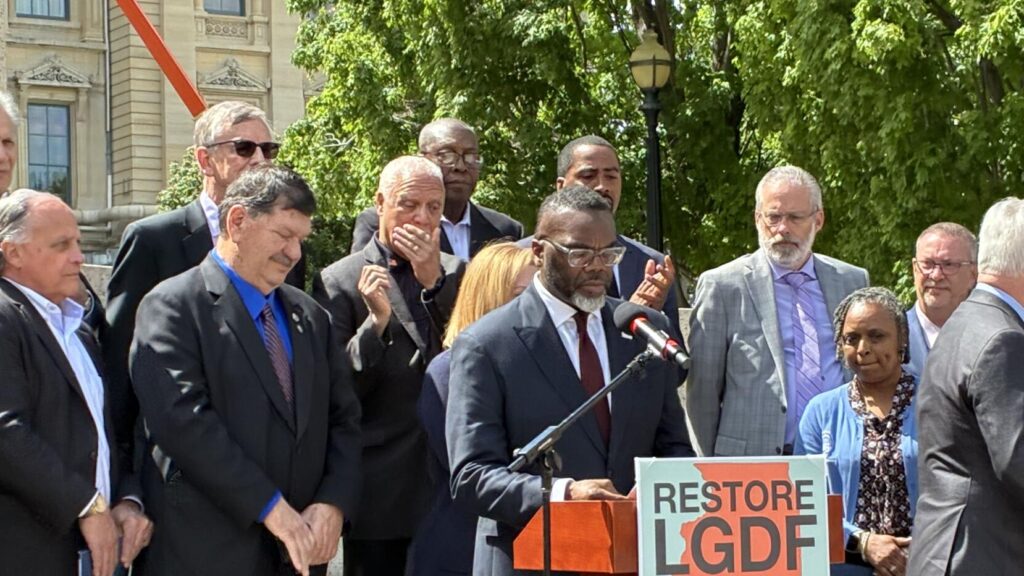
Johnson, municipal leaders statewide clash with Pritzker over local funding cuts
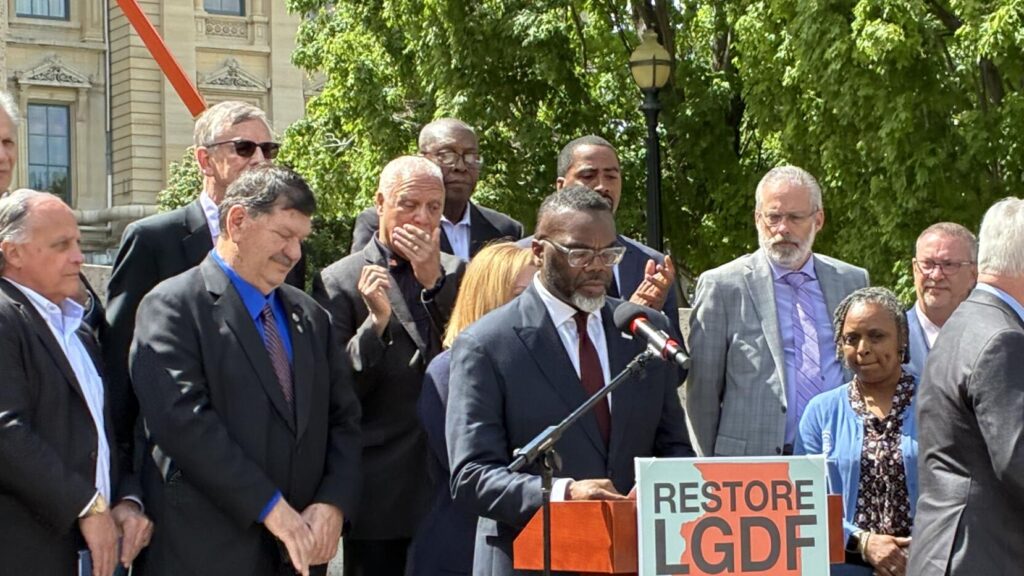
Johnson, municipal leaders statewide clash with Pritzker over local funding cuts

Pettit’s Home Run, Late Rally Propel Lincoln-Way West Baseball Past Andrew 5-2

Illinois bill would force employers to pay employees regular wages for jury duty

Foxx: Prosecutors’ ‘silence’ on murder exonerations doesn’t mean ‘innocent’

Foxx: Prosecutors’ ‘silence’ on murder exonerations doesn’t mean ‘innocent’

Foxx: Prosecutors’ ‘silence’ on murder exonerations doesn’t mean ‘innocent’

Illinois Quick Hits: ISU union workers reach deal, return to work

Illinois Quick Hits: ISU union workers reach deal, return to work

Illinois Dems eye $7B from new tax proposals, push ‘Billionaire Wealth Tax’