Will County Health Department Warns of Potential Federal Funding Cuts and Rising Healthcare Costs for FY2027
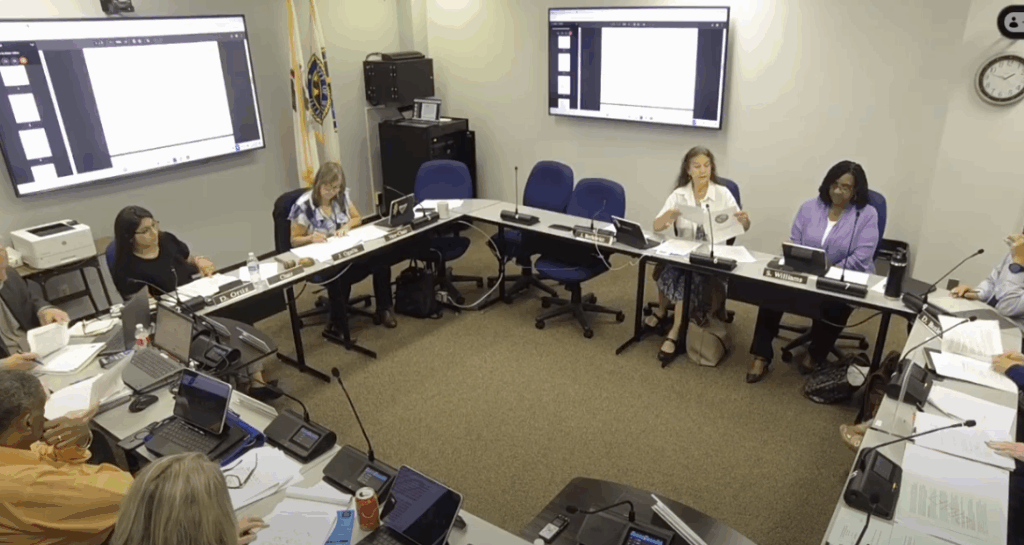
Will County Board Finance Committee Meeting | May 5, 2026
Article Summary
The Will County Health Department presented its preliminary FY2027 budget outlook to the Finance Committee, warning of a looming $1 million increase in employee health insurance costs and the potential loss of millions in federal grant funding tied up in national lawsuits.
Health Department Budget Key Points:
-
Employee health insurance costs for the department are projected to rise from $185 to $215 per full-time equivalent, resulting in a $1 million budget increase.
-
The department is closely monitoring two federal lawsuits that could impact $16 million in public health and social service grants.
-
A newly hired consultant has provided short-term revenue-boosting strategies for the Community Health Center, such as unblocking emergency appointments for regular scheduling.
-
The department outlined three capital improvement requests, including replacing four failing rooftop HVAC units and installing automatic doors for WIC and behavioral health entrances.
The Will County Board Finance Committee on Tuesday, May 5, 2026, received a sobering preliminary budget report from the Will County Health Department, highlighting significant unavoidable cost increases and an uncertain federal revenue landscape for Fiscal Year 2027.
Elizabeth Bilotta and Denise Bergen, representing the Health Department, outlined the strict fiscal monitoring required to keep the department’s budget balanced. While the department is currently projected to come in under budget for expenses in FY2026, the upcoming fiscal year presents immediate hurdles.
“If we look at 2027 right off the bat… the increase in health insurance for FTE from 185 to 215 is a million dollars alone for us of an increase,” Bilotta told the committee.
Adding to the expense side of the ledger, the department has not yet begun union negotiations for the upcoming year, meaning additional salary increases are anticipated. The department is also facing contractual increases for its Electronic Health Records (EHR) software—utilized across behavioral health, family health services, and the Community Health Center—as well as rising costs for its learning management system, branch office rent, and general utilities.
However, the most significant variable for the department lies in its revenue streams. Medicaid revenues, which brought in over $7 million in FY2024 and $8.5 million in FY2025, are subject to fluctuating program rules. Furthermore, staff noted a trend of individuals dropping off the healthcare marketplace due to high premiums, transitioning them to sliding-scale payments based on income and family size rather than standard insurance payouts.
Federal grant funding is also in a precarious position due to ongoing litigation.
“Right now we have two different federal lawsuits that we’re monitoring very closely,” Bergen said. She explained that approximately $6 million in Illinois Department of Public Health funding for HIV prevention and surveillance, along with $10 million across five states for TANF (Temporary Assistance for Needy Families) and child care funds, are currently frozen by preliminary injunctions, though existing funding is continuing for now. Grants for programs like Better Birth Outcomes and early childhood initiatives are directly tied to these social service line items.
The department is also eyeing the President’s proposed federal budget, which outlines potential cuts to HIV prevention, public health preparedness, and the elimination of Title X family planning services.
To mitigate these challenges, the Health Department and Sunny Hill Nursing Home have engaged a financial consultant to identify ways to enhance revenue streams. One immediate, short-term win implemented at the Community Health Center involved altering scheduling practices.
“As a medical clinic, they were keeping several appointments blocked for emergencies, and they stayed blocked until that day,” Bergen explained. “They’re saying free them up the day before, schedule an appointment, do walk-ins.”
On the capital improvements side, the department signaled it will be requesting funds for three major projects. The first involves installing automatic doors at the Joliet location’s WIC and behavioral health entrances to better accommodate strollers and wheelchairs, alongside adding key-swipe security to back-office WIC areas. The second project requests the replacement of four of the building’s 16 aging rooftop HVAC units to address persistent heating, airflow, and electrical breaker issues. The final capital request seeks to replace 20-year-old carpeting in the Community Health Center’s lobby, offices, and lower-level community room with hard flooring to improve infection control and indoor air quality.
Because of the high degree of revenue uncertainty, the department noted it will have to wait until closer to the state’s July 1 fiscal year start to finalize exact budget figures for the county’s review.


Sunny
Latest News Stories
WATCH: Frustration mounts with Dept. of Corrections ‘unseriousness,’ ‘timeliness problem’

Illinois audit commission members worried about ‘ghost’ health care networks

Exclusive: District to repay $3 million to property owners
WATCH: CCTV footage captures attempted murder of Pennsylvania governor

Most Americans say U.S. heading in the wrong direction, poll finds
Balmer pleads guilty to attempted murder of Pennsylvania governor
Cook County officials warn property tax reform could hurt homeowners
Maine Gov. Janet Mills officially launches U.S. Senate bid
Illinois quick hits: Poll finds mixed reviews for Trump; posthumous medal for Kirk; transit fare increase proposed
AARP under fire after $9 billion payment from UnitedHealthcare revealed

WATCH: Trump: Pritzker should ‘beg;’ Veto Session begins as Madigan reports to prison
Meeting Summary and Briefs: Will County Board Public Health & Safety Committee for October 2, 2025