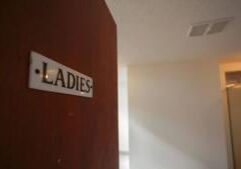
Proposed law would require women’s restroom on construction sites
(The Center Square) – Construction companies across Illinois may be required by law to provide female employees with separate bathroom facilities and stock menstrual products under a bill being considered in Springfield.
Though the bill was still in the process of being amended last week, based on negotiations with business interests, some still remain opposed to the initiative for a variety of reasons.
Senate Bill 3465 mandates the primary employer on a construction site must provide separate bathroom facilities, stock menstrual products and, upon request, provide a private space for nursing employees to lactate.
The law would apply to construction companies with 10 or more employees – including women – on a site active for more than five days.
Beth Berendsen of Chicago Women’s Trades said the bill is very important for women in the construction industry, whom she said have faced discrimination and unfair treatment for decades.
“We want to make sure those workers stay on the job and part of staying on the job is making those workers work sites, respectful and responsible and safe for those workers,” Berendsen said.
State Rep. Tom Weber, R-Fox Lake, said he was unaware of there being any issue related to restrooms or menstrual products for women on work sites, despite having worked in the industry.
Weber also pushed back on the narrative that the bill would be exclusively beneficial.
“I find that as smaller companies that this could impact – whether wrongly or, you know – that someone might decide not to hire a woman if they think this is going to cost them extra money,” Weber said.
David Ramirez, representing the Association of Builders and Contractors of Illinois, said the organization isn’t against the efforts made in the bill, but they believe it would be much more difficult to implement than it seems on paper.
Noah Finley from the National Federation of Independent Business said his organization had previously withdrawn their opposition after language to loosen requirements for employers was added, but they have since reversed course.
“We haven’t seen this amendment that is supposed to be coming along. My understanding, I mean based upon conversations – what was said here – it will also impact other things that we had negotiated in that agreement and potentially walking some of those aspects back,” Finley said.
Facing many questions from representatives on the House Labor and Commerce committee, Berendsen addressed their concerns about who has to pay under the regulations.
She said that the employer would be responsible for providing menstrual products and would be required to supply either refrigeration or a cooler for breast milk upon request.
“It’d be a separate toilet facility for women and people who menstruate,” Berendsen said. “And in terms of the menstrual hygiene products, we have talked to contractors who put a box of tampons in their safety kit and then they’re in compliance.”
Rep. Weber asked if the law would apply to construction sites overseen by state agencies, who would also face increased costs from the law. Berendsen said it would apply to all construction employers that meet the requirements.
Those in opposition still await a new amendment to the language, but the committee recommended it pass.
The deadline for Senate bills to pass the House is Friday.






Partly Sunny
Latest News Stories

IL, Chicago, suburbs to get up to $280M in Monsanto PCB deal

Survey: Teachers concerned about AI’s impact on students

Los Angeles County board votes to ban masks for ICE officers

Illinois quick hits: Son of ‘El Chapo’ guilty; still above $3 a gallon

WATCH: Chicago mayor, ‘responsible stewards’ defend taxes, opponents say they’ve failed
WATCH: Pritzker encourages protests as feds challenge use of force lawsuit

Attorneys general oppose pay cut for foreign farmworkers
WATCH: Pritzker signs vaccine law GOP doctor called ‘Trump Derangement’ bill

Illinois, Chicago residents rank high taxes as state’s top issue

Illinois quick hits: Biss criticizes university payout; more time in emergency rooms

WATCH: Sanctuary bill soon law; Use of force case proceeds; CTU audits due Mon

Park District Board Approves New Management Job Descriptions