Hundreds of Uber drivers demand union-permitting bill move in Springfield
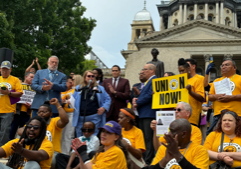
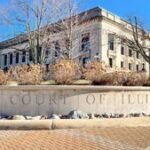
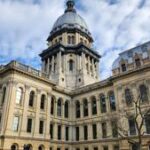
(The Center Square) – Nearly 400 drivers for platforms like Uber and Lyft appeared at the Illinois Capitol, where they urged lawmakers to move forward with Senate Bill 2906, which would give collective bargaining rights to many of the independent contractor drivers.
Aside from the unionization, the current Senate version would also impose a new fee of 4 cents per trip, which would go to a Rideshare Workers Support Fund, and could be increased based on the Consumer Price Index each calendar year.
Sponsor of the bill, state Sen. Ram Villivalam, D-Chicago, characterized the bill as one that would result in better working conditions, wages and increased job benefits.
“We would like the corporations that are making, I think, $43 billion dollars in profit to do the right thing. But because they won’t on their own, we’re going to make them,” Villivalam said.
The Illinois Labor Relations Board, however, has pushed back. In March, Director Kimberly Stevens told a House committee that their chamber’s version of the bill presents a conflict of interest in the per-ride fee.
Stevens said the conflict is that the board would be managing funds for unions it also regulate.
She told lawmakers her agency doesn’t collect fees and would not be able to provide information or data about employers to the union, as it isn’t within their purview.
The amended Senate version attempts to correct the conflict by allowing the board to contract a third-party organization for the services.
Sen. Robert Peters, D-Chicago, spoke of affordability in the state, and issues drivers face, including sometimes suspending driver accounts over unfounded claims.
“It is our time and our moment to get what we need. So, we’re going to get a union in the state and we won’t take no for an answer,” Peters said.
Ronnie Gonzalez, a representative with the International Association of Machinists Union, explained why the group feels it needs the ability to bargain with the companies, even though they are not traditional employees.
“While these advancements and technologies have been enjoyed by the passengers, the workers are left behind by federal and state labor laws that do not recognize their changing in work environment,” Gonzalez said.
Gonzalez previously told The Center Square that stakeholders concerned with the per-ride fee over cost to riders are unfounded, and if they required the companies to instead pay into the fund, there would be less transparency for consumers.
The bill has been continuously postponed in the Labor Committee since mid-April, with no hearing scheduled.
Showers And Thunderstorms Likely
Latest News Stories
Will County Considers First Update to Wastewater Ordinance Since 2016
IDOT Plans to Invest Over $1.3 Billion in Will County Roads Through 2031
Committee Advances 50% Increase in Mental Health Levy on 4-3 Vote
Will County Poised to Launch Major Mental Health Initiative Based on Joliet Program’s Success
Looming State Energy Bill Threatens to Further Limit County Control Over Solar and Wind Projects
Controversial Immigrant Rights Resolution Postponed by Will County Board After Heated Debate
Will County’s Gas-to-Energy Plant Reports Nearly $460,000 Net Loss Amid Operational Setbacks
Will County to Draft First-Ever Policy on Artificial Intelligence Use
Will County Sees 50% Drop in Opioid Deaths, But Alarming Rise in Suicides
Will County Board Backs Effort to Rename ‘Stigmatizing’ Chicago Sanitary and Ship Canal
Access Will County Dial-a-Ride on Track for Full County-Wide Service in 2026
Divided Will County Board Authorizes Condemnation for 143rd Street Widening