Revised bipartisan housing bill passes U.S. House, one step closer to becoming law
The U.S. House overwhelmingly passed its revised version of the 21st Century Road to Housing Act, sending the bipartisan legislation meant to address the housing crisis over to the Senate for approval.
“Today, we proved Washington still works,” Rep. French Hill, R-Ark., who sponsored the House amendment, said in a statement. “After months of bipartisan, bicameral negotiations – and with the partnership of the Trump Administration – the House delivered to make housing more accessible and affordable for American families.”
The House’s amendment, passed in a 396-13 vote, leaves much of the Senate-passed version untouched.
That includes provisions supporting manufactured housing expansion, streamlining environmental reviews for new housing construction, and establishing a pilot program to convert vacant and abandoned buildings into livable housing.
It also keeps the slight boost to the 15% cap on banks’ private investments in affordable housing and a ban on large institutional investors – defined as entities that own more than 350 housing units – from purchasing single-family homes for the next 15 years. Manufactured housing, multifamily homes, and build-to-rent properties are exempted from the ban.
But the House also implemented a handful of controversial changes that some senators have balked at, in particular axing a provision mandating that institutional investors sell rental homes they build to individuals within seven years of construction.
Supporters said that would expand the number of homes on the market and help drive down prices, while opponents argue it could distort markets and lead to widespread evictions.
The House-revised version also allows private equity to buy up housing that is supported with Low-Income Housing Tax Credits and other rent-restricting affordable housing programs.
Less controversial additions the House made include the insertion of the Housing Supply Frameworks Act. It directs the U.S. Department of Housing and Urban Development to create voluntary federal guidelines for jurisdictions looking to increase housing supply.
House lawmakers also included a swath of deregulatory community banking provisions aimed at making it easier for community banks to finance single-family housing construction.
They revised the Senate’s broad four-year Central Bank Digital Currency ban, allowing the Federal Reserve to issue a digital currency off-limits to the general public but available to financial institutions and the federal government.
Given broad bipartisan support for the majority of provisions in the bill, however, House leaders are hopeful enough senators will approve it. President Donald Trump has endorsed the House-revised bill and urged the Senate to send it to his desk.






Chance Showers And Thunderstorms
Latest News Stories

Manhattan Park Board Rejects Site Plan Proposal, Halts Planning Over Cost Dispute

Board Denies Appeal for “Tiny Home” RV Living in Crete

Jackson Township Board Notified of Proposal for 800-Acre Data Center

JJC Board Censures Trustee Broderick Twice, Denies Request to Restore Good Standing

Will County Board Compromises on Mental Health Levy, Approves $10 Million After Debate

Green Garden’s Wildflower Farm Granted Second Extension for Rural Events Permit
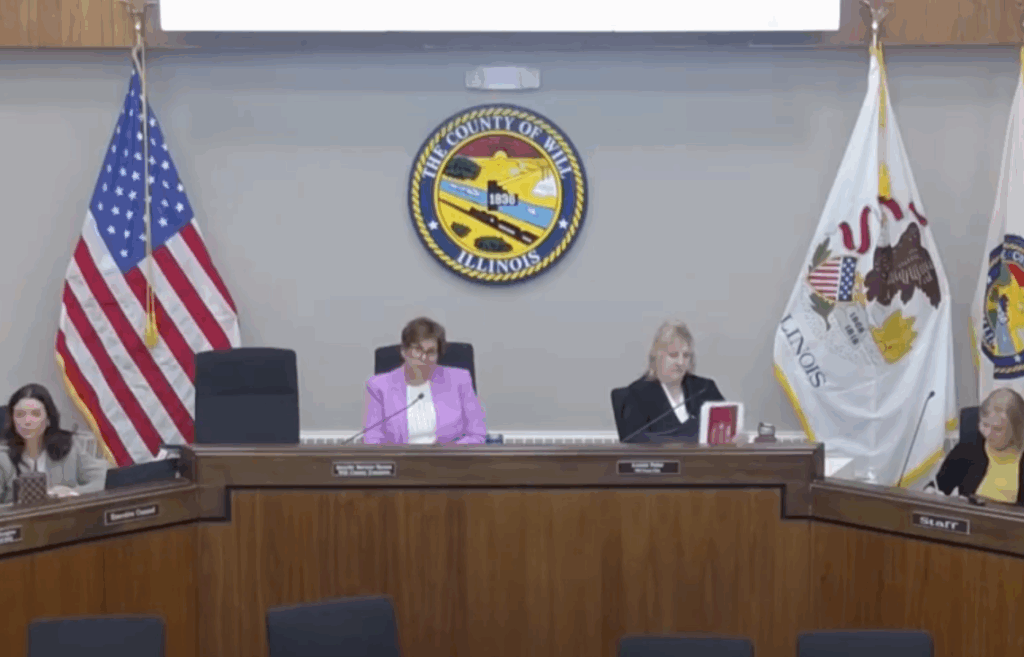
Will County Board Rejects Proposed Tax Hike, Approves 0% Levy Increase in Contentious Vote
Will County Awards $10.4 Million Contract for Bell Road Widening Project
Regional Office of Education Highlights School Safety, New Learning Programs in Update
New Lenox Solar Farm Proposal Advances with Conditions, Following Village and Forest Preserve Input

Meeting Summary and Briefs: Will County Board for October 16, 2025
Will County Board Approves New 30 MPH Speed Limit for Frankfort Township Road