Government spending on seniors’ benefits soon to make up majority of federal budget
More than half of the federal budget will go toward benefits for Americans 65 years and older by 2036, and that percentage is set to only grow, a recent congressional report finds.
The Joint Economic Committee’s 2026 report shows that non-interest federal spending on Social Security and Medicare payouts will climb from 45% to 52% over the next decade
“Given long-term demographic forecasts, this increase does not represent a peak, but rather a step in a continued upward trajectory,” the report notes.
In recent years, the U.S. has racked up record-breaking deficits, pushing the national debt past $39 trillion. The federal government is on track to post a $2 trillion deficit for fiscal year 2026, according to the Office of Management and Budget.
Monetary transfers to seniors made up between $350 billion and $520 billion of the federal deficit in 2025, depending on the methodology used to calculate interest payments, JEC found.
“The trajectory of transfers is problematic,” the report adds. “Together, Social Security and Medicare account for roughly two-thirds of the expected nominal growth in non-interest Federal spending over the next three decades.”
Ever-growing federal spending on seniors is not only worsening the nation’s fiscal trajectory but also raises questions regarding the fairness of redistributing the earnings of younger, less established generations to programs supporting retirees, rather than public services for all age demographics.
“Because younger workers generally earn less and rely more heavily on wage income, a larger share of their total tax burden directly funds senior-oriented initiatives,” notes the report. “[O]ver 80 percent of the taxes paid by the bottom 40 percent of households function mostly as direct transfers to seniors.”
Notably, the Social Security Administration has not guaranteed future benefits to Americans who are currently paying into the system.
The amount deducted from workers’ paychecks to subsidize the Social Security and Medicare of current retirees is “a pure and simple tax,” Stephen Goss, former chief actuary of SSA, told U.S. lawmakers in 2024.
Both the Social Security trust fund and Medicare’s hospital insurance trust fund are less than seven years away from insolvency.
Social Security’s depletion will trigger an up to 28% benefit cut across the board, reversing over a decade’s worth of Cost of Living Adjustment increases.
In order for current benefit levels to remain as they are post-insolvency, a median wage earner making $60,000 annually would need to pay an additional $2,600 in annual taxes, according to a Cato Institute analysis.
Both government overspending and demographic trends play a part in hastening the approaching cliff. While U.S. population growth stagnates, America’s 65 years and older population is expected to increase from about 61 million in 2023 to about 77 million by 2035.
By that time, SSA estimates there will be only 2.4 workers contributing to Social Security and Medicare for each beneficiary, “further elevating the level of wealth transferred from younger cohorts to seniors,” per the JEC report.
But if the funding shortfall is not remedied, lower-income seniors will be particularly harmed by the automatic benefit cuts.
“This is an upside-down safety net. When automatic benefit cuts kick in in 2032, the retirees who rely most on Social Security will be hurt the most, while wealthy households will scarcely notice the change,” the Cato Institute’s director of budget policy, Romina Boccia, wrote in a recent piece for the Daily Economy.
“Social Security, if it is to exist at all, should focus on preventing old-age poverty, not provide wealthy retirees with an ever-growing worker-funded annuity layered on top of substantial private savings,” Boccia added.
Rather than increasing taxes on workers or cutting benefits for wealthier seniors, the Republican section of the JEC report posits expanding the contributing workforce as a preferable solution.
“A more immediate approach [to the problem] involves reforming the immigration system to aggressively attract talent in high paying fields experiencing labor shortages,” the authors suggest. “[A]n influx of high-earners would alleviate the mounting pressure on American workers to surrender an ever-increasing share of their income to support seniors.”
Under the current Trump administration, however, increasing immigration of any type is unlikely to happen in the near future.






Partly Sunny
Latest News Stories

Manhattan Grapples with Route 52 Safety After Tragedy, Demands Action from IDOT
Manhattan Park District Ratifies Emergency Purchase of Bucket Truck for $36,500

Meeting Summary and Briefs: Will County Planning and Zoning Commission for October 21, 2025
Meeting Summary and Briefs: Will County Board Finance Committee for October 21, 2025

Meeting Summary and Briefs: Manhattan Fire Protection District for September 15, 2025
Future of Will County’s Cannabis Fund Debated Amid Budget Shortfall

Manhattan Fire District Earns Clean Audit, Hires Investment Manager

Meeting Summary and Briefs: Manhattan Village Board for October 21, 2025
Will County Health Department Pleads for $1 Million to Avert ‘Weakened Public Health System’
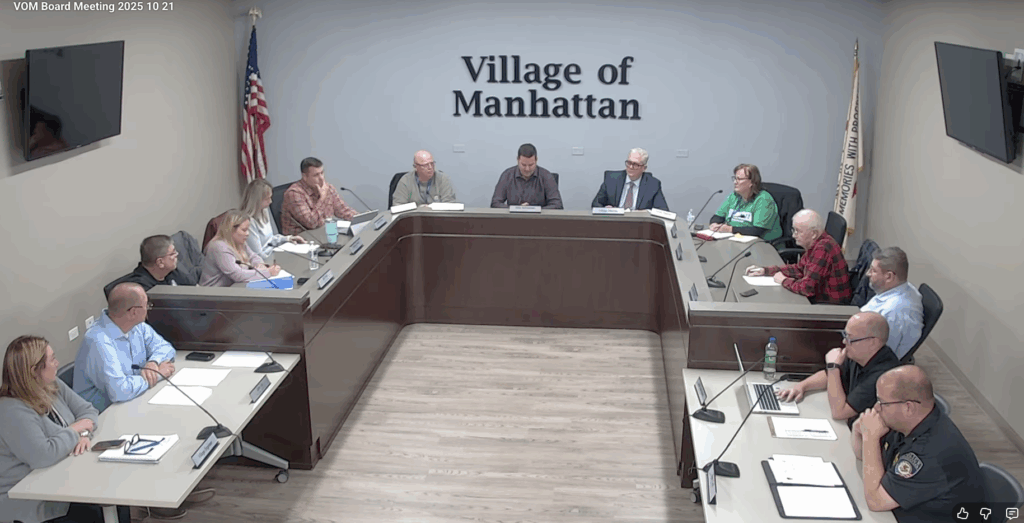
Manhattan Village Board Approves Water and Sewer Rate Hikes to Fund Future Infrastructure

Safety Upgrades Coming to Dangerous Route 50 and County Line Road Intersection
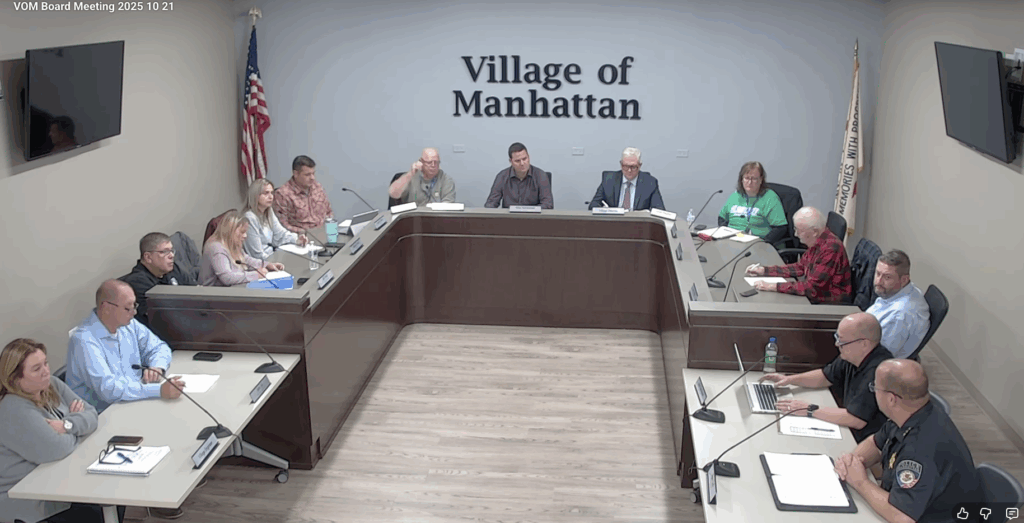
Manhattan Bans Retail Sale of Kratom, Citing Public Health and Addiction Risks
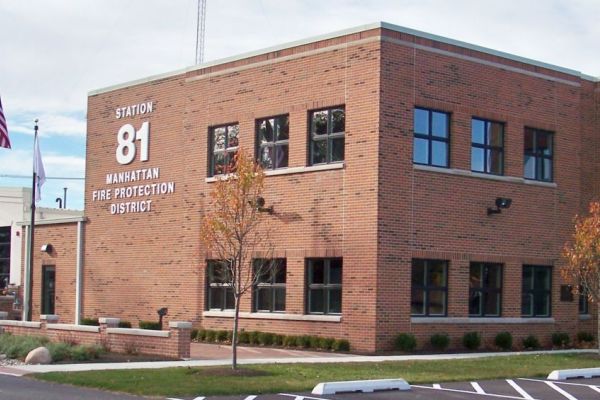
Manhattan Fire District Approves $8.75 Million Bond Sale for New Fire Station

Manhattan Approves Annexation for 41-Home Butternut Ridge South Subdivision