NASA unveils $1B moon base push amid cost questions
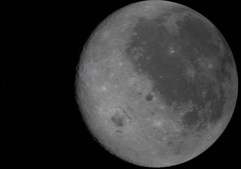
NASA unveiled nearly $1 billion in new moon base contracts Tuesday as its top official called for less reliance on taxpayer funding and a faster path to putting astronauts on Mars.
NASA Administrator Jared Isaacman said Tuesday that America’s space program shouldn’t be “perpetually funded by taxpayers,” even as the agency announced nearly $1 billion in new moon base contracts as part of NASA’s effort to establish the first permanent human outpost beyond Earth and prepare for crewed missions to Mars.
The agency awarded contracts to Blue Origin, Astrolab, Lunar Outpost and Firefly for lunar landers, rovers and drones.
Blue Origin was selected to deliver the lunar terrain vehicles to the surface under a contract valued at $188 million, with an option period worth an additional $280.4 million based on performance.
Astrolab received a $219 million contract and Lunar Outpost a $220 million contract to build the rovers themselves, according to a NASA official at the briefing.
Firefly was selected to deploy NASA’s MoonFall hopping drones, designed to scout landing sites, search for water ice, and establish communications networks around the moon base, though NASA did not disclose the contract’s value.
NASA announced three initial Moon Base missions, with a fourth wave of awards expected in the coming months.
Moon Base One, slated for launch no earlier than fall 2026, will use Blue Origin’s Blue Moon Mark 1 Endurance lander to deliver payloads to the lunar south pole. Moon Base Two, planned for later in 2026, will deliver more than 1,100 pounds of cargo including a rover to mature lunar terrain vehicle operations. Moon Base Three, also planned for 2026, will fly on Intuitive Machines’ Nova-C Trinity lander carrying scientific instruments and payloads from the European Space Agency and the Korea Astronomy and Space Science Institute.
Isaacman cast the moon base as a proving ground for Mars, saying it would be better to master the skills for deep space exploration when four days from Earth rather than months away.
The moon base will unfold in three phases, with the first running through 2029 and focused on cargo delivery and lunar surface technology testing. Phase two will introduce permanent infrastructure, including a power grid, and phase three will culminate in what NASA projects as a permanent human presence spanning hundreds of square miles at the lunar south pole.
NASA’s Artemis architecture relies heavily on commercial partnerships – a model Isaacman said is intended to eventually shift portions of lunar transportation and infrastructure away from direct federal funding.
The moon base is designed to support NASA’s broader Artemis program, which successfully sent four astronauts on a crewed lunar flyby mission in April during Artemis II. Artemis III, which will land astronauts on the lunar surface for the first time since 1972, is targeted for launch in mid-2027. NASA is working with both Blue Origin and SpaceX on lander concepts for that mission.
The space agency provided no total cost estimate for the broader Moon-to-Mars program. NASA previously described the lunar base initiative as a $20 billion effort over seven years, but agency officials Tuesday offered no total projected cost for the broader Moon-to-Mars campaign.
NASA’s acting inspector general testified before Congress in January 2024 that the Artemis program alone was projected to exceed $93 billion through 2025. The inspector general also estimated the SLS/Orion system would cost at least $4.2 billion per launch for the program’s first four missions, excluding about $42 billion in formulation and development costs accumulated over the previous decade.
The Government Accountability Office has designated NASA’s acquisition management a high-risk area for more than three decades, citing the agency’s persistent challenges limiting cost growth and schedule delays on its most complex programs.
Agency officials offered no updated accounting of taxpayer spending on the lunar-orbiting Gateway station NASA paused earlier this year as it redirected resources toward surface infrastructure. A 2021 contract for Gateway’s living quarters alone was valued at $935 million.
When asked Tuesday how NASA planned to fund the expanded moon base program, Isaacman pointed to a $10 billion appropriation from the Working Families Tax Cut Act, fiscal year 2026 appropriations and the president’s 2027 budget request. He did not provide a total cost estimate for the full Moon-to-Mars program or say what spending ceiling, if any, exists for the effort.
Tuesday’s briefing marks the latest milestone in a program whose costs have drawn scrutiny since its inception. NASA announced the $20 billion moon base plan in March, and in January said it planned to build a nuclear reactor on the moon by 2030 to support Mars missions — also without a cost estimate. A NASA spokesperson said at the time that funding for the nuclear project was part of ongoing agency budget work. Tuesday’s briefing offered no update on that figure either.
The briefing comes amid significant uncertainty over NASA’s budget. The White House has proposed cutting the agency from $24.4 billion to $18.8 billion – a 23% reduction – while the House has advanced legislation keeping funding flat. The Republican chairman of the House Science Committee said the White House proposal “simply” could not support Trump’s own exploration goals.
Meanwhile, NASA’s fiscal year 2027 budget request shows $2.6 billion still allocated for Gateway through 2029 under the Working Families Tax Cut Act, even as the agency publicly redirected those resources toward the moon base. The Senate is expected to take up its own NASA spending bill in June.
The funding uncertainty comes as the United States and China race to land astronauts on the moon.
Isaacman told lawmakers in April that the competition would be decided “in months, not years,” and warned that China aims to reach the lunar surface before the end of the decade.
NASA reorganized its mission directorates earlier this month to accelerate the effort, consolidating its human spaceflight and space operations offices and naming Carlos García-Galán, moon base program manager within the Human Spaceflight Mission Directorate, to lead the effort.
NASA envisions a future where astronaut crews arrive at the lunar surface twice a year, with mission durations increasing as lunar infrastructure expands — until, García-Galán said, “we’re permanently here and we’re not giving it up.” What that future will ultimately cost American taxpayers, no one at Tuesday’s briefing would say.






Mostly Cloudy
Latest News Stories

Trump says he plans to rename Department of Defense

WATCH: Trump moves to end cashless bail in D.C., nationwide

Five incidents of swatting college campuses drawing concern

WATCH: Chicago reacts to Trump’s public safety push; AI in schools; rural health care

Will County Board Approves New Fee Schedule for Recorder of Deeds

Illinois expands campus abortion access, shields doctors from legal risk

Illinois quick hits: Human trafficking enforcement; health care fraud division announced
Nonprofit files complaints against Trump attorneys but almost no public discipline

Jackson Township to Hear Proposal for Manure-to-Gas Energy Facility
Everyday Economics: Softer tape, PCE in focus, and the Fed’s next move

Meeting Summary and Briefs: Manhattan School District 114 Board of Education for August 13, 2025

Marine’s mother takes on troop transport duties for family visits