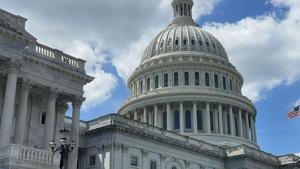
$1.1T Pentagon funding bill leaves room for White House spending spree
U.S. House lawmakers have unveiled the draft text of their $1.14 trillion annual defense bill, a must-pass bipartisan bill that fits into President Donald Trump’s plan to increase the Pentagon’s budget to historic levels.
The House Armed Services Committee will mark up the proposed fiscal year 2027 National Defense Authorization Act on June 4.
Besides the usual investments in munitions restocking, shipbuilding, military construction, nuclear infrastructure, and technology innovation research, the bill enhances cybersecurity coordination with Israel in light of the ongoing conflict in Iran.
It also provides funding for securing supply chains, as well as supports new workforce initiatives aimed at boosting mining of critical minerals and raises all servicemember salaries by 3.6%, among other measures.
The mammoth package aligns with the White House’s proposal to boost the Department of War funding by roughly 43%.
The White House requested a $1.5 trillion Pentagon budget for fiscal year 2027, with roughly $1.1 trillion coming from the NDAA and an extra $350 billion from a separate party-line budget reconciliation bill.
Though Republican lawmakers have not yet confirmed whether they intend to follow that plan, party leaders want to pass another budget reconciliation bill – which could include the $350 billion defense earmark – to push through more of the Trump administration’s agenda before the 2026 midterm elections.
The House’s NDAA draft must be reconciled at some point with the yet-to-be-released Senate version. Last year’s NDAA cost taxpayers $900 billion, and the DOD also received an $173 billion boost that same year from Republicans’ “One Big Beautiful Bill.”
Federal budget watchdog organizations like the Committee for a Responsible Federal Budget are urging lawmakers to rein in military spending, particularly since the DoW is the only federal agency to never pass an audit.
“There is little doubt that the United States has immense defense and national security needs. But having allocated $4.6 trillion over the past five years to defense, there should also be little doubt that there is substantial waste, fraud, abuse, and errors within the defense budget,” CRFB stated Wednesday.
“Before Congress considers an enormous expansion of the defense budget, they should work to understand what previously-appropriated dollars are still available and make sure existing dollars are being spent wisely and cost-effectively.”






Showers And Thunderstorms Likely
Latest News Stories

WATCH: Dems leave hearing before minority group’s testimony on Biden border policies
Will County Executive Committee Delays Vote on School Choice Referendum

Construction Business Permit on Sweedler Road Hits Snag Over Flood Plain Issues

Manhattan Parent Makes Emotional Plea for More Transparent School Threat Policies

Chicago council committee rejects mayor’s proposed tax hikes

Illinois quick hits: Elections board considers primary election petition objections

Feds: Illegal commercial drivers licenses issued in California

Socialist candidate runs against Los Angeles mayor

193 youth in care of Illinois’ child welfare agency missing in 2025

Hemp industry advocate promises to work with Pritzker, lawmakers

Bill would make health care sharing ministries tax deductible

HHS terminates Biden-era rule that rewarded doctors for ‘anti-racism’ plans