Pope’s AI warnings match Americans’ responses; Cabinet reaction mixed
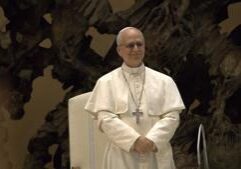
Pope Leo XIV, a Chicago native, on Monday continued the legacy of his predecessor with a social encyclical addressing artificial intelligence – as much a pivotal challenge as a welcomed technological advance to the 21st century.
He didn’t argue against use of it; rather, he encouraged ways to engage “for the common good” while also to “remain human.”
“Humanity – in all its grandeur and woundedness – must never be replaced or surpassed,” Leo wrote in Magnifica Humanitas, the Latin for Magnificent Humanity. “We can embrace the technological progress that alleviates suffering and unlocks new possibilities, provided that we do not abandon the very essence of our humanity, namely the capacity for relationship and love.”
The more than 42,000 words requested a disarming of artificial intelligence similar to nuclear disarmament; warned against automation in battlefield conflicts; cautioned against digital slavery through the mix of data and artificial intelligence; and pointed to reports of prejudiced algorithms in the sectors of healthcare, employment and security.
In many ways, it was a match to various studies and views from Americans; in others, there was not agreement on his position.
Impact on the 12 core human capacities will be more negatively than positively in the next 10 years, said more than half of American adults in a survey released in September by the Elon University Poll in conjunction with a report from the school’s Imagining the Digital Future Center. In particular, social and emotional intelligence; empathy and moral judgment; capacity and willingness to think deeply about complex subjects; sense of individual agency; confidence in their own native abilities; and self-identity, meaning and purpose in life were named in the sampling of 1,005 Americans.
In response to the pontiff, Elon University’s Lee Rainie said, “The encyclical is a full-throated affirmation of the sanctity of human dignity. It comes at a hinge moment when very new and very real questions arise: What are humans good for at a moment as other intelligences surpass ours? What will happen to our sense of dignity and purpose when artificial intelligence can perform duties that used to anchor our livelihoods?”
Rainie, educated at Harvard and LIU Post, is the director of the Imagining the Digital Future Center. He’s also a former managing editor at U.S. News & World Report, and a former director at the Pew Research Center of Internet and Technology Research.
“Pope Leo,” he continued, “offers a judicious analysis of the disruptions that confront humans and a compelling argument for keeping AI in check. His calls for protecting children and pursuing truth are particularly striking. Moreover, in light of the recent report from Elon University’s Imagining the Digital Future Center about the need for new human resilience strategies, I was delighted he made similar arguments for people to focus on ‘existential dignity,’ institutional reform, changes in our education systems and reimagining genuine human connection.”
Rainie said those issues, long before the digital age, have long been pondered through the ages by spiritual leaders and philosophers. He said Pope Leo’s invite to government leaders is essential “because they cannot avoid the challenges AI poses to the very essence of being human.”
Leo delivered remarks on democracy, social media, labor, war, economy, human trafficking, and the environment. The “culture of immediacy and hyperstimulation” from digital media, he said when talking about the world’s youth, needs a solution from policymakers, educational institutions and families.
“The Elon University Poll has found several elements of Pope Leo XIV’s encyclical regarding AI resonates with many, but far from all, American adults,” said Dr. Jason Husser, director of the Elon University Poll. “For example, in April 2026 we found opposition in North Carolina vastly outnumbered support for hypothetical data centers. Similarly, when we asked North Carolinians about their preferences for high school curricula, we found very high support for emphasizing human-centered skills like communication and empathy and high levels of support for limiting AI use in schools.
“However, in that same survey we found that a majority also thought students should learn about AI’s benefits, risks, and ethical issues before graduating high school. At an aggregate level, a very large number of Americans share elements of Pope Leo XIV’s uneasiness and desire for nuanced caution regarding the social implications of unbridled AI use.”
Count Vice President J.D. Vance among them. The Republican from Ohio is a practicing Catholic and formerly worked in Silicon Valley. He described his intake of the encyclical as bits and pieces, though he declared “it sounds very profound, and the sort of thing that you would expect and hope from a leader of the church.”
Second-term Republican President Donald Trump has reversed a number of Biden era policies inclusive of deregulation, accelerating private-sector innovation and promotion of “ideologically neutral” artificial intelligence. He’s concerned with competition from China.
And he’s feuded publicly with the pope. His Cabinet, after Monday, wasn’t necessarily united in reaction. Interior Secretary Doug Burgum, for example, essentially dismissed the warnings as “editorializing” in the role of leading the Catholic Church.
In America, 1 in 5 – approximately 50 million to 68 million of adults – identify as Catholic, according to the Pew Research Center. It is the largest single religious denomination, with growth trends in the South and West. Including children, the estimated number is 68 million to 73 million.

Partly Sunny
Latest News Stories
Village Bolsters Winter Operations with New Hires and Truck Purchase

Public Works Committee: Will County Consolidates Paratransit Services Amid Funding Debates

P&Z Commission: Peotone Area Variances Forwarded for Garage and Pole Barn
Meeting Summary and Briefs: Manhattan-Elwood Public Library District Board for October 2025
Peotone License Plate Camera Renewal Sparks Privacy Debate in Public Works Committee
No Accidents Reported Since Route 52 Stop Sign Installation; Local Business Donates Cameras

Library Board Authorizes Online Bill Pay and Formalizes Friends of the Library Agreement
Joliet Unity Movement Criticizes Board’s Handling of Cannabis Tax Revenue
Safety Upgrades Planned for Wilmington-Peotone Road; Gas Line Proposal Rejected
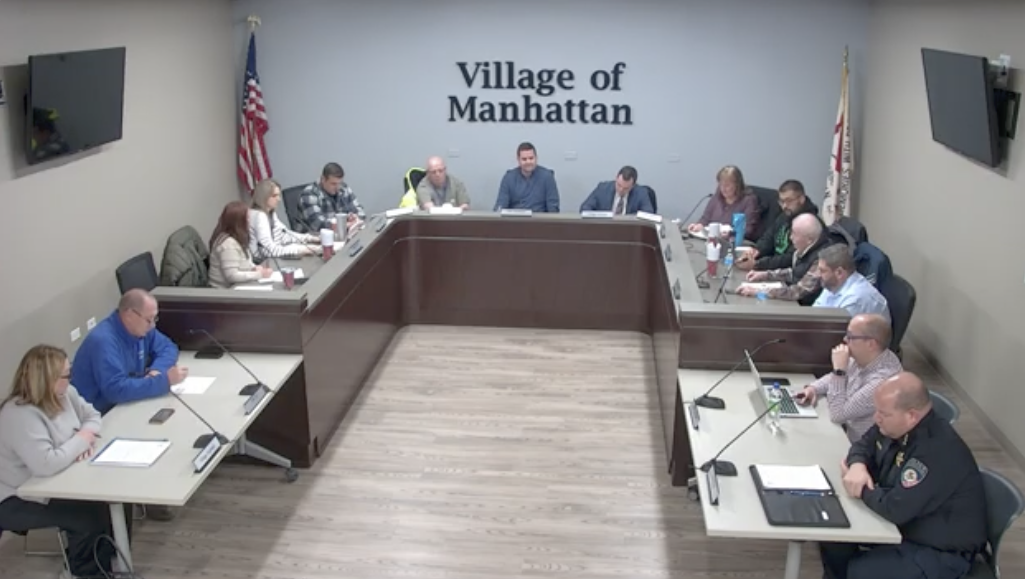
Manhattan Trustees Approve 2025 Property Tax Levy
Tensions Flare as Board Members Clash Over Budget Process and Protocol
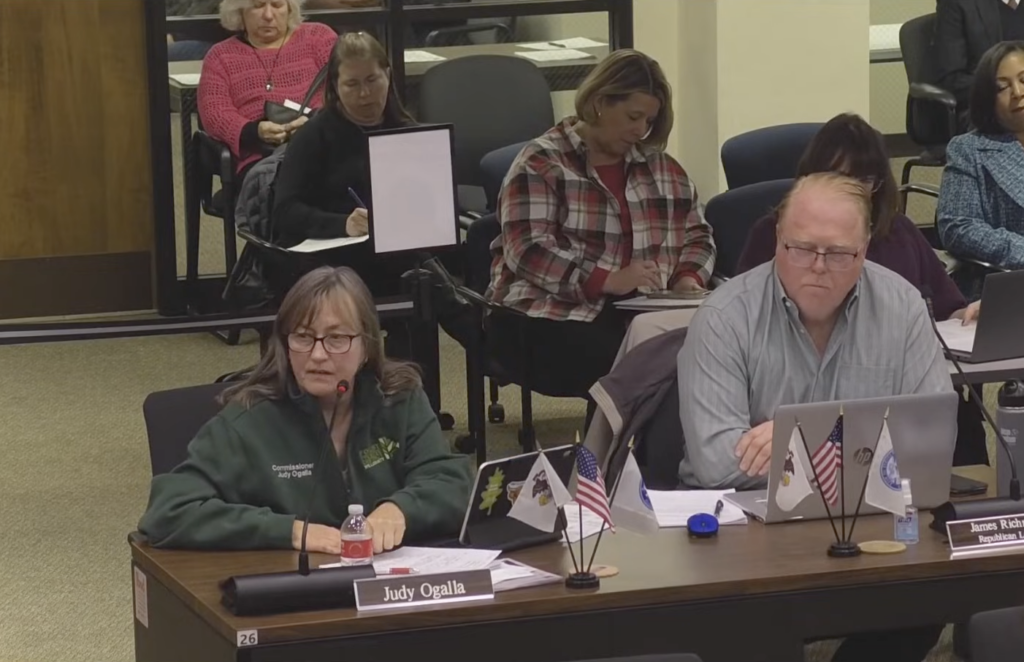
Will County Board Approves $2.7 Million Reserve Draw to Finalize 0% Tax Levy