
Supreme Court rules against prison sentence reductions
The U.S. Supreme Court, in two separate cases on Thursday, ruled against convicted individuals seeking to reduce their prison sentences.
The high court ruled in favor of the government in both Rutherford v. United States and Fernandez v. United States. Justices on the court held that convicted individuals in both cases seeking to reduce their sentences under federal statutes did not apply.
In Rutherford v. United States, the justices ruled in a 6-3 decision that the First Step Act of 2018 did not allow Daniel Rutherford and Johnnie Carter’s prison sentences to be reduced. Rutherford and Carter were convicted of separate armed bank robberies that were stacked upon one another, resulting in 42 years and 70 years in prison, respectively.
In 2018, the First Step Act reformed several aspects of prison sentencing, including barring sentences from being stacked like Rutherford and Carter. However, the legislation only applied to individuals convicted after it was enacted, which did not include Rutherford and Carter.
The legislation allowed for an “extraordinary and compelling reason” to reduce other prison sentences not already covered in its language. However, justices on the court did not agree that the timing of sentences and the enactment of the legislation was “extraordinary and compelling.”
“When Congress declines to make a sentencing amendment retroactive, the fact that a preamendment sentence is longer than it would have been postamendment is not an ‘extraordinary and compelling reaso[n]’ that ‘warrant[s]’ a sentence reduction,” Justice Amy Coney Barrett wrote in the court’s majority opinion.
Justices Ketanji Brown Jackson, Sonia Sotomayor and Elena Kagan disagreed with the majority. Sotomayor said it was not the high court’s responsibility to consider whether Rutherford and Carter could be released.
“Under the statutory scheme that Congress created, the [Sentencing] Commission has the leading role of defining the words ‘extraordinary and compelling’ and thus setting the scope of compassionate release,” Sotomayor wrote. “This Court, by contrast, has the more modest role of ensuring that the Commission does not act unreasonably.”
In a separate case, Fernandez v. United States, the high court ruled 8-1 against an individual seeking early release from a prison sentence. The case focused on Joe Fernandez, who was indicted in 2013 for the assassination of two gang members.
Fernandez was convicted of two consecutive life sentences. He argued he was innocent and petitioned for compassionate release under federal law.
The court’s majority argued that challenging a conviction does not justify early release from a life sentence. Barrett said Fernandez would have to appeal different statutes and likely take on a new trial.
“The supposed invalidity of a conviction is not among the ‘extraordinary and compelling reasons’ that justify compassionate release,” Barrett wrote in the majority opinion.
Brown Jackson was the sole dissenter. She argued compassionate release is designed to give prisoners relief from harsh sentences under federal law.
“It was clear from the start that compassionate release was a distinct vehicle for addressing potential inequities with respect to a defendant’s sentence: one specifically designed to allow for the flexible consideration of ‘extraordinary and compelling’ circumstances notwithstanding the restrictions that otherwise made the sentencing system less discretionary,” Jackson wrote.
Justices on the court worked through criminal law cases on its docket Thursday while the term rapidly comes to a close over the next few weeks.






Partly Sunny
Latest News Stories

Will County Board Approves Permits for Landscaping Business and Restaurant Liquor Service in Frankfort Area
Board Approves Engineering Contracts for Mokena Road Widening

Will County Awards $1.46 Million Contract for Kankakee Street Bridge Replacement in Manhattan Township
Crete Township Community Center to Get New Digital Sign
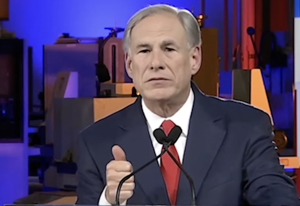
Texas legislature passes redistricting map, governor to sign into law
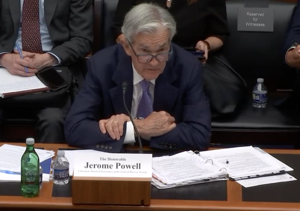
Dow hits record high after Fed Chair hints at September rate cuts
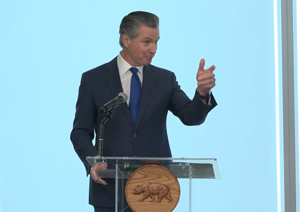
WATCH: Newsom optimistic about redistricting despite poll

Newsom meets with Danes, talks about Trump but not 2028

CA bill to give interest on insurance payments to homeowners

DOJ releases Maxwell interview transcripts, audio; described Trump as ‘gentleman’

Erik Menendez denied parole; brother appears before board

After cutting union contracts, VA redirects $45M to veterans