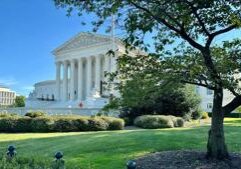
Supreme Court rules in favor of racially biased jury claims
The U.S. Supreme Court, in a 5-4 decision on Thursday, ruled in favor of an Black man convicted of capital murder in Mississippi, who said the jury that convicted him was racially biased.
In the case, Pitchford v. Cain, Terry Pitchford was convicted of robbing a grocery store alongside Eric Bullins in 2004. Bullins shot and killed the store owner during the robbery and recieved a 20-year jail sentence.
However, during jury selection in Pitchford’s case, state prosecutors removed four of the five Black potential jurors. The jury, made up of 11 white jurors and 1 Black juror, convicted Pitchford of murder and sentenced him to death.
“The trial court did not afford Pitchford’s counsel a sufficient opportunity to rebut the prosecutor’s proffered race-neutral reasons for striking the four black jurors and never determined whether the prosecutor’s stated reasons were pretextual,” Justice Brett Kavanaugh wrote in the court’s majority opinon.
In Batson v. Kentucky, the high court established a precedent that jurors could not be excused from a case based on race. Rather, a prosectors must come up with a race-neutral explanation to excuse a juror. The majority of justices said the trial court did not adequately adhere to that requirement.
“Whether due to confusion, oversight, an overly hurried jury selection process, or some other cause, things broke down, and the ordinary trial-court procedure for resolving Batson claims at step three never occurred— notwithstanding the repeated efforts of Pitchford’s counsel to pursue and preserve the Batson objection,” Kavanaugh wrote.
However, Justices Neil Gorsuch, Clarence Thomas, Samuel Alito and Amy Coney Barrett disagreed with the majority arguments. Gorsuch, in the court’s dissenting opinion argued that state prosectors provided adequate reasons, other than race, to dismiss the Black jurors.
“One prospective juror, it said, had returned late to court after lunch break and had a history of mental problems,” Gorsuch wrote. “Two had brothers who had been convicted of violent offenses. Another ‘had no opinion on the death penalty.'”
Gorsuch also argued that the court’s majority opinon did not outline how the case should proceed in the future and what steps similar cases should take. The high court overruled lower court’s decisionmaking in this case and will return consideration of Pitchford’s conviction, with a clarified understanding of jury selection procedures.





Slight Chance Showers And Thunderstorms
Latest News Stories

U.S. debt tops 100% of GDP, ‘deeply troubling’ for economy, national security

Manhattan Renews Cash Rent Farmland Leases on Village-Owned Properties

U.S. troops in Italy, Spain hang in balance as troop reduction in Germany announced

Federal appeals court halts access to mail-order abortion drug

Labor unions back McCormick’s plan to reform federal permitting

Court-ordered tariff refunds bypass consumers who paid

Lincoln-Way West Outlasts Bradley-Bourbonnais in 10-9 Slugfest

Lincoln-Way West Softball Blanks Andrew 10-0 in Conference Play

Professor: Surging gas prices will have long-term effects

Illinois Quick Hits: DHS says ICE captures child sex abuser released by Illinois DOC

Durbin calls probe ‘sham’; state lawmaker backs transparency
Lawmen believe trip from Carolinas to Washington a threat to Trump