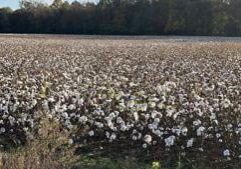
USDA plan rallies around American cotton farmers
America lost its top rank for cotton production in the middle of the last century, its mark as the top exporter to Brazil three years ago.
“Change starts today,” USDA Secretary Brooke Rollins said in announcing the Great American Cotton Plan.
The initiative of the U.S. Department of Agriculture is mission-minded strengthening the cotton farm economy; restoring domestic textile manufacturing; expanding cotton trade opportunities; and increasing demand for products made with American-grown cotton. Rollins said the administration of second-term Republican President Donald Trump wants cotton to be the fabric of choice.
“Supporting natural fibers like cotton also aligns with the Make America Healthy Again agenda as Americans grow increasingly concerned about microplastics and synthetic materials in everyday products,” she said. “Cotton is natural, breathable, biodegradable, and proudly grown by American farmers — not manufactured from petroleum-based plastics that can shed microplastics into our soil, water, and bodies.”
The plan’s foundation is to promote domestic cotton consumption; provide affordable cotton by increasing domestic demand and production; improve cotton trade; and protect cotton growers from adverse risk.
Legislation – Buying American Cotton Act of 2026, known also as House Resolution 7230 – filed Jan. 22 by Rep. Dr. Greg Murphy, R-N.C., has languished in the Committee on Ways and Means of the House of Representatives. He was grateful for the initiative.
“North Carolina is a leading cotton-producing state and home to the nation’s top textile industry,” he said. “The Great American Cotton Plan will help strengthen our supply chains, support hardworking farmers, and promote high-quality American-grown cotton. I am proud to have introduced the Buying American Cotton Act to help further support the cotton industry and our rural communities.”
Friday afternoon, 72 cosponsors inclusive of both major parties were on board, 23 at initial filing and 70 before the month of May began. Only Missouri (No. 5) did not have a cosponsoring lawmaker for the bill among the top 10, respectively, states in cotton production – Texas, Georgia, Arkansas, Mississippi, Oklahoma, Alabama, California and Tennessee.
“This plan only builds on our work in Congress to break open new markets for farmers and ensure that what’s grown and made here stays at the forefront of global trade,” said Rep. August Pfluger, R-Texas.
Texas is far and away the leader in cotton production – more than 5.2 million 480-pound bales annually. Georgia (1.7 million) and Arkansas (1.3 million) are top three.
“Georgia is consistently a top state for cotton production and acres planted – with the industry providing over 50,000 jobs statewide and an economic impact exceeding $3 billion,” said Rep. Rick Allen, R-Ga. “Great to see the USDA and Secretary Rollins prioritizing U.S. cotton producers with the Great American Cotton Plan.”
Synthetic materials, a release says, are a major competitor in the industry. Input costs have risen and there have been trade distortions, the USDA said.
Already this year, the forecast is a loss of $2.6 million on 9 million planted acres. Cotton gins since 1980 have dropped from 2,254 to 446 – a decline of 82.5%.





Partly Sunny
Latest News Stories

Support swells across the aisle for $580B BUILD America 250 Act

Revised bipartisan housing bill passes U.S. House, one step closer to becoming law

War of words reignites with Trump, Pritzker, Bailey

Nesbitt asks DOJ to investigate Whitmer’s ties to grant scandal

Senate Republicans’ rebellion in War Powers Resolution vote could sway House vote

Cassidy breaks with Trump on Iran, spending after reelection defeat

Nashville, state spent billions of taxpayer funds drawing Super Bowl

Judge won’t let ConAgra off hook in class action over fish fillet brine

Legal analysts applaud yet are skeptical of American Bar Association’s DEI elimination

Illinois Quick Hits: Bill offering CTE alternative clears senate committee

Workers say mass Spirit Airlines layoffs violate federal law

Bill that tried to kill secret agreements with your tax dollars now faces its own silent death