Rubio provides few answers to Congress on Iran conflict timeline
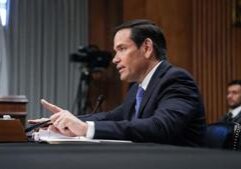
With the U.S.-Iran conflict approaching the 100-day mark, Secretary of State Marco Rubio defended the Trump administration’s military strategy before a committee of U.S. lawmakers Tuesday.
Democrats on the Senate Foreign Relations Committee – which Rubio previously served on as a U.S. senator from Florida – grilled him on foreign policy questions, particularly related to the congressionally unauthorized military actions in Iran.
Many asked Rubio why Congress should approve the State Department’s $33.6 billion annual budget request when they still remain in the dark about the administration’s major foreign policy plans, including the end of the now 94-day Iran conflict.
The U.S. is currently in a fragile ceasefire with Iran, even as the Strait of Hormuz remains closed. Under the terms of the ceasefire, Iran was supposed to reopen the critical trade route. Because it has not done so, the U.S. has blockaded Iran’s oil shipments.
Rubio told lawmakers he could not guarantee the timing of a deal – saying it could happen “today, it could happen tomorrow, it could happen next week” – but added that Iran is in a much weaker position than before the conflict began.
Iran was attempting to heavily arm itself with conventional weapons in order to pursue its nuclear weaponry goals, Rubio said, “which is why the President chose to act, to deny them that point of immunity … So my whole point is, the Iranian conventional shield has been substantially eroded.”
He added that if a deal ultimately doesn’t work out “then obviously we still have a problem with respect to their nuclear ambitions. But what they won’t have is the conventional [weaponry] shield to hide behind any longer.”
Democrats, however, pointed out that the conflict has negatively affected Americans as well.
Since the initial U.S.-Israeli joint strikes Feb. 28, costs of jet fuel, crude oil, and fertilizer have skyrocketed, resulting in more expensive plane tickets, higher distribution costs for consumer goods, and U.S. gas prices hitting a four-year high.
“There is a cost to the Iranian economy, but now there is a devastating cost to the U.S. economy,” Sen. Chris Coons, D-Del., said. “What is going to get the Strait reopened? Because this is kind of the only question that matters for American consumers right, and every day we get wildly different signals from the president.”
Rubio replied the Trump administration is still “in talks” with Iran, but its “internal regime is somewhat fractured,” slowing response times.
The impetus to reopen the strait is on Iran, Rubio added, not the U.S.
But Sen. Brian Schatz, D-Hawaii, and others expressed disbelief that the Trump administration did not foresee the global economic impacts of striking Iran.
“Nobody’s defending what Iran is doing,” Schatz said. “I think what we’re saying is this was not just predictable, it was predicted … It’s really shocking to me the degree to which this administration expresses shock that the thing that everybody said was going to happen ended up happening.”
Public opinion of the Iran conflict continues to sour, with poll averages showing less than 38% of American voters approve while nearly 58% disapprove of the U.S.’s involvement, according to RealClearPolitics’s analysis of all major polls on the issue.
As of Tuesday, the Iran conflict has cost the lives of 14 U.S. military servicemembers. The Pentagon’s most recent estimate of federal spending on military hostilities – over $29 billion – is from mid-May.



Chance Showers And Thunderstorms
Latest News Stories

Green Garden and New Lenox Road Projects Approved in $2.5 Million Public Works Package

Meeting Summary and Briefs: Lincoln-Way Community High School District 210 for March 19, 2026

Trump endorses Hilton in California gubernatorial primary
Feds award $1M for Rose Bowl upgrade ahead of Olympics
Trump defends Section 122 in latest tariff legal challenge
Education department rescinds Title IX resolution agreements
Illinois gun owners plan rally in wake of Supreme Court order
Artemis II mission breaks records Monday as astronauts observe far side of the moon
Illinois quick hits: Illinois House speaker’s son to attend private school; AFSCME workers set strike date at Illinois State University; IDOT urges public to avoid distracted driving
Federal-state showdown looms over regulation of prediction markets
No-knock warrant legislation brings Chicago victim, Illinois gun group together
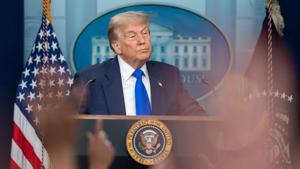
Trump promises ‘complete demolition’ in Iran as deadline looms