Retirees face $5,500 average cut to annual Social Security benefits in 2032
Over 60 million Americans could see their monthly Social Security checks slashed by $500 on average starting in 2032, according to a new report analyzing the impacts of the retirement trust fund’s insolvency.
Absent immediate major reforms, the retirement trust fund will be exhausted in less than seven years, automatically triggering a 24% across-the-board benefit cut.
But retirees in some states will see higher cuts than others, with average monthly benefits shrinking by more than $500 in 29 states, the Committee for a Responsible Federal Budget found.
Using the most recent state-level data available, the committee measured the impacts insolvency would have on today’s retirees in each state, publishing the results on an interactive map.
The committee found that retirees in Connecticut, New Jersey, New Hampshire, Delaware, Maryland, Washington, Minnesota, Massachusetts, Michigan, and Utah will be hit hardest, with average cuts ranging from $556 to $523 per month.
Mississippi retirees will see the smallest average monthly cut, $459. But that is still the entire monthly grocery budget of the average senior American household in 2032, when adjusting U.S. Bureau of Labor Statistics 2024 numbers for inflation.
The estimates are particularly troubling in light of a recent Congressional Budget Office report showing that Social Security benefits “play a critical role in families’ financial wellbeing in retirement,” particularly for lower-income households.
When measuring how Social Security benefits influenced household wealth disparities between 1989 and 2022, the office’s report found that the program “plays a particularly equalizing role […] because of its progressive benefit formula and near-universal coverage.”
As of 2026, retirees make up roughly 17% of the country’s population and between 10% to 23% of state populations, meaning Social Security retirement trust fund insolvency would harm state economies along with seniors’ finances.
The committee found that in 47 states, over 15% of the population would be directly impacted by insolvency. In Maine, West Virginia, Vermont, Delaware, Montana, New Hampshire, South Carolina, and Wisconsin, over 20% of residents would be directly impacted.
Both the personal finances of retirees and the state GDP impacts of insolvency could in fact be much starker in 2032, given that the committee’s projection is based on currently available data and the U.S. population is aging rapidly.
Seniors will make up an estimated 22% of Americans by 2032, as the U.S. population will have topped 360 million while the number of seniors is projected to reach 82 million, according to federal statistics and estimates from the Population Reference Bureau.
The committee acknowledges that restoring solvency “will require navigating difficult tradeoffs.”
“However, [Congress] must act quickly to prevent deep, abrupt benefit cuts that would affect all beneficiaries, regardless of age or need,” it stated in the report. “With insolvency projected to occur during the terms of the next elected Senators and President, candidates and policymakers must decide how they will secure a program vital to millions of Americans.”
The committee and other fiscal watchdog organizations have pointed out dozens of ways U.S. lawmakers could restore solvency and strengthen retirement security, such as transitioning to a flat benefit, slowing benefit growth for higher earners, and capping annual Cost of Living Adjustments for the top half of beneficiaries.
However, Social Security reforms that would adjust benefits in any direction but upwards is considered a political red line.
U.S. citizens aged 65 and older are the most likely to participate in elections, with over 80% registered to vote and nearly 75% voting in 2024 – the highest share of any age group.






Showers And Thunderstorms Likely
Latest News Stories

District 114 to Overhaul Policy Updates with New ‘Press Plus’ Service
Lincoln-Way Board Weighs Community Solar Program Promising $155,000 in Annual Savings
Will County Reverses Zoning on Peotone Farmland to Facilitate 10-Acre Sale

Meeting Summary and Briefs: Joliet Junior College Board of Trustees for September 10, 2025
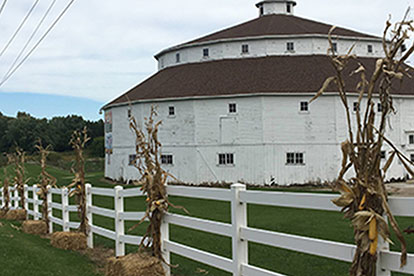
Manhattan Park Board Hires New Architect for Round Barn Buildout, Secures Annexation for Future Banquet Hall
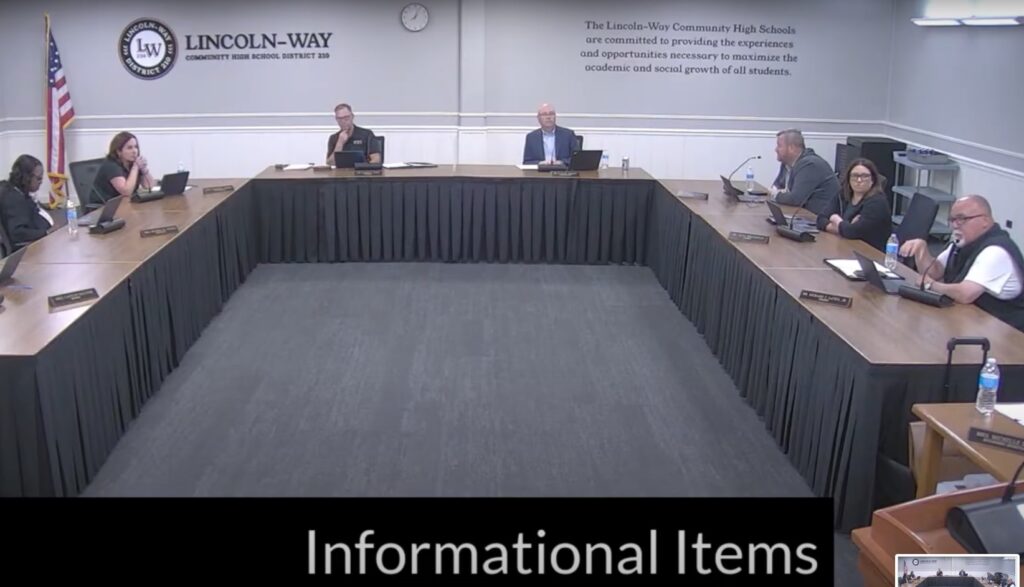
Lincoln-Way 210 Board Approves $172.7 Million Budget with Planned Deficit for Bus Purchases
Manhattan School District 114 Approves $41.5 Million Budget for FY26
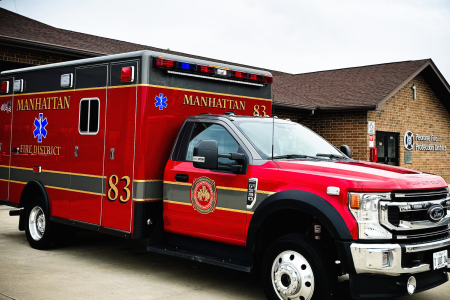
Manhattan Fire District Advances New Station with $8.75M Bond Hearing, Approves Contracts with $194,000 Savings

Will County to Pay Enbridge $82,000 to Relocate Pipeline Equipment for Exchange Street Improvements
Laraway Road Widening Project in New Lenox and Frankfort Gets Additional $468,000 for Redesign

“Federal Policy Uncertainty” Blamed for Delay of Peotone Solar Farm; County Grants Second Extension
Will County Grants Extensions to Five Solar Projects Sold to New Developers