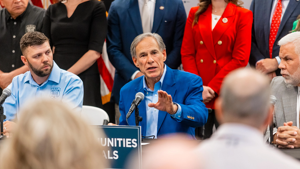
Trump signs executive orders on customs, federal workforce reforms
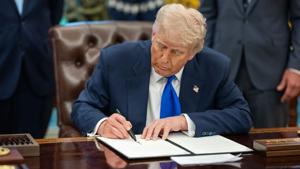
A year and a half and over 260 executive orders into his second term, President Donald Trump signed several more executive orders Wednesday, including one strengthening customs enforcement and another on federal workforce reforms.
According to the administration, “systemic inefficiencies” in the customs system allow ill-intentioned individuals and countries to avoid complying with federal import-export rules by “undervaluing imports, withholding critical information about [Importers of Record] and the goods being imported, and avoiding payment of duties through various arrangements and schemes.”
“These actions threaten national security, undermine foreign relations, disadvantage domestic businesses, and harm Americans,” according to the executive order.
To address those concerns, the order would impose stricter vetting, bonding and disclosure requirements on importers of record. It would also require more detailed supply chain information, increase audits and penalties for noncompliance, and accelerate the seizure of noncompliant imports. It also directs the administration to work with Congress on crafting legislation that would help facilitate lasting customs reforms.
U.S. Customs and Border Protection Commissioner Rodney Scott described the customs and borders executive order as embodying an America first ethos “in the trade environment.”
“Different countries and different people are undercutting the import-export rules, the tariffs, to literally undermine American businesses, and we’re going to put a stop to it,” Scott said. “We’re going to start holding trade accountable for bringing threatening things and threatening products into our country.”
As of late Wednesday evening, the text of the executive order on federal workforce reforms had not yet been publicly released, but the president and other key officials described it in the Oval Office earlier in the day. They said that rules governing the federal workforce protect underperforming or ill-intentioned employees from being held accountable for their actions and conversely, can often prevent hardworking and high-achieving employees from being rewarded or recognized for their work.
“It’s been a long-standing problem that is almost impossible to fire a federal employee, even in cases of serious misconduct, and as a result, if you have employees who are trying to undermine the wishes of the American people by pushing their own agenda or are just incompetent in what they’re doing, agencies have a … difficult time getting rid of them,” said James Shirk, a member of the White House Domestic Policy Council.
“What this [order] does is basically treat those employees like private sector workers. They can be hired on the basis of merit and competence,” Shirk added, and if they’re failing to fulfill the duties of their role, they can be fired.
The American Federation of Government Employees issued a statement on the order immediately after the signing, accusing the president of creating a “new politicized personnel system.”
“This is a blatant attempt to corrupt the federal government by eliminating employees’ due process rights so they can be fired for political reasons,” said the federation’s national president, Everett Kelley.
Kelly said the new hiring schedule has “essentially no procedural or appeal safeguards that have long protected the integrity of government operations.”




Partly Sunny
Latest News Stories
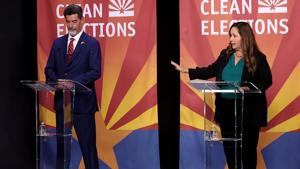
Grijalva, Butierez headed for rematch in congressional race

Biggs wins Arizona gubernatorial primary with 71.5% of vote
Trump endorsements score wins for Arizona candidates
Republicans advance bill to make Trump border policy permanent

Trump admin investigates five medical schools over DEI

Lawyer: Billionaire tax could cost California $1 trillion

Hegseth defends Trump’s request for $67B to fund Iran conflict

Official: Agreement could come soon on Colorado River
Trump gives boost to Lebanese relations; puts squeeze on Iran in the process

Illinois news in brief: State police use grant money to recover 342 stolen vehicles; State launches Blue Envelope program; Treasurer: State returned $307.8 million in I-CASH
Biden recordings case could head to U.S. Supreme Court

Pritzker touts climate, green energy record as capacity leaves, rates rise