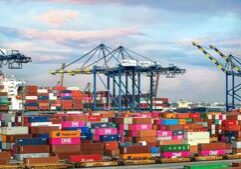
Trump targets 60 economies with forced labor tariffs
The U.S. Trade Representative proposed tariffs of 10% to 12.5% on imports from 60 economies, including Canada, Mexico, Japan and the European Union, arguing that their failure to block goods made with forced labor harms American workers and manufacturers.
The proposal comes as the Trump administration seeks a more durable legal foundation for tariffs after courts invalidated two authorities it had previously relied on.
USTR concluded that 54 of the 60 economies lack formal bans on imports made with forced labor. The remaining six – Canada, Ecuador, the European Union, Indonesia, Mexico, and Pakistan – maintain prohibitions but do not adequately enforce them, according to the agency.
“The failure of our most important trading partners to address the importation of goods made with forced labor is unacceptable,” U.S. Trade Representative Jamieson Greer said. “This creates a dynamic where American workers are forced to compete globally on an unlevel playing field.” USTR did not respond to questions from The Center Square.
The administration argues the tariffs would pressure trading partners to strengthen forced-labor enforcement while protecting U.S. workers from unfair competition.
The administration also disputes claims that tariffs have fueled inflation. White House officials instead point to energy market disruptions following Operation Epic Fury, the U.S. military operation targeting Iran, which disrupted global energy markets after the closure of the Strait of Hormuz.
“Prior to the start of Operation Epic Fury, the Trump administration hiked the average U.S. tariff by severalfold yet inflation continued to cool,” Desai told The Center Square. “The Trump administration has consistently maintained the cost of tariffs will ultimately be borne by foreign exporters who rely on access to the American economy, the world’s biggest and best consumer market.”
Government data shows inflation remained relatively subdued early in the year, although economists disagree about whether tariff costs are ultimately absorbed by foreign exporters, importers, retailers or consumers.
Consumer prices rose 0.2% in January and February before accelerating in March and April, with energy prices a significant contributor to the increase, according to the Bureau of Labor Statistics.
Critics argue the tariffs will fall hardest on American consumers. A March The Center Square Voters’ Voice Poll found that 42% of voters say American consumers primarily bear the cost of tariffs, while 12% believe foreign countries pay.
The Tax Foundation estimates existing tariffs cost the average U.S. household about $700 in 2026, down from roughly $1,000 in 2025 after the U.S. Supreme Court struck down Trump’s IEEPA tariffs. The estimate does not include the proposed forced-labor tariffs. A cost estimate for the proposed tariffs was not immediately available Wednesday.
The Consumer Choice Center said the proposed duties function “first and foremost as a tax on American consumers, driving up prices on everyday goods from groceries and electronics to clothing and household appliances.”
“Forced labor is a genuine moral crisis that demands a serious response at the right time and place,” said Yaël Ossowski, deputy director at the Consumer Choice Center. “But taxing American consumers on goods from 60 countries, including our closest democratic allies, is not serious trade policy. Blanket tariffs raise prices at the register while doing almost nothing to change conditions in foreign factories.”
Retailers and trade groups say the administration should pursue diplomatic solutions instead.
“We do not believe tariffs are the appropriate tool to address whether a country has a ban on imports of goods made with forced labor,” Jonathan Gold, vice president of supply chain and customs policy at the National Retail Federation, told The Center Square. “USTR and the U.S. government more broadly should continue working in partnership with the identified countries to address the use of forced labor in the supply chain.”
The National Foreign Trade Council, which represents U.S. businesses engaged in international trade, echoed that view, urging USTR to seek “solutions through government-to-government engagement, rather than pursuing counterproductive and inflationary tariffs.”
The AFL-CIO and Global Labor Justice, a worker rights organization, did not respond to requests for comment.
The Alliance for American Manufacturing called on the administration to use tariffs to stamp out forced labor practices, arguing that foreign governments’ failure to enforce import bans “replaces domestically produced goods with lower-cost imports,” weakens supply chain resilience and “incentivizes exploitative practices that are rightly prohibited for U.S. firms both legally and ethically.”
Some businesses that support the forced labor rationale nonetheless urged restraint on scope. Trek Bicycle warned that “broad-based tariffs applied across virtually all imports from most of the world’s economies will not effectively target bad actors – they will simply raise costs for American consumers and businesses alike.”
Some Republican lawmakers have also raised concerns. Rep. Max Miller, R-Ohio, told Greer at an April House Ways and Means Committee hearing that the administration’s tariff policy “is not a net positive, it is a net negative” for small and medium-sized businesses that cannot pass higher costs on to consumers.
Rep. Ray LaHood, R-Ill., whose district exports about 40% of its corn and soybeans, raised concerns about the impact on Illinois farmers competing with Brazil and Argentina for global markets. Canada, Mexico, Brazil and Argentina are all among the 60 economies subject to the proposed tariffs.
The proposal also comes as the administration seeks a more durable legal foundation for its trade agenda after several recent court setbacks limited other tariff authorities.
The Supreme Court ruled 6-3 in February that IEEPA does not authorize the president to impose tariffs, eliminating one of the administration’s broadest claimed sources of trade authority.
A federal trade court struck down a subsequent 10% global tariff under Section 122 of the Trade Act in May.
Section 301, which survived legal challenges during Trump’s first term and was largely maintained by the Biden administration, represents the administration’s most durable remaining tariff authority.
But that authority could face renewed scrutiny. The Supreme Court is expected to consider next week whether to hear HMTX Industries v. United States, a case challenging whether USTR exceeded its authority when it expanded first-term Section 301 tariffs on China from about $50 billion to $500 billion in imports using a modification process that requires less procedural scrutiny than the original tariff action, according to court filings.
The National Retail Federation, the American Apparel and Footwear Association, and the Consumer Technology Association filed a brief urging the court to take the case, warning that without limits, USTR could impose modest tariffs under Section 301 and then expand them significantly with less procedural scrutiny.
Public comment on the proposed tariffs is open through July 6, with hearings scheduled for July 7. Interested parties seeking to testify must submit requests by June 22.
If finalized after the comment period and hearings, the tariffs would represent the administration’s broadest use of Section 301 authority to date, extending duties to imports from more economies than any previous Section 301 action and expanding the use of trade policy as a tool to combat forced labor abroad.




Chance Showers And Thunderstorms
Latest News Stories

Manhattan Buried Under Nearly 12 Inches of Snow; Sub-Zero Temperatures Forecast for Friday
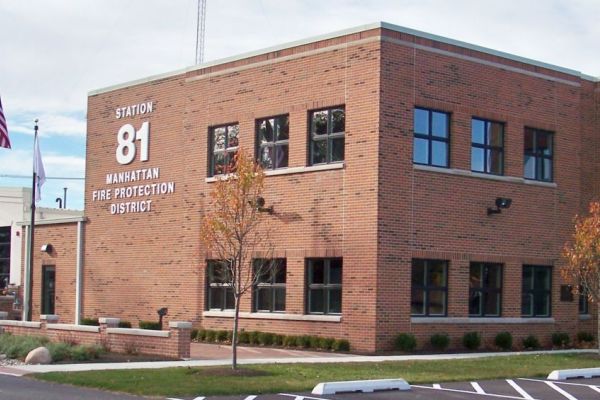
Manhattan Fire District Grapples with Surging Insurance Costs in Draft Budget
Meeting Summary and Briefs: Jackson Township Board for Oct. 2025

Frankfort Turns to County for Wildlife & Dangerous Animal Control
Illinois rejects federal ‘no tax on tips’ rule, keeps state tax on tipped income

JJC Foundation Director Kristin Mulvey to Retire After 25 Years of Transformative Leadership
Attack foiled in Ft. Worth day before National Guard troops shot in WDC

Hundreds of flights canceled in Chicago as winter storm wreaks havoc

Manhattan Park District Explores Pickleball Expansion at Round Barn Farm

Baker Road Bridge Projected to Open Ahead of Schedule

Lincoln-Way 210 Switches to Under Armour for Athletic Apparel
Fiscal Fallout: States continue to increase budgets despite end of COVID emergency