Supreme Court rules against Verizon, AT&T over privacy penalties
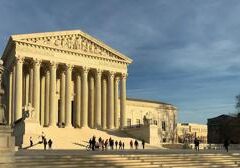
The U.S. Supreme Court, in an 8-1 decision on Thursday, ruled that the Federal Communication Commission did not need to involve a jury in multimillion dollar enforcement actions against Verizon and AT&T.
The justices weighed in on FCC v. Verizon and FCC v. AT&T, cases where the communications agency handed down $57 million and $47 million penalties against the cell phone carriers, respectively.
The FCC said Verizon and AT&T did not keep customer’s location data appropriately confidential. Through an FCC enforcement action, a trial by jury is not necessary to issue an enforcement notice.
However, lawyers for Verizon and AT&T argued the Seventh Amendment guaranteed them the right to a trial. The majority of justices on the Supreme Court did not agree.
Chief Justice John Roberts said the jury trial was not necessary in this case because the FCC’s enforcement actions did not require the cell phone carriers to pay the fines.
“The Commission cannot hold ‘the existence of a notice of liability or an order of forfeiture’ against a regulated party ‘unless the forfeiture has been paid or a court’ has ordered payment,” Roberts wrote.
Verizon and AT&T ultimately paid the penalties the FCC assessed against the two companies. Roberts said the payment was not necessary.
“Under the statute at issue here, the Commission is powerless to visit any adverse consequences on a regulated party who receives a forfeiture order,” Roberts wrote.
Justice Clarence Thomas was the lone dissenter in the case. He said Verizon and AT&T could not have known that the FCC did not have the power to enforce a monetary award. He argued the FCC would have still gone after the two companies seeking a monetary award if they decided not to pay the penalties.
“The Commission took the position that it could issue the orders not because they were nonbinding, but because such orders could be imposed, from start to finish, without the involvemnt of ‘Article III courts,'” Thomas wrote.
Thomas said the commission would have still proceeded to a trial without a jury to recieve the multimillion dollar awards. He called for the high court to take up similar cases on the rights of executive agencies, like the FCC, to determine Constitutional protections.
“Today, the Court punishes AT&T and Verizon for complying with a government order that they in good faith believed was obligatory, diligently preserving their objection to that order, and then litigating that objection so effectively as to cause the Government to change its position years later,” Thomas wrote.



Partly Sunny
Latest News Stories
Consensus for power supply solution still elusive
Digitization of aviation supply chain an opportunity to ascend out of 1950s

Zoning Cases in Crete and Manhattan Townships Postponed to December 16

Will County Commission Approves New Lenox Variances, Overriding Staff’s Denial Recommendation
‘Classic impasse’ for Chicago aldermen debating proposed taxes, spending cuts
Lincoln-Way 210 Board Approves Tentative 2025 Tax Levy with 4.57% Increase

Texas authorities arrest men for violent crimes after illegally entering as minors

WATCH: Gun ban cases and the Supreme Court; English and CDLs; Don Tracy eyes Senate

Illinois quick hits: Madigan disbarred; taxpayers subsidize medical debt relief
Will County Executive Committee to Hash Out Budget Cuts Following Levy Reduction

Meeting Summary and Briefs: Manhattan Township for September 9, 2025

Inflation-adjusted teacher salaries drop despite record spending on public education