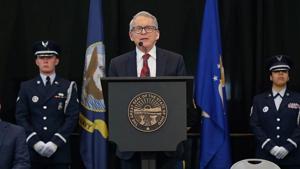
Wisconsin Supreme Court rules against race-based scholarships
A Wisconsin college grant program that sent financial aid to students based on specific race, national origin and ancestry cannot legally operate because it violates the Equal Protection Clause of the 14th Amendment, the Wisconsin Supreme Court ruled Thursday.
The ruling came after a Wisconsin Court of Appeals ruling that attaining diversity in higher education is no longer a compelling interest that allowed for an exception to the Equal Protection Clause. The case was filed by filed by six taxpayers against the Wisconsin Higher Educational Aids Board and Executive Secretary Connie Hutchinson, who was in charge of administering the grants.
The grant program began in 1985 for students attending private and technical colleges in the state who were a minority undergraduate who was a “Black American,” “American Indian,” “Hispanic” or a former citizen of Laos, Vietnam or Cambodia who entered the country in 1976 or later.
Justice Jill Karofsky concurred with the opinion of the court but wrote separately in her opinion, joined by Susan Crawford, on the benefits of the scholarship program.
“Despite this documented success, the grant program’s explicit reliance on race is fatal to its constitutionality for the reasons explained in Justice Dallet’s concurring opinion,” Karofsky wrote. “A suggested alternative means of maintaining a grant program to improve retention would be to target individuals who are economically disadvantaged, since there is also a statistical correlation between economic disadvantage and low retention rates.
“While this alternative aligns with the Supreme Court’s ruling in SFFA, it falls short because it does not acknowledge the racial inequality underlying the problem.”
Sen. Eric Wimberger, R-Gillett, sponsored a bill that would have ended race-based college scholarships in the state but that bill was ultimately vetoed by Gov. Tony Evers.
“Today, the state Supreme Court unanimously affirmed the policy outcome of my bill, Assembly Bill 669, which Governor Evers vetoed and legislative Democrats opposed, to end discriminatory and race-based scholarships in Wisconsin,” Wimberger said in a statement. “Giving benefits based solely on race presumes someone has individual personal characteristics simply because they belong to a race category. That is stereotyping and racism at their plainest and simplest.”






Slight Chance Rain Showers then Partly Sunny
Latest News Stories

Village Staff Updates Board on Housing Development, Infrastructure Projects, and Police Activity
Township Reviews Tax Levies; Bridge Construction Costs Rise

Flint Man Charged with 1988 Murder of Wife Joan Bernal Following Cold Case Breakthrough
Manhattan Board Approves Purchase of New Plow Truck Chassis Following Engine Failure
Residents Raise Concerns During Earth Rise Solar Energy Presentation

Meeting Summary and Briefs: Manhattan Park District Board for Nov. 2025

Homer Glen Man Charged with Reckless Discharge, Battery to Deputy Following Standoff

Park Board Standardizes Job Descriptions for 2026

Islamic civil rights group says nothing about civil unrest in Iran

Ohio debate over potential child care facility fraud heats up

As Illinois ends grocery tax locals can replace, food inflation debate continues

North Carolina NYE terror attack foiled by FBI, several police departments