Pollster: Biggs set to win Arizona GOP gubernatorial primary
The Arizona GOP gubernatorial primary is set for July 21, but pollster Mike Noble says the race is “essentially over.”
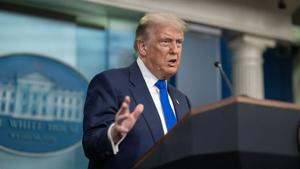
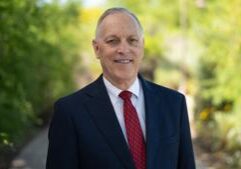
Noble Predictive Insights released a poll showing that U.S. Rep. Andy Biggs, R-Gilbert, holds a 50-point lead over fellow U.S. Rep. David Schweikert, R-Scottsdale. Biggs received President Donald Trump’s endorsement, and other Trump-endorsed candidates have prevailed in this year’s primaries elsewhere in the nation.
Another poll released in June by The NextGen Performance showed Biggs up by 46 points over Schweikert.
“In May, the question was whether Biggs could close it out,” Noble, CEO of Noble Predictive Insights, said. “Now, among likely GOP primary voters, he looks like he has. He’s not just leading. He’s lapping the field.”
Biggs is “winning with all key demographic groups” and early voters, according to Noble.
The poll found 66% of male and 52% of female likely Arizona GOP primary voters supported Biggs, compared with just 13% and 8% respectively for Schweikert.
Biggs also has a significant advantage over Schweikert among white and Hispanic voters, according to the poll.
The winner of the primary will go up against Democratic Gov. Katie Hobbs, who’s running unopposed in her party’s July 21 primary, in the Nov. 3 general election.
Noble told The Center Square on Tuesday that the tipping point in the Republican primary was when Karrin Taylor Robson dropped out of the race.
When she left, it helped Biggs gain momentum in the primary, Noble said.
“Since then, he has continued to add to his lead,” he noted.
Biggs has increased his lead by 20 points over Schweikert since May.
As members of Congress, Biggs and Schweikert have supported many of President Donald Trump’s key policy priorities, including the One Big Beautiful Bill Act and the 2017 Tax Cuts and Jobs Act.
Despite this, Taylor Robson’s supporters “gravitated to Biggs” over Schweikert because Biggs was the Trump candidate, Noble said, adding that the president endorsed both Taylor Robson and Biggs.
On top of this, undecided voters in the Arizona GOP primary haven’t supported Schweikert, according to the poll.
The poll showed 26% of voters are still undecided. Of these undecided voters, the poll found 68% would vote for a candidate not on the primary ballot.
“Schweikert’s problem is not that there are no undecided voters left,” Noble said. “It’s that the undecided voters are not really looking his way. If there were a hidden Schweikert surge, we would expect to see it there. We don’t.”
Noble told The Center Square that “Schweikert’s [campaign] run did not make sense from the beginning.”
“To challenge a Trump-endorsed candidate, [a candidate has] to have money to do it. I don’t think Schweikert really had the money to spend,” he said.
Records from the Arizona Secretary of State’s Office show Schweikert’s campaign has $86,388 on hand while Biggs has $1.1 million.
According to Noble, the Arizona GOP is “Trump’s party.”
Among Trump supporters, 74% of poll respondents said they would vote for Biggs, while only 7% said they would vote for Schweikert.
The Center Square reached out to the gubernatorial campaigns for Schweikert and Biggs, but they did not respond before publication time.
NPI’s poll had a margin of error of plus or minus 4.75%.





Slight Chance Showers And Thunderstorms then Mostly Cloudy
Latest News Stories
Joliet Junior College, City of Joliet to Explore Joint Public Safety Institute
Manhattan Township to Draft Solar Farm Ordinance Amid Growing Interest
Meeting Summary and Briefs: Village of Manhattan Board of Trustees for September 2, 2025
Manhattan to Install Solar-Powered Flashing Beacons in School Zone

Resident Shares Personal Tragedy as Manhattan Proclaims Suicide Prevention Month
Manhattan Adopts 20-Year Comprehensive Plan to Guide Future Growth
WATCH: Legislator warns gas could reach $8 to $10 a gallon
White House announces new AI Education initiative

Chicago student petitions to restore bathroom doors
Alleged Epstein 50th birthday letter from Trump released

WATCH: Bonta disappointed with U.S. Supreme Court ruling
Trump’s tariffs ‘not survivable’ for some U.S. small businesses