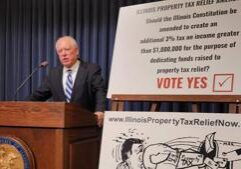
Millionaire tax push resumes in Chicago
(The Center Square) – Former Illinois Gov. Pat Quinn and state Rep. LaShawn Ford, D-Chicago, have taken the next step in their campaign to raise taxes on people who earn more than $1 million, and the speaker of the Illinois House is on board.
Quinn and Ford filed ordinances on Thursday for a non-binding referendum to be placed on Chicago ballots in the general election this November or in the citywide election next February.
Statehouse members did not vote on Ford’s proposed constitutional amendment in time for a binding measure to appear on the November ballot statewide.
HJRCA 21 would impose a 3% tax on net income more than $1 million, with 50% of revenues to be used for property tax relief and 50% for public school districts.
A reporter from The Center Square asked Quinn why Illinois does not provide more immediate property tax relief by placing a cap on property tax increases like Indiana does.
Quinn said he supported a cap on levies in 1991 or 1992.
“That has not worked well in Illinois. There are too many exceptions. Now, I think we ought to take a look at those exceptions,” Quinn said.
The former governor said the millionaire amendment would be better because it would provide rebates for taxpayers.
On Wednesday, Illinois House Speaker Emanuel “Chris” Welch told The Center Square reporter Sean Reed he fought for Ford’s constitutional amendment proposal this year.
“I certainly would ask people to join me in the fight to tax the rich, to pass the surcharge tax on millionaires,” Welch said.
Welch said lawmakers should consider the tax if a special session is called for any reason.
Quinn listed other states that have passed legislation to enact taxes on millionaires, including Hawaii, Massachusetts and Washington.
The former governor said Massachusetts has more millionaires now than it did when the tax was approved.
Washington state officials approved a 9.9% tax on household income above $1 million in March.
A survey conducted in late April by the Association of Washington Business found about 24% of employers considering moving their business out of the state, and even more considering moving their personal residence out of Washington.
The Center Square recently reported that Starbucks plans to relocate more than 300 from Seattle to Nashville, according to regulatory filings and interviews with officials in both cities.
When asked by The Center Square if Illinois school districts might simply waste the extra money, Quinn said the amendment allows the legislature to place guardrails in school district budgets.
“We want to make sure that the money the school districts get is used to abate and reduce property tax levies, and the legislature under this amendment would have that power,” Quinn said.
After Chicago Mayor Brandon Johnson provided his city’s public schools with a $1 billion tax-increment financing sweep last December, the board of education raised its property tax levy by the maximum amount allowed just days later.
CPS has since proposed a $10 billion budget for next school year, with a projected deficit of $732.5 million.
Sean Reed, Randy Diamond and Carleen Johnson contributed to this story





Patchy Fog then Sunny
Latest News Stories

PSA urges consumers to think ‘Before You Call That Lawyer’

Vance to lead talks in Iran on Saturday

Rep questions state ed board’s higher budget request, proficiency standards

Illinois reps move bill to give remedy to young victims of hidden cameras
Illinois Quick Hits: Chicago Election Board says 94% of ballots casts were for Dems

Chicago office vacancy rates worsen, card swipe numbers offer hope

Illinois Quick Hits: Illiois gas prices keep rising

Meeting Summary and Briefs: Joliet Junior College Board of Trustees for March 11, 2026
IL Supreme Court says it can remove Cook Co. judge for pro-Trump column

FBI: Illinois’ cyber crime losses reached $535M in 2025

Minnesota, Illinois AGs challenge federal orders to keep coal plants running

FBI finds Americans lose billions to cryptocurrency scams