
U.S. Supreme Court to hear Colorado-Nebraska water dispute
The U.S. Supreme Court has decided to weigh in on the latest water squabble in the West, where Nebraska has accused Colorado of violating a century-old water rights agreement.
Nebraska has set aside $600 million for a new canal that would start along the South Platte River in the northwest corner of Colorado. But the state alleged Colorado has sought to impede the effort, in violation of its compact with Nebraska. The lawsuit also argues that Colorado has not given Nebraska its due amount of water from the river.
The Supreme Court announced it will hear the states’ arguments on the issue, giving Colorado until late September to respond. The move comes as water rights grow into an increasingly tense political issue in the West, with Colorado simultaneously involved in the unresolved Colorado River negotiations.
“Nebraska will finally have the opportunity to prove that Colorado has violated the Compact and to hold Colorado accountable for depriving Nebraska of water that rightfully belongs to our state,” Nebraska Attorney General Mike Hilgers said in a statement after the Supreme Court announcement last week.
The South Platte River Compact, signed by the two states in 1923, divvied up water rights and assigned an order of priority to its access. Under the agreement, Colorado is required to allow a minimum of 120 cubic feet of water per second (cfs) to flow into Nebraska from the river, assuming there is enough water to do so. This only occurs during the irrigation season, between April 1 and Oct. 15, while Colorado has exclusive access to the rest of the year.
Colorado has argued that shortages on Nebraska’s water requirements have come from a total lack of supply, which the contract does not require the state to make up for.
The Colorado Department of Natural Resources told The Center Square in an email that if it shuts off “junior” water users, those with rights to the river after Nebraska’s, and there is still not enough water to meet Nebraska’s allotted amount, then that is not a break with the contract.
But Nebraska Attorney General Hilgers told reporters last week, “We absolutely have not gotten the water to which we are entitled. In fact, it’s gone back decades.” The Supreme Court complaint also argued that Colorado had given junior water users access to the river before Nebraska.
In May, U.S. Solicitor General D. John Sauer recommended that the Supreme Court partially take up Nebraska’s lawsuit and focus on the complaint that Colorado was not delivering its contracted water. Sauer and the U.S. Department of Justice filed an amicus brief in support of Nebraska.
The compact also kept the door open for Nebraska to build a canal from the river starting in Colorado to draw additional water, up to 500 cfs, during the non-irrigation season.
State lawmakers proposed the project in 2022 and set aside over $600 million for construction of the Perkins County Canal in 2023.
“This represents the most significant water infrastructure investment ever made by the State,” Nebraska Department of Water, Energy and Environment Director Jesse Bradley said in an April statement. “This project will ensure the South Platte River will continue to flow into Nebraska for use by irrigators, power providers, municipalities, and the environment all across the state.”
Bradley said construction on the canal is planned to finish in 2032.
As part of the lawsuit, Nebraska argued that Colorado has attempted to block its canal construction effort, including by fighting Nebraska’s eminent domain effort.
In a rare interstate move early last year, the state of Nebraska offered $1.4 million for 650 acres of land to Colorado landowners. The offer was accompanied with a threat of forced land purchase, eminent domain, according to Nebraska Public Media. The use of eminent domain across state boundaries was protected in the 1923 compact.
Nearly a year after Nebraska sued Colorado over the river water rights, the U.S. Supreme Court agreed to hear the case. The decision came on June 29 and was quickly followed by a rebuttal by Colorado Attorney General Phil Weiser.
“Colorado is complying with the South Platte River Compact and not interfering with Nebraska’s efforts to build the Perkins County Canal,” Weiser said in a statement in reaction to the Supreme Court’s announcement. “Today’s court decision merely opens the door for Nebraska to bring its claims against Colorado. Nebraska’s burden to prove those claims is incredibly high and we will vigorously defend Colorado’s full entitlements under the compact.”
In May, Sauer, the solicitor general, recommended that the Supreme Court partially take up the lawsuit, with a focus on Nebraska’s complaint that Colorado was not delivering its contracted water. The DOJ brief called the complaint of Colorado’s efforts to block the canal construction “unripe,” on account of the effort only beginning in 2023.
Across the western U.S., water rights have become a central political issue in recent years amid decades-long droughts and booming populations. The issue has been most visible in the ongoing Colorado River negotiations, which include seven U.S. states and multiple other parties.
“Ultimately, the supply of water – I don’t want to say it’s zero-sum – but it’s close to zero-sum,” said Hilgers. “Either we get the water to which we’re entitled, or Colorado land owners get that water. What we’re trying to do is fight for our water supplies.”
Hilgers added that he thought the Supreme Court case could go on for years before a resolution.
A Supreme Court order for Colorado to file an answer to Nebraska’s complaint within 30 days was granted a 60-day extension until Sept. 28, the Colorado Attorney General’s office told The Center Square.






Partly Sunny
Latest News Stories

Trump aiming for ceasefire, world awaiting news from Putin summit
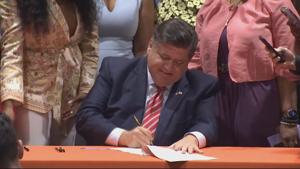
Pritzker acts upon 269 bills, vetoes 2, signs ‘lawsuit inferno’ measure

Report: average American to receive $3,752 tax cut in 2026 due to OBBBA

Republican, Dem work to prevent deportation of entrepreneur
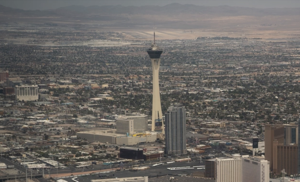
Nevada superintendent says ICE won’t enter schools
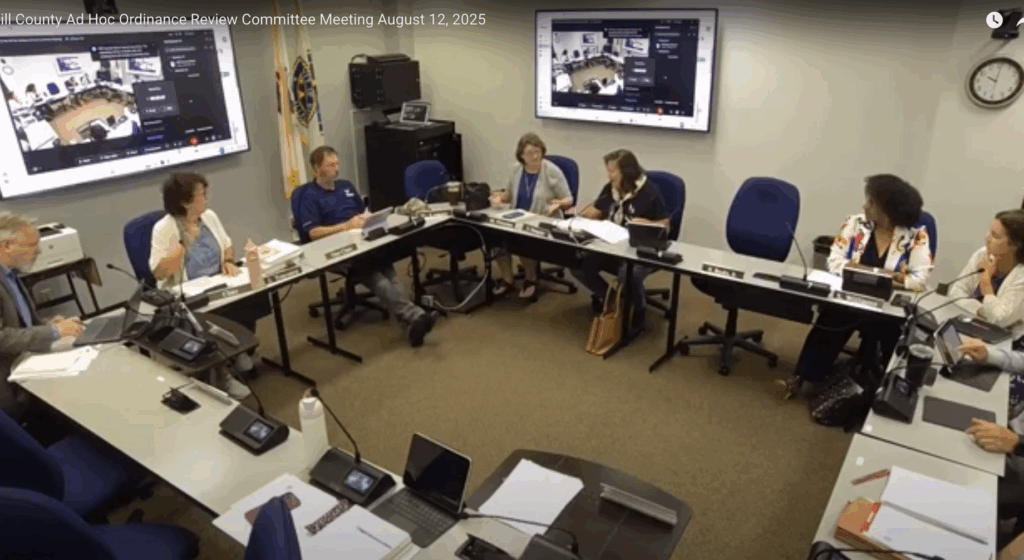
Will County Updates Solid Waste Ordinance, Increases Fines and Reporting to Landfill Committee
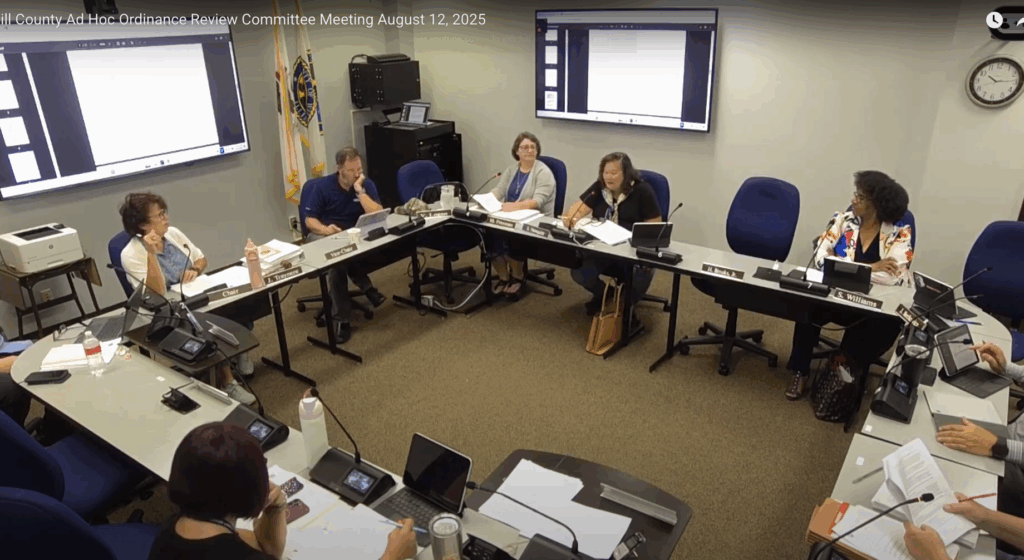
Citing Liability Concerns, Will County Committee Postpones Vote on Septic System Ordinance
Will County Moves to Repeal Obsolete 1972 Fire Hydrant Ordinance
MAHA-style bill would close food additive safety loophole
Will County Board Gets Back to Basics with Robert’s Rules of Order Training
Executive Committee Approves Amended Houbolt Bridge Agreement to Settle Litigation
Manhattan Fire District Awards Initial Bids for New Station, Re-bids Four Items to Cut Costs