Board releases guidance for use of AI in Illinois classrooms
(The Center Square) – In the wake of new state laws regulating artificial intelligence, the Illinois State Board of Education released new guidance on how AI tools and technology should and shouldn’t be used in the classroom and on campuses.
The guidance comes in response to a bill passed last year, requiring the board to address growing concerns of AI being used without guardrails in place.
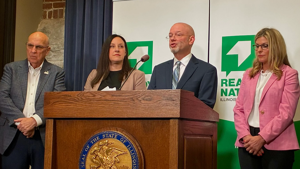
State Rep. Laura Faver Dias, D-Grayslake, said her bill would require the board to address concerns she and other lawmakers have heard from teachers and schools across the state when discussing it in the House last year.
“Artificial intelligence has quickly exploded into every facet of our lives and every sector of our economy and society. Schools and classrooms are no different,” Faver Dias said. “With AI technology evolving far faster than educators have capacity to follow closely, many are looking for guidance, both to leverage its benefits and avoid potential harms.”
The new guidance spans more than 400 pages and provides examples of how instructors can use AI tools to better their instructional material and increase student engagement.
The document also provides specific examples of what teachers shouldn’t do with AI, such as loosely written prompts to create rubrics and lesson plans.
Separately, the document gives guidance on how schools could implement new lessons about AI when working with students on technological literacy.
An announcement from the board noted it is not mandating the use of AI in classrooms, but rather providing ways for teachers and administrators to address and properly use the technology.
“The guidance does not create statewide mandates for classroom AI use. Instead, the guidance is designed to help districts make informed decisions based on local context, capacity, and community priorities. It includes practical tools, model policy resources, and case studies to support implementation,” read an ISBE news release.
The guidance also offers school administrators ways they could effectively use the tools.
In the state Senate this year, another bill would have placed extra requirements on school districts surrounding the use of AI, such as the ban of using it for grading.
“What this does is it ensures that the use of AI is not haphazardly applied in each classroom in a different way to the whims and fancies of the individual educator, but rather is a policy that is adopted by the school board for use in the school so that there is a coherent policy,” Sen. Robert Martwick said of his proposal.
The law, called the Student Educational Technology Rights Act, would have required school districts to create an AI policy banning its use in grading, while providing a list of approved tools and companies that can be used in instruction, either by teachers or students.
He noted that the idea for the bill was brought to him by young constituents who were concerned about the use of AI by students.
The bill passed the Senate but has yet to be taken up in the House, though it could come back into play late this year during the fall veto session.






Sunny
Latest News Stories

ALEC: State regulations drive up electricity prices
Chicago mayor announces homelessness plan with unclear funding sources

Minnesota wins legal fight over tuition benefits for illegal immigrants

Illini Final Four trip expected to benefit University of Illinois, state of Indiana
Trump makes history at Supreme Court amid landmark birthright citizenship challenge

New Hampshire school district sued over transgender policies
Trump watches as high court hears challenge to his birthright citizenship order

Illinois Quick Hits: Prtizker says Trump order is unconstitutional

U of I pressed on costly abandoned development project, stance on DEI directives

Trump says Iran’s new leader wants ceasefire
‘Conversion therapy’ bans in IL, other states, in danger, after SCOTUS ruling
Lincoln-Way 210 Approves Student Registration and Meal Fee Increases for 2026-2027