USDA: California owes $1.4 billion because of SNAP errors
California saw $1.4 billion in Supplemental Nutrition Assistance Program errors for Fiscal Year 2025.
That accounts for $3.8 million every single day.
That’s part of a trend of Southwestern states having to repay the federal government for SNAP benefits.
A payment error rate refers to instances of overpayment or underpayment to households. It is not inherently indicative of fraud, according to the U.S. Department of Agriculture, which oversees SNAP for the federal government. Rather, according to the department, it often stems from households providing incomplete information or state data processing errors.
Because of the high volume of error, California is subjecting itself to having to repay the federal government.
States that manage to stay below a federally mandated threshold of 6% for mistakes are safe. But consecutive years above the threshold force states into USDA-approved corrective action plans and financial liabilities. Under federal rules, liabilities can either be repaid in full, or states can reinvest half of the penalty into improving state operations to prevent future errors.
The information comes from the U.S. Department of Agriculture, which oversees SNAP for the federal government. States also have their own agencies involved in the oversight process. In California, which had 5 million-plus people on SNAP last year, that agency is the Department of Social Services.
“California remains committed to both payment accuracy and program access, ensuring that these critical food benefits are reaching the people they intend to support as quickly as possible,” said Theresa Mier, the DSS information officer, in an email to The Center Square.
In Colorado, where SNAP helps more than 600,000 beneficiaries under the supervision of the Colorado Department of Human Services, misallocated funds climbed to more than $143 million for the year. That averages out to $393,000 per day, landing the state an error rate of 10.09%.
The CDHS did not respond to The Center Square’s request for comments.
Nevada managed a lower, yet still problematic error rate of 6.22%. Erroneous payments topped $63 million annually, costing taxpayers about $173,000 every single day.
After being contacted by The Center Square, Nevada’s Division of Social Services , which oversees the program, acknowledged the USDA data is accurate for Nevada.
“The Nevada Division of Social Services will continue to comply with all applicable federal program requirements,” said DSS Public Information Officer Kristle Muessle in an email to The Center Square.
If Nevada is required to pay a portion of SNAP benefits under federal cost-sharing requirements, it could have an impact on the program, Muessle said. She added that DSS will at that time “evaluate all available options to determine the most appropriate course of action.”
California, Colorado and Arizona are part of a national trend as they deal with paying heavy sums back to the federal government. In Arizona, SNAP errors reportedly could cost taxpayers $200 million, as The Center Square reported earlier this week.
The national payment error rate for Fiscal Year 2025 was 10.62%. Federal law, again, dictates a 6% error threshold. Approximately 41 states plus Washington, D.C., exceeded the limit.
Combined, these errors represent $10.17 billion in government waste for fiscal year 2025.
“These payment error rates are further proof that state accountability is severely lacking in SNAP,” said Agriculture Secretary Brooke L. Rollins in the press release. “USDA has taken historic action to help interested states curb SNAP waste, and I hope other states, regardless of political leadership, prioritize needy families and the American taxpayer over politics.”
States that managed to stay below the 6% threshold are safe from financial penalties.
Those states are Nebraska (5.90%), Wisconsin (5.72%), Utah (5.54%), Vermont (5.38%), Iowa (5.34%), Kentucky (4.70%), Wyoming (3.96%), Idaho (3.85%) and South Dakota (2.47%)





Sunny
Latest News Stories

Will County P&Z: Green Garden Township Variances Granted in Monee
Will County P&Z: Manhattan Township Rezoning Approved
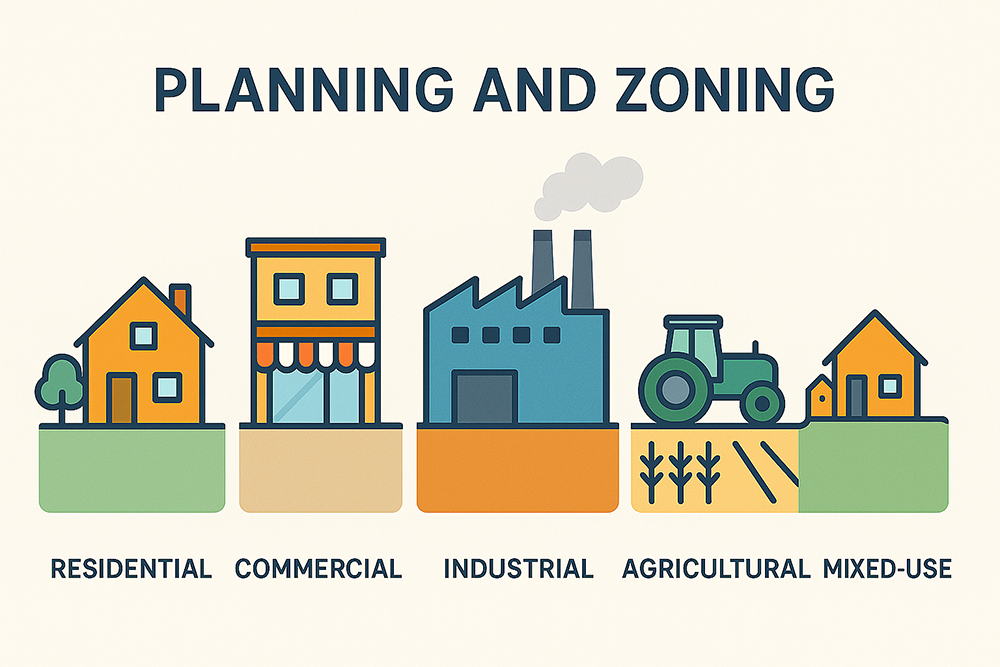
Will County P&Z: Green Garden Township Rezoning Approved Amid Concerns Over Lack of a Final Plan

Zoning Commission Overrules Staff, Approves Greeen Garden Twp Variance for 3-Acre Agricultural Lot
Pritzker: Fair maps in Illinois would be ‘disarming’ to Democrats
State Overhauls Standardized Testing; Manhattan to Launch New Middle School Career Program
Meeting Summary and Briefs: Manhattan Village Board for August 19, 2025
Lincoln-Way Board Approves Special Education Co-op Budget Amid Concerns Over Rising Costs
Lincoln-Way Board Approves Special Education Co-op Budget Amid Concerns Over Rising Costs
States sue over Victims of Crime Act grant funding

Illinois quick hits: COVID fraud indictments issued; man sentenced for mailing fentanyl

WATCH: Illinois In Focus Daily | Thursday Aug. 21st, 2025

Lincoln-Way Board Reviews $162 Million Tentative Budget, Projects Deficit Due to Bus Purchase Timing