Court OKs $45M verdict in talc asbestos case, including $30M for ‘reduced lifespan’
(Legal Newsline) – An Illinois appeals court has thrown open a new avenue for personal injury lawyers and others to claim potentially massively enhanced verdicts, as the court upheld a $45 million verdict awarded by a Cook County jury to the family of a woman who died of mesothelioma, allegedly caused by exposure to talc in Johnson & Johnson baby powder — a verdict that included $30 million in damages awarded to the family for the woman’s “reduced lifespan.”
A divided three-justice panel of the Illinois First District Appellate Court delivered the ruling on July 10 in Chicago.
The majority opinion in the 2-1 decision was authored by Justice Michael Hyman. Justice Aurelia Pucinski concurred in full with the ruling.
Justice Celia Gamrath concurred partially with the ruling, but split with her colleagues on the question of whether Illinois law clearly allows the courts to use the state’s so-called Survival Act to force Johnson & Johnson and certain successor corporations to pay an additional $30 million to the family for suffering the plaintiff will no longer endure in years she will no longer live.
In dissent, Gamrath worried her colleagues had stretched prior rulings too far to uphold the unprecedented $30 million addition to the verdict and, in the process, had created a new path for trial lawyers to similarly grab millions of dollars more in wrongful death cases.
“The majority’s decision will now turn shortened life expectancy damages into a routine component of every survival action paired with a wrongful death claim,” Gamrath wrote in her partial dissent. “If Illinois is to adopt this sweeping expansion of survival recovery, it should come from our supreme court or the general assembly.” (sic)
The decision tees up a potential date before the Illinois Supreme Court on the question.
In a statement following the verdict, a Johnson & Johnson spokesperson said the company intends to “immediately appeal.”
“We remain confident that further review will confirm that the law does not permit the unprecedented recovery allowed here,” said Erik Haas, J&J’s Worldwide Vice President of Litigation, in the statement.
The decision comes about two years after a Cook County jury directed J&J to pay $45 million to the family of plaintiff Theresa Garcia.
Garcia had filed suit against J&J and a collection of successor companies and other co-defendants, accusing them of negligence for selling talc-based baby powder products, which allegedly contained naturally occurring asbestos.
Johnson & Johnson sold its consumer health unit, which included its baby powder product line, to Kenvue in 2023. As part of that deal, J&J would maintain liability for litigation related to baby powder products sold in North America.
According to court documents, Garcia filed suit after she was diagnosed with mesothelioma in January 2020 at the age of 52.
Garcia died in July 2020, after she filed the lawsuit. The courts then allowed her daughter, Stephanie Salcedo, to take her place, as administrator of Garcia’s estate.
Garcia’s family and their lawyers claimed Garcia had inhaled asbestos fibers allegedly contained in the talc.
The lawyers pointed to lab tests, which allegedly demonstrated talc products could contain small amounts of asbestos, which they say could then cause mesothelioma, a fatal cancer of the lining of the lungs that is always fatal.
The disease is typically associated with asbestos exposure, and has been the subject decades of lawsuits against industrial manufacturers and many other companies, generating billions of dollars in fees for trial lawyers in the process.
Courts in Cook County and downstate Madison and St. Clair counties have consistently ranked among the most popular court systems for such asbestos exposure cancer lawsuits.
However, in recent years, as the number of such industrial asbestos exposure plaintiffs has begun to ebb, many of those same trial lawyers have switched to suing companies like Johnson & Johnson over alleged sources of asbestos, such as talcum powder.
The studies used to justify such talc powder lawsuits have come under criticism as “junk science.” Johnson & Johnson, for instance, has accused one of the most prominent talc expert witnesses frequently used by trial lawyers, Dr. Jacqueline Moline, of fraud.
They also have pointed out some other leading talc case expert witnesses have switched sides in recent years, after spending decades downplaying the possibility of talc exposure as a source of mesothelioma, when they were being paid to testify about the asbestos risks from industrial sources instead.
Some courts have thrown out talc case verdicts based on faulty testimony from such expert witnesses.
Most recently, for instance, a retired judge serving as a so-called special master reviewing evidence in a consolidated action involving tens of thousands of talc-related lawsuits against Johnson & Johnson in New Jersey federal court has recommended a federal judge throw out a key plaintiff expert’s test for asbestos. That test has undergirded more than 68,000 lawsuits, yet “lacks all of the traditional indicia of reliability,” the retired judge wrote in a recent filing.
In Garcia’s case, plaintiffs relied heavily on testimony from two particular witnesses, identified as geologist Mark Bailey and pulmonologist Steven Haber, who testified that they believed Garcia’s mesothelioma was caused by exposure to asbestos allegedly in J&J’s talc powder.
Their testimony was allowed despite objections from J&J. The company had asserted Bailey’s testing methods were shrouded in secrecy and Haber’s conclusions exceeded his expertise.
On appeal, all three justices on the appeals panel agreed that Cook County Judge Patrick Sherlock was not wrong to allow Bailey and Haber to testify, rejecting J&J’s assertions that the testimony deprived them of a fair trial.
So, all three justices agreed the jury’s verdict should be upheld on the question of whether the jury was correct to award Salcedo and Garcia’s family at least $15 million, including $12 million for the family’s wrongful death claim.
The justices also agreed on the legal question of whether the defendants could use Texas law to allow J&J’s spinoffs, Kenvue and another entity known as Holdco, to escape joint liability under Garcia’s claims.
In the ruling, the justices agreed the Cook County court was correct to shut down the companies’ attempt to use Texas corporate law, rather than New Jersey law, to limit liability.
However, the appeals panel split sharply on the question of whether J&J should be forced to pay an additional $30 million under the Illinois Survival Act.
J&J had argued the award was improper, because, under Illinois law, those damages for a shortened lifespan should only be paid to plaintiffs who are living at the time the jury renders a verdict.
But the majority on the panel disagreed. Hyman said nothing in Illinois law or prior state legal precedent clearly states that such “shortened lifespan” verdicts can only be awarded to living plaintiffs.
Hyman and Puciniski said they believed it was enough under Illinois law and Illinois Supreme Court rulings that the plaintiff was alive at the time the lawsuit was filed and the death of the plaintiff doesn’t mean their family can’t then collect the same damages, on behalf of their deceased relative.
“The Survival Act damages compensate Garcia for the loss of years of life, an injury she sustained once she learned that mesothelioma would have a drastic and permanent effect,” Hyman wrote in the majority opinion. “This was not a recovery by the estate for ‘damages tied to lost years a deceased plaintiff never lived’ but rather compensates Garcia for the loss of years of life that mesothelioma took from her while she was alive.
“Garcia experienced and sued for that injury before her death; the Survival Act permits her estate to continue the claim.”
Further, they rejected the claim that the verdict amounts to an improper move to use the Survival Act to award $30 million for “future injuries” to a person who has died and can no longer suffer any injuries.
“The relevant question is when the injury arose. An injury does not become a future harm because its consequences continue into the future. Garcia’s reduced lifespan was caused and known before her death. So her death did not create the injury; mesothelioma did,” Hyman wrote.
Gamrath, however, pushed back on those contentions, saying the appellate court, at minimum, exceeded its authority in finding the $30 million Survival Act award proper and may have permitted Garcia’s family to claim millions more than they should under improper “double recovery” for the same injuries.
After Garcia’s death, the family cannot now recover both for wrongful death and for Survival Act damages that have to this point only been awarded to people who are still alive.
The prior Supreme Court rulings on which the majority rested their ruling “involved living plaintiffs who faced an increased risk of future death but who, under the single recovery rule, would have no later chance to pursue wrongful death damages,” Gamrath wrote.
“Their logic is simple: a tortfeasor (the party that is alleged to have caused harm) should not ‘get off scot-free’ when an injury is likely, though not certain, to shorten the plaintiff’s life. Once the plaintiff dies, however, that concern disappears.
“A wrongful death action then compensates for the life cut short, leaving no doctrinal footing for layering shortened life expectancy damages on top of wrongful death damages,” Gamrath wrote.
She added later in the dissent: “Just as survival damages cannot include future pain and suffering or medical expenses a decedent will never incur, they cannot include years of life the decedent never lived.”
Garcia’s family was represented in the case by attorneys Trey Barnham and Lisa Shirley, with the firm of Dean Omar Branham Shirley, of Dallas, Texas.
Following the appellate ruling, Garcia’s family’s lawyers hailed the decision, calling it “a significant appellate victory for asbestos victims.”
“We believe this decision sends a powerful message that jury findings in these asbestos cases will be upheld when they are supported by the evidence and the law,” Barnham said.
In J&J’s statement responding to the verdict, Haas said the company believed the decision would ultimately be overturned, noting the decision “upheld a damages theory that has never before been recognized in Illinois and that one member of the court concluded improperly expands survival-law damages beyond their established limits.”
Haas added: “This decision is also irreconcilable with decades of scientific research demonstrating that Johnson’s Baby Powder is safe, does not contain asbestos, and does not cause mesothelioma. It stands in sharp contrast to recent defense verdicts and other court decisions rejecting plaintiffs’ unsupported theories.”
“More broadly, this case illustrates how plaintiffs’ lawyers continue to rely on litigation-driven junk science in pursuit of massive verdicts.”






Patchy Fog then Partly Sunny
Latest News Stories
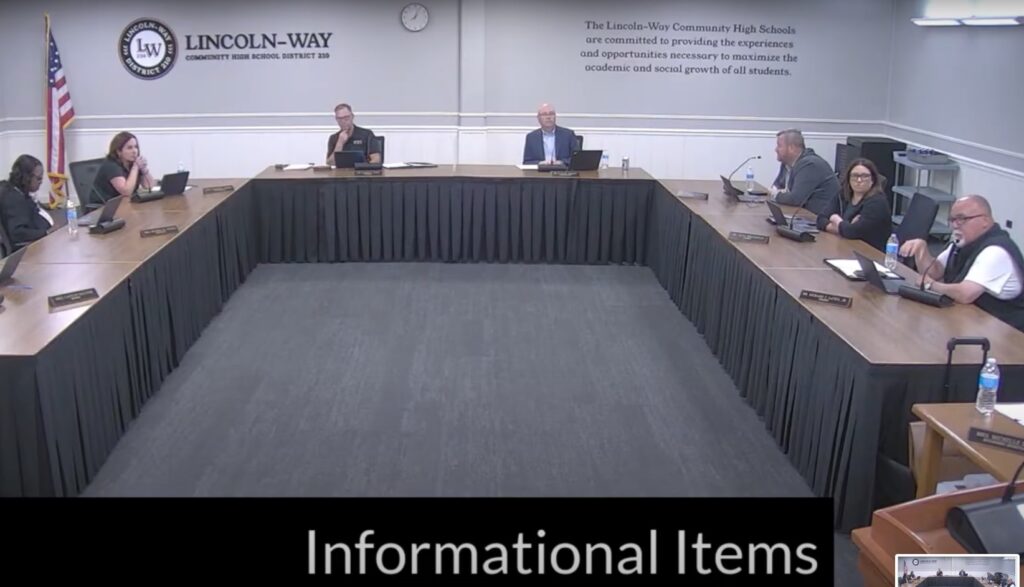
Lincoln-Way 210 Board Approves $172.7 Million Budget with Planned Deficit for Bus Purchases
Manhattan School District 114 Approves $41.5 Million Budget for FY26

Manhattan Fire District Advances New Station with $8.75M Bond Hearing, Approves Contracts with $194,000 Savings

Will County to Pay Enbridge $82,000 to Relocate Pipeline Equipment for Exchange Street Improvements

Laraway Road Widening Project in New Lenox and Frankfort Gets Additional $468,000 for Redesign

“Federal Policy Uncertainty” Blamed for Delay of Peotone Solar Farm; County Grants Second Extension
Will County Grants Extensions to Five Solar Projects Sold to New Developers
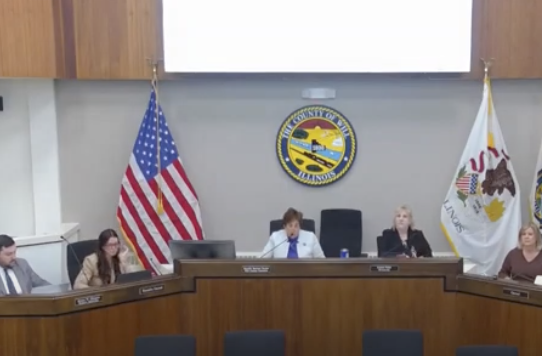
Will County Board Approves Controversial Drug Recovery Retreat in Crete Township

Parents Voice Alarms Over Bus Safety, Lateness in Manhattan School District

Meeting Summary and Briefs: Village of Manhattan Board of Trustees for September 16, 2025

Joliet Junior College Honors Seven Long-Serving Employees Upon Retirement
Manhattan Police Department Promotes Garrison to Commander, Diaz to Sergeant